
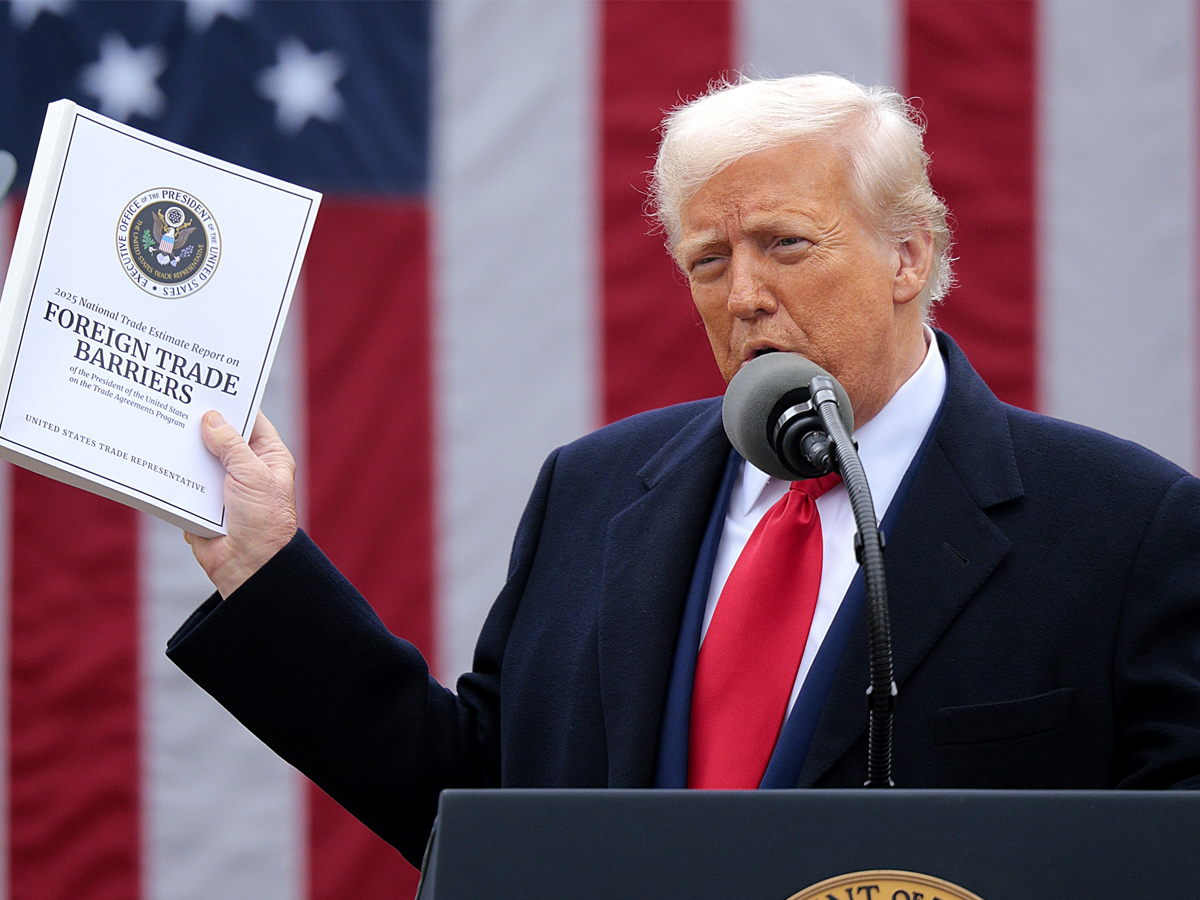
In a landmark ruling with wide-ranging consequences for global trade, the US Supreme Court has struck down President Donald Trump’s attempt to impose sweeping tariffs under a national emergency law. The decision sharply curtails presidential power over trade policy and reinforces Congress’s constitutional authority.
The court ruled 6–3 that Trump exceeded his legal authority by using a 1977 statute designed for emergencies to unilaterally impose import taxes on nearly all US trading partners.
What Did the US Supreme Court Decide on Trump’s Tariffs?
The Supreme Court upheld a lower court ruling that rejected Trump’s use of the International Emergency Economic Powers Act (IEEPA) to impose tariffs without congressional approval. Writing for the majority, Chief Justice John Roberts said the president failed to meet the legal standard required for such an extraordinary exercise of power.
Roberts wrote that “the president must ‘point to clear congressional authorisation’ to justify his extraordinary assertion of the power to impose tariffs,” adding plainly: “He cannot.”
Why Did the Court Say Trump Overstepped His Authority?
The ruling centred on the Constitution’s clear division of powers. While Congress holds the authority to impose taxes and tariffs, Trump relied on IEEPA, which allows presidents to regulate commerce during national emergencies.
The court found that using this law to impose broad tariffs intruded on Congress’s role and violated the “major questions” doctrine. This legal principle requires that actions of vast economic and political importance receive explicit approval from lawmakers.
What Is the ‘Major Questions’ Doctrine and Why Does It Matter?
The “major questions” doctrine limits executive agencies from making sweeping policy changes without clear backing from Congress. Ironically, conservative justices have previously used this doctrine to block major executive actions by former President Joe Biden.
In this case, the court applied the same standard to Trump’s tariffs, signaling that no president can bypass Congress on issues with massive economic consequences.
Which Justices Supported and Opposed the Ruling?
Chief Justice Roberts was joined by conservative Justices Neil Gorsuch and Amy Coney Barrett, both appointed by Trump, along with the court’s three liberal justices.
The dissent came from conservative Justices Clarence Thomas, Samuel Alito, and Brett Kavanaugh, who argued for a broader interpretation of presidential emergency powers.
The case arose from lawsuits filed by businesses harmed by the tariffs and a coalition of 12 US states, most led by Democratic governors. They argued that Trump’s actions created economic instability and violated constitutional limits on executive power.
The court agreed, stating that allowing such unilateral tariff authority would dangerously expand presidential control over economic policy.
What Does This Mean for US Trade Policy Going Forward?
The ruling reshapes the balance of power over trade. While Trump imposed some tariffs under other laws—which remain unaffected—his reliance on IEEPA for broad import taxes now stands firmly rejected.
Trump previously defended the tariffs as essential to US economic security, warning that without them, “the rest of the world would laugh at us.” He frequently accused countries, especially China, of exploiting the United States through unfair trade practices.
Why Is This Decision Significant Globally?
By limiting the president’s ability to impose emergency tariffs, the Supreme Court has reduced uncertainty for global markets and US trading partners. The ruling also sets a powerful precedent that future presidents, regardless of party, must seek congressional approval before making trade decisions with a vast economic impact.
As debates over executive power continue, the court has drawn a clear line: trade policy of this scale belongs to Congress, not the White House.




