Supreme Court strikes Trump tariffs: $2,000 stimulus checks in doubt, refunds ordered, temporary 10% global tariff announced. Full impacts explained.
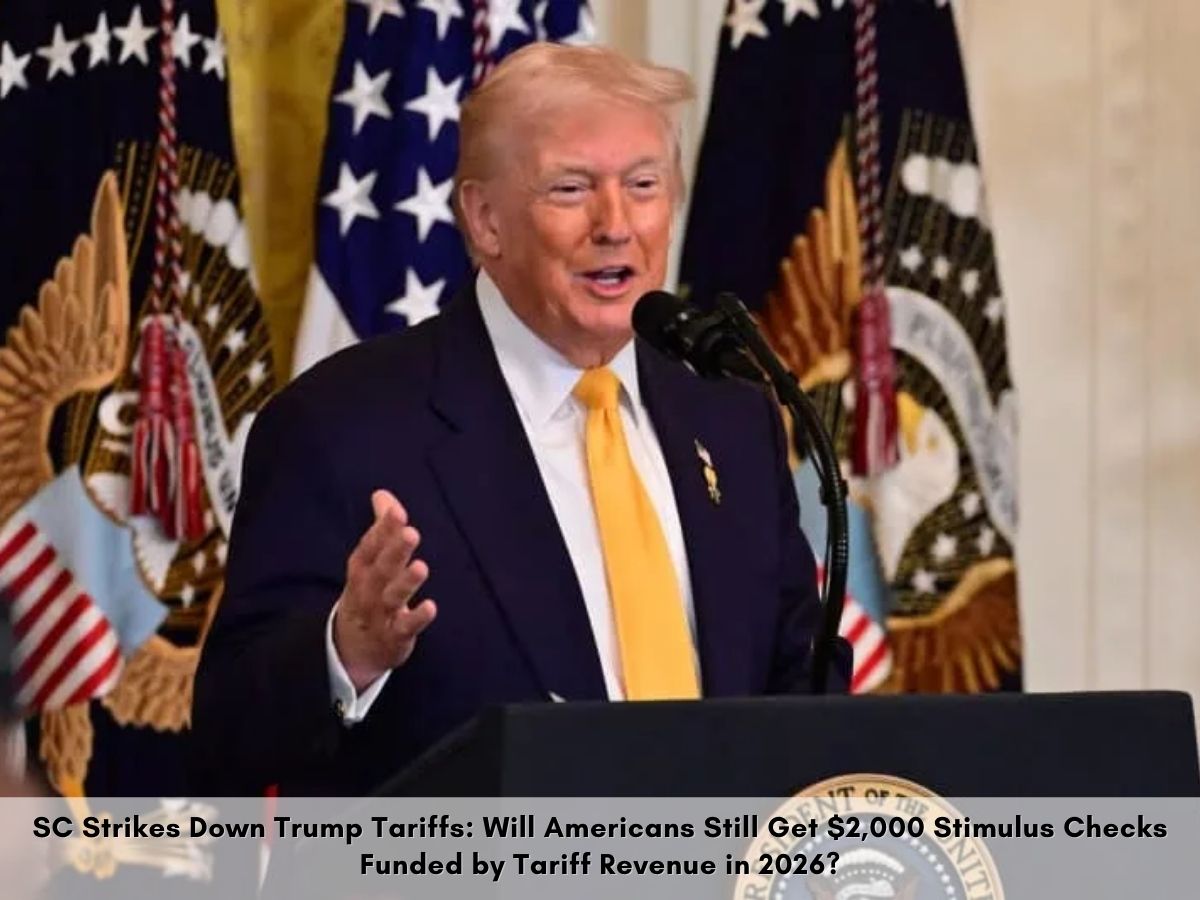
$2,000 Tariff Stimulus Checks Uncertain After Supreme Court 6-3 Ruling Against Trump: Refunds for Businesses, New Tariffs Incoming? (Image: X)
The U.S. Supreme Court ruled Friday that President Donald Trump exceeded his authority by imposing sweeping global tariffs without clear congressional authorization, casting doubt on his proposed $2,000 stimulus checks funded by tariff revenue. In a 6-3 decision, the court ordered refunds of some 2025 tariff collections to businesses, prompting Trump to announce a temporary 10% global tariff under a different legal basis.
Chief Justice John Roberts wrote the majority opinion, joined by Justices Sonia Sotomayor, Elena Kagan, Neil Gorsuch, Amy Coney Barrett, and Ketanji Brown Jackson. The International Emergency Economic Powers Act (IEEPA), the court ruled, did not permit unrestricted import duties.
Justices Clarence Thomas, Samuel Alito, and Brett Kavanaugh dissented, arguing Trump had the authority. With no immediate advice on refund procedures being sent to lower courts, the decision represents the first significant high court loss in Trump's second term.
Over 1,000 lawsuits already seek refunds of an estimated $175 billion collected, potentially creating a "mess" as noted in dissents.
Speaking to reporters Friday, Trump criticized the court: "I'm ashamed of certain members of the court, absolutely ashamed for not having the courage to do what's right for our country."
He warned pre-ruling "WE'RE SCREWED" if tariffs were deemed illegal and vowed alternatives without details. Trump ordered a temporary 10% global tariff for 150 days under Section 122 of the 1974 Trade Act, effective soon, adding to existing duties.
White House economic adviser Kevin Hassett previously said Congress would handle appropriations for tariff-funded spending.
The $2,000 dividend checks were never a sure thing. Even before the Supreme Court ruling, the numbers didn't add up. The federal government collected roughly $200 billion in additional tariff revenue from January to December 2025 . But sending $2,000 to most American adults would cost between $280 billion and over $600 billion, depending on eligibility rules . The Committee for a Responsible Federal Budget estimated a $2,000 dividend modeled on pandemic-era stimulus would cost about $600 billion—double the annual tariff revenue . TD Economics calculated that even restricting checks to filers earning under $80,000 would cost upwards of $250 billion, wiping out most tariff revenue .
Trump's own statements have wavered. In a January interview with The New York Times, he initially forgot he made the promise, then said checks could come "toward the end of the year" . More recently, he told NBC News he's "looking at it very seriously" but "hasn't made the commitment yet" . Following the Supreme Court ruling, the White House declined to comment specifically on the checks' future, saying only that it is doing "what is best for the American people."
The decision requires the Court of International Trade to reimburse importers for unlawful tariffs; interest may be assessed on more than 1,000 applications. Due to clawbacks on 2025 revenue, this lowers the amount of money available for rebates.
Business groups worry about uncertainty as the administration pivots legally.
A: Trump promises alternatives, but there is already no legislation. It raises serious concerns by invalidating important revenue sources and mandating reimbursements.
A: According to reports, new duties have cost an additional $200 billion; some are now eligible for refunds.
A: Roughly $600 billion annually, double projected tariff income, says Committee for a Responsible Federal Budget.
A: According to sources, new duties have cost an additional $200 billion; some are now entitled for refunds.
A: Senator Hawley's July 2025 bill proposes $600+ payments; no advancement reported.
A: Court of International Trade lawsuits are filed by businesses and importers; the process is continuous and may be of interest.
Disclaimer: This information is based on inputs from news agency reports. TSG does not independently confirm the information provided by the relevant sources.
