US Supreme Court 6-3 ruling strikes down Trump's IEEPA tariffs as overreach. Chief Justice Roberts leads decision with major trade implications. Read full details.
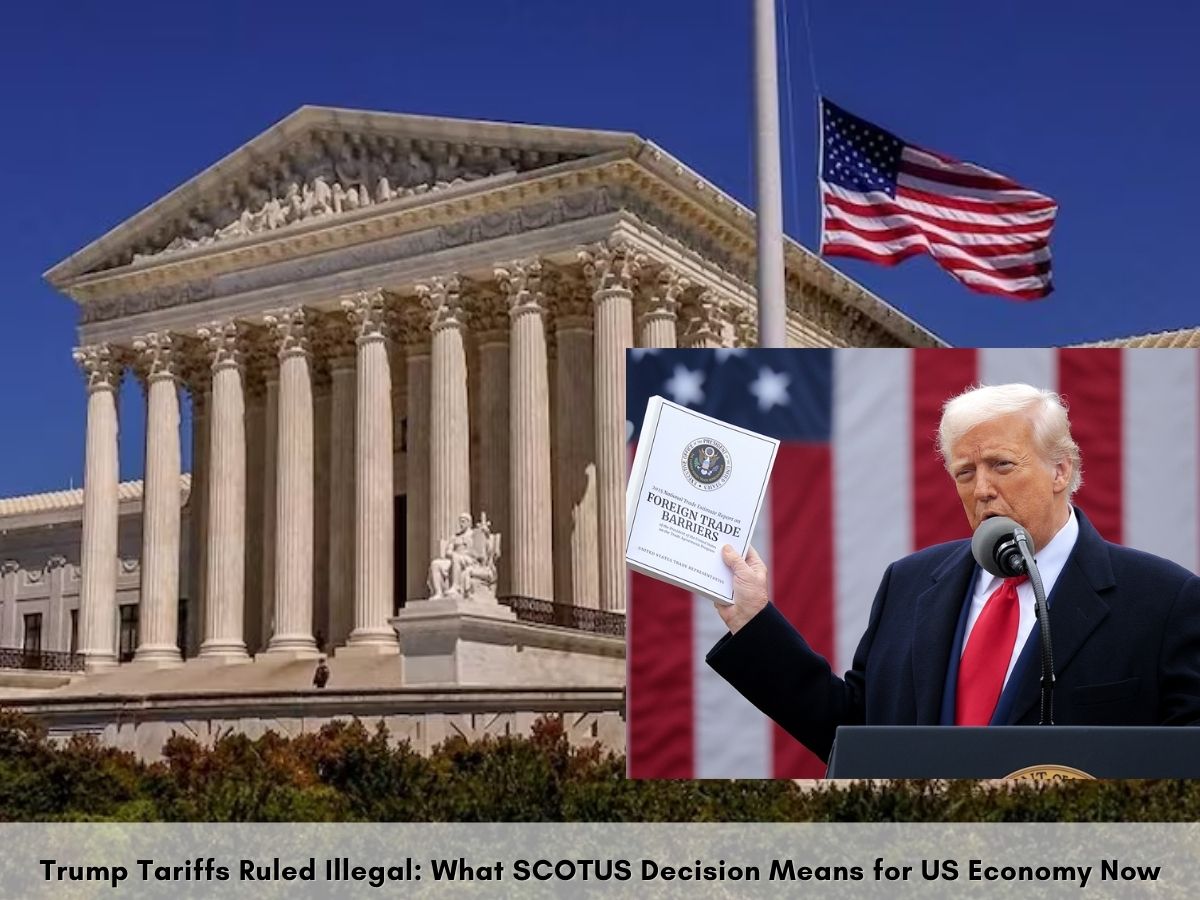
6-3 Ruling Ends Trump's Emergency Tariff Powers Under 1977 Law (Image: File)
The US Supreme Court on Friday struck down President Donald Trump's sweeping tariffs imposed under a 1977 law, delivering a major setback to his trade agenda. Despite protests from corporations and 12 predominantly Democratic-led states, the justices affirmed a lower court's conclusion that Trump's use of the International Emergency Economic Powers Act exceeded his power in a 6-3 decision.
Chief Justice John Roberts authored the majority opinion, joined by conservative Justices Neil Gorsuch and Amy Coney Barrett—both Trump appointees from his first term—plus the three liberal justices. Roberts wrote that the president must "point to clear congressional authorisation" for such tariffs, adding: "He cannot."
The court applied the "major questions" doctrine, which demands explicit congressional approval for executive actions of vast economic significance. This principle has curbed prior executive moves, including some from former President Joe Biden.
Dissent came from conservative Justices Clarence Thomas, Samuel Alito, and Brett Kavanaugh.
The decision split conservatives, with Gorsuch and Barrett siding against Trump's position despite his role in their appointments. Businesses hit by the tariffs, along with 12 states, brought the challenge over his unprecedented IEEPA use.
Trump invoked the law—meant for regulating commerce in national emergencies—to slap import taxes on nearly every US trading partner without Congress's okay. He called the tariffs essential for economic security, warning in November that without them, "the rest of the world would laugh at us because they've used tariffs against us for years and took advantage of us," including by China.
The US Constitution assigns Congress the power to impose taxes and tariffs, not the president. Trump's action pushed presidential bounds in trade, immigration crackdowns, firings, domestic military usage, and international operations, and it was the first time a president had utilized IEEPA for tariffs.
The ruling focused solely on IEEPA-based tariffs. Government data from October to mid-December shows other Trump tariffs under different laws generate about a third of total revenue from his import taxes.
This outcome limits Trump's authority to take unilateral trade actions, hurting global supply chains and partner nations. It strengthens Congress' role in crucial economic decisions. The ruling has implications beyond trade, putting limits on presidential power claims.
A: Justices Clarence Thomas, Samuel Alito, and Brett Kavanaugh dissented.
A: The International Emergency Economic Powers Act (IEEPA) of 1977.
A: Businesses affected by the tariffs and 12 states, mostly Democratic-led.
A: No, only those under IEEPA; others under different laws remain.
Disclaimer: This information is based on inputs from news agency reports. TSG does not independently confirm the information provided by the relevant sources.
