New footage indicates a US Tomahawk missile hit near a girls’ school in Minab, Iran, killing children; Trump’s comments about Iranian Tomahawks are unsubstantiated.
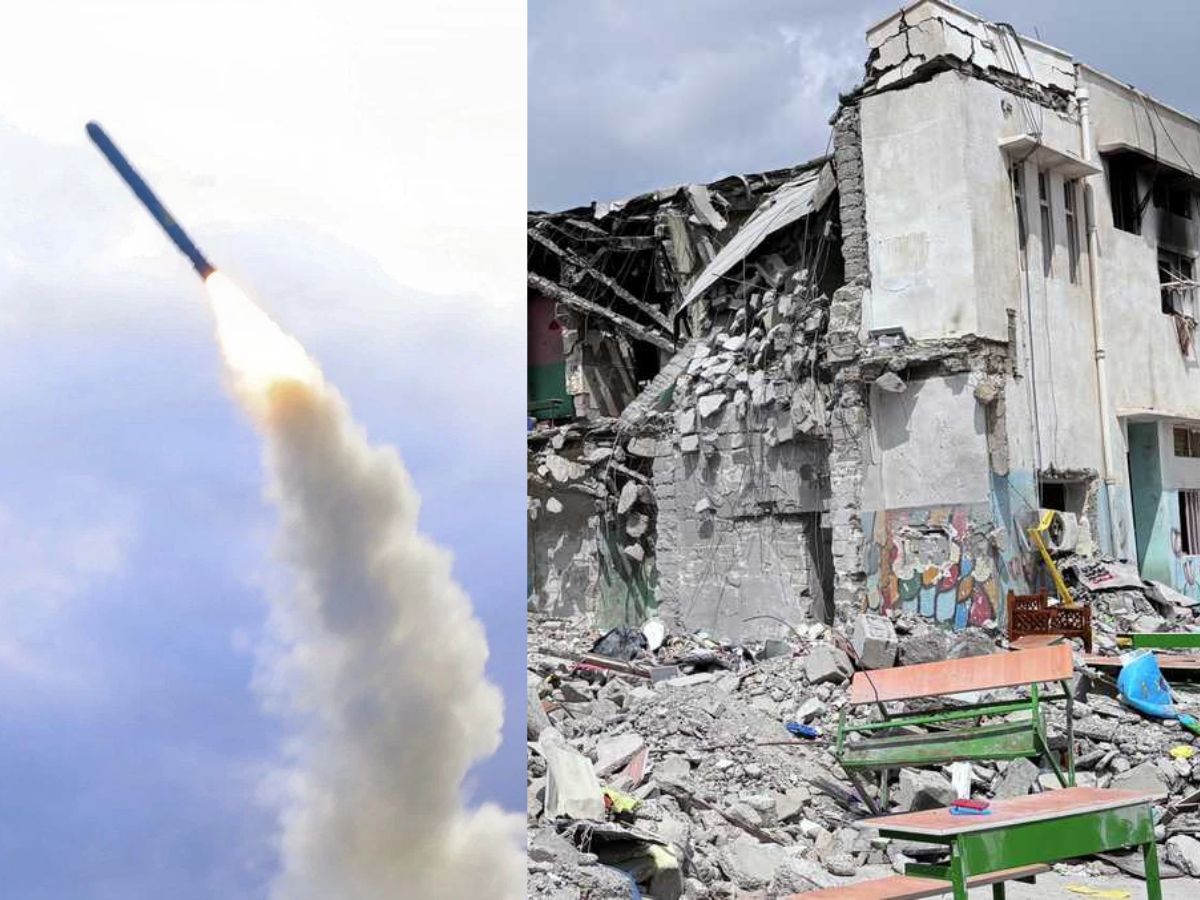
New footage indicates a US Tomahawk missile hit near a girls’ school in Minab [Photo: X]
Newly released and verified video evidence shows a missile hitting an area near a primary school in Minab, Iran, during the first day of the current conflict. The footage suggests a Tomahawk cruise missile may have been involved, raising questions about civilian casualties.
Reports say at least 168 people, mostly children, were killed in the strike. President Donald Trump has publicly questioned who fired the missile, suggesting it could have been Iran or “somebody else.”
Independent analysts are examining the video to determine the weapon type. The incident has sparked international outrage. Experts stress the need for transparent investigations.
Newly released and independently verified footage has strengthened evidence that a US Tomahawk cruise missile struck an area adjacent to a girls’ primary school in Minab, Iran, during the opening day of the ongoing conflict between the United States‑led coalition and Iranian forces. Witnesses and analysts say the impact occurred on February 28, killing scores of civilians, including many children.
🇮🇷🇺🇸 Footage of the Tomahawk missile strike on the primary school for girls in the city of Minab.
— Freed Ninja (@freezymfe) March 9, 2026
This proves it was the US and that the target was intentional, as the missiles goes into diving mode after finding the designated target
168 girls aged 7-12 and teachers were… pic.twitter.com/oQMYugNcal
The footage, geolocated by open‑source investigators, shows a missile consistent with a Tomahawk, a system only known to be used by the US military in the current conflict, hitting a naval facility beside the Shajareh Tayyebeh school. Video frames also show smoke rising from the school before the visible strike on the adjacent compound. This challenges recent statements by US officials about responsibility.
On the morning of February 28, during the first wave of US‑led strikes in the region, a missile hit the Shajareh Tayyebeh elementary school for girls in southern Iran’s Hormozgan province, according to Iranian officials. Local media put the death toll at 165–180 people, most of whom were schoolchildren.
The school was located just meters from an Islamic Revolutionary Guard Corps (IRGC) naval compound that was also hit by missiles. Although the base had been physically separate from the school since 2016, satellite imagery shows the complex was targeted in the same offensive that damaged the school.
Iranian authorities condemned the strike as a “war crime” and held large funeral processions for the victims. International humanitarian groups, including UNESCO, called for full investigations into possible violations of international law.
President Trump rejected US responsibility and said, “Whether it’s Iran or somebody else… a Tomahawk is very generic… Iran… also has some Tomahawks — they wish they had more…” He also claimed Iran’s missiles are “very inaccurate.” Analysts stress that this contradicts video and satellite evidence. US military officials said the incident is under investigation.
Critics argue that Trump’s comments may confuse public understanding of the attack. The President’s statements have been widely debated by journalists and experts. The administration faces pressure to clarify who carried out the strike.
A Tomahawk missile is a long-range, precision-guided cruise missile designed for land strikes from ships or submarines. It can travel over 1,600 kilometres and carries a warhead powerful enough to destroy fortified targets. The missile flies at low altitude, making it hard to detect. It is produced by US defence contractor Raytheon.
Tomahawks have been a core part of US naval warfare for decades. They can operate in all weather conditions. Analysts say their accuracy and range make them one of the most effective deep-strike weapons.
The United States is the main operator of Tomahawk missiles, deploying them on ships and submarines. Allied nations like the United Kingdom, Australia, Japan, and the Netherlands also have access to them. Japan purchased around 400 missiles and has been preparing to deploy them on warships.
These missiles are tightly controlled due to their strategic importance. Only a few countries outside the US operate them. Their use is often limited to high-precision military operations. Analysts note that their global proliferation is low.
Despite President Trump claiming Iran has “some Tomahawks,” there is no public evidence that Tehran operates this missile. Iran’s arsenal mostly includes indigenous and Russian-made missiles, not Tomahawks. Weapons analysts emphasise that Iran lacks the technology and systems to deploy them effectively.
Experts also point out that missiles found in Iran have distinct designs different from Tomahawks. Misattributing the weapon could mislead the public. Independent investigations have not confirmed any Iranian involvement. Trump’s remarks have sparked debate among military experts and journalists.
The Minab school strike has drawn global condemnation. Human rights groups and US lawmakers demand transparent investigations into civilian deaths. International organisations stress the protection of children in conflict zones. Critics argue that if US missiles were involved, accountability measures must follow.
Funeral ceremonies and protests have occurred across Iran. The strike has heightened tensions between Tehran and Washington. Calls for justice and compliance with international law continue to grow. Independent investigators are monitoring the situation closely.
