
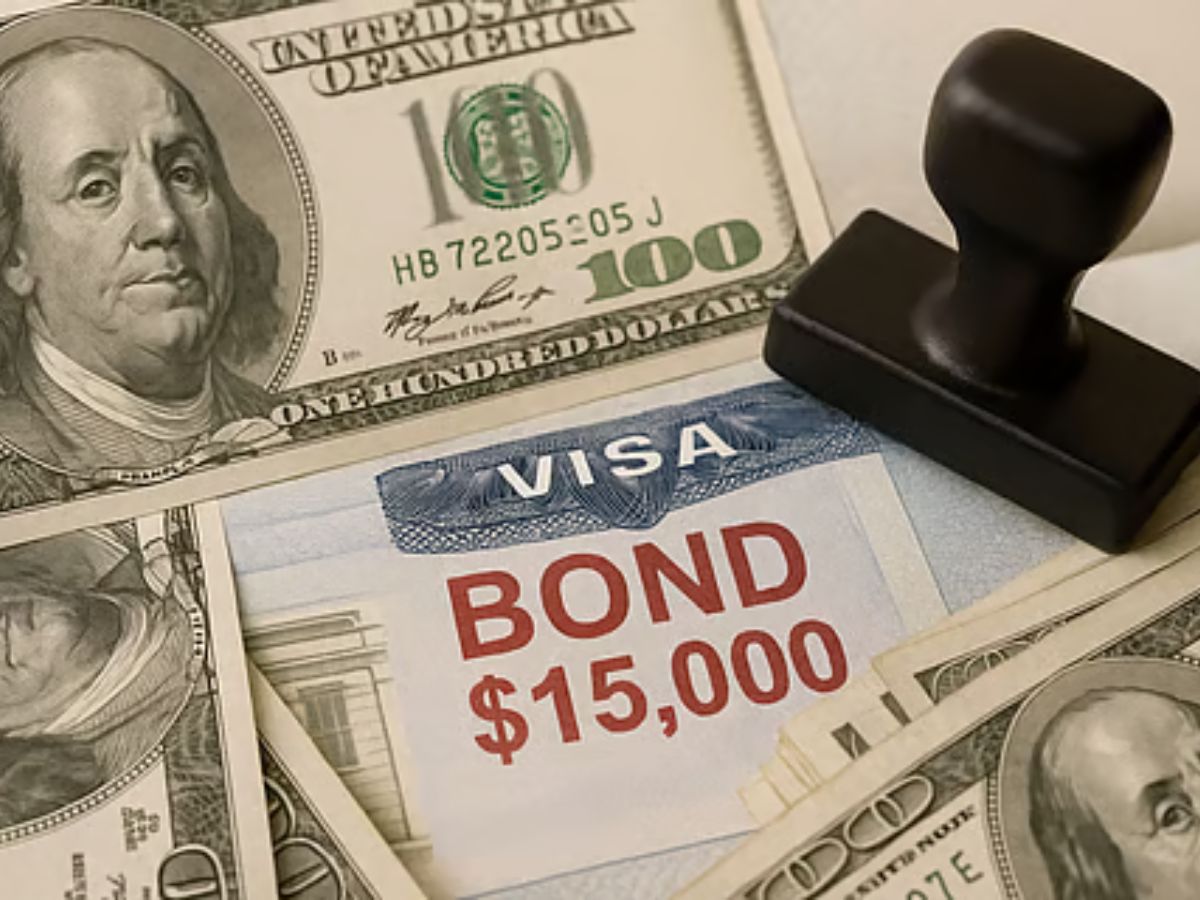
The US government has expanded a controversial visa bond program, which could significantly increase the cost and complexity of travel for citizens of 38 countries. Under the newly expanded policy, passport holders from selected nations may have to post refundable security deposits or ‘bonds’ of up to $15,000 as part of their application for certain US visitor visas.
Officials say the requirement aims to discourage visitors from overstaying their visas, though critics argue it could put travel out of reach for many families, students, and professionals.
What is the US Visa Bond Policy?
The visa bond program was first introduced as a pilot by the US State Department in mid-2025. It requires some foreign nationals applying for B1/B2 tourist or business visas to post a refundable bond ranging from $5,000 to $15,000 before their application is processed. The exact amount is determined at the visa interview.
The deposit is meant to act as a guarantee that the visitor will leave the United States in accordance with the visa terms. Importantly, paying the bond does not ensure visa approval, but applicants may receive a refund if their visa is denied or they comply with all visa conditions during their stay.
US Visa Bond Policy: Which Countries Are Now Affected?
The expansion brings the total number of nations subject to the bond requirement to 38. This includes countries mainly from Africa, Latin America, and South Asia. New additions to the list include:
- Algeria
- Angola
- Antigua and Barbuda
- Bangladesh
- Benin
- Bhutan
- Botswana
- Burundi
- Cabo Verde
- Central African Republic
- Côte d’Ivoire (Ivory Coast)
- Cuba
- Djibouti
- Dominica
- Fiji
- Gabon
- The Gambia
- Guinea
- Guinea-Bissau
- Kyrgyzstan
- Malawi
- Mauritania
- Namibia
- Nepal
- Nigeria
- Sao Tome and Principe
- Senegal
- Tajikistan
- Tanzania
- Togo
- Tonga
- Turkmenistan
- Tuvalu
- Uganda
- Vanuatu
- Venezuela
- Zambia
- Zimbabwe
How does the Bond System Work?
When applying for a B1/B2 visa (tourist or business), applicants from these countries may be asked to:
- Pay a refundable deposit before the visa is processed
- Pay between $5,000 and $15,000, depending on individual assessment
- Use the US Treasury’s Pay.gov platform for bond transactions
If the visa is approved and the visitor complies with all terms, including leaving the US on time, the bond can be refunded. If the visa is denied, applicants may also receive the money back.
US Justification for the Policy
US officials argue that the visa bond requirement helps prevent visa overstays, a common concern in immigration enforcement. They say that the financial guarantee encourages visitors to respect their visa conditions and depart the country as required.
The bond policy is part of a broader tightening of immigration and travel rules, which also includes more stringent in-person interviews, extensive social media history disclosure, and detailed travel background checks.
What Travellers Should Know?
The visa bond rule affects B1/B2 tourist and business visa applicants from 38 countries. Bonds are refundable if the visa is denied or if the holder leaves on time. The policy becomes enforceable on January 21, 2026. It is separate from other travel restrictions like visa bans or fee hikes.
What does This Mean for US Visa Applicants?
The expanded visa bond requirement marks a significant shift in US travel policy under the Trump administration. While officials frame it as a tool to ensure compliance with visa rules, the high deposit amounts and the increased number of affected nations have sparked criticism and concern. For travellers from developing regions, the financial hurdle may redefine access to US tourism and business opportunities in 2026 and beyond.




