US-Israel strikes on Iran spark regional war, oil surge and global alarm as casualties mount and leadership crisis unfolds.
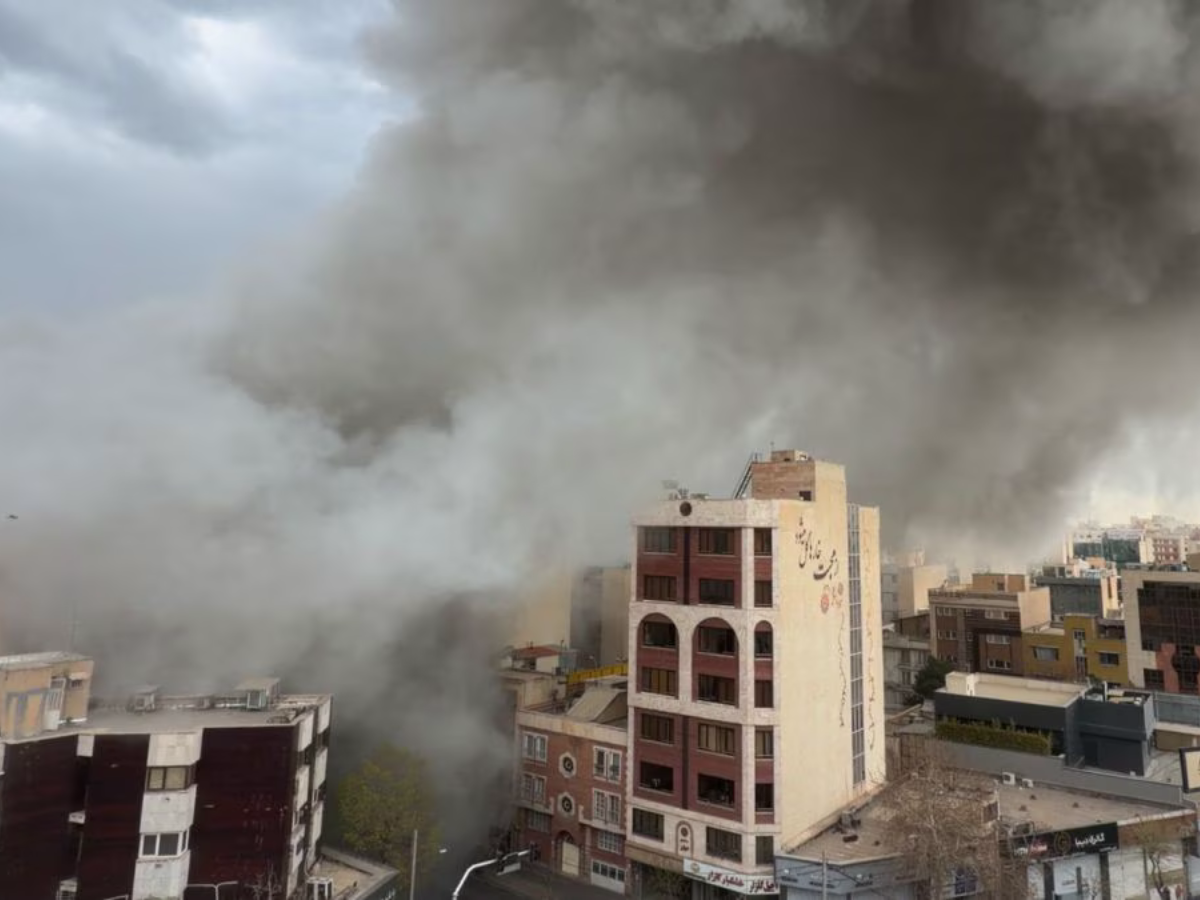
Smoke rises over regional cities as US-Israel-Iran conflict expands across the Middle East (Photo: X)
US-Israel-Iran Conflict: The rapidly escalating conflict between the United States, Israel and Iran has expanded to a localized war that has an international repercussion. Supposed joint US Israeli attacks in the Iran territory are said to have killed the Supreme Leader Ali Khamenei and other influential people. In response, Tehran launched missile and drone attacks throughout Israel and Gulf countries which host the US troops. The conflict spread to other areas such as Lebanon and even further within the 72 hours, bringing about a threat of long term instability.
Loud explosions were heard near a nuclear technology plant and an air force base near the central Iranian city of Isfahan as the Middle East conflict escalated. Iran’s media outlets reported the explosions, although the exact cause of the explosions and the damage they caused remain unknown.
The US embassy in Beirut released an emergency notice that Americans should leave Lebanon at once. This was after Israeli attacks in the southern suburbs of Beirut and Hezbollah counterattack. According to Lebanese officials, at least 31 people died in new attacks, and schools and higher education establishments were closed down in certain areas of Beirut.
Vladimir Putin and Mohammed bin Zayed Al Nahyan demanded an urgent ceasefire as it is a dangerously escalatory situation. Moscow declared the strikes as an aggressive action and the Gulf leaders emphasized that their countries were not launch pads. Diplomatic contacts are alive, but no official discussions are taking place.
Iran claims of hitting energy infrastructure in Qatar and Saudi Arabia with their missiles. Fires had been reported at oil facilities which were often contained. Three US fighter jets crashed in Kuwait when what the United States Central Command termed as an apparent friendly fire. The six crew members were all safely ejected. In the region alone, 18 individuals including four US service members have been reported killed in retaliation attacks.
In the absence of Khamenei, a three-member transitional council is taking charge of the state. It has President Masoud Pezeshkian, the head of the judiciary Gholamhossein Mohseni Ejei, and senior cleric Alireza Arafi. It may take weeks before the succession process and the fact that some of the top military officials have died complicates the process.
US President Donald Trump and Israeli Prime Minister Benjamin Netanyahu claimed that the attacks were designed to target the missile system of Iran and prevent nuclear weapons. Briefings at Pentagon indicated that Tehran was not planning an imminent attack until first attacked, and this brought about a question of preemption and deterrence.
There are thousands trapped by the airspace closures in Iran, Israel, Lebanon, Qatar and the UAE. Large transit centers in Dubai and Doha canceled flights. The travel insurers fear that the disruption may be weeks long in case the missile exchange persists.
Markets responded instantly where Brent crude shot up by approximately 9% to approximately 79 a barrel and US benchmark WTI shot up by approximately 8% to 73. When there was a scramble of supply as in the case of the Gulf energy sites, the European gas prices shot as high as 48%. Approximately one-fifth of world oil trade is being transited via the Strait of Hormuz increasing worries.
1. How long could the conflict last?
US officials suggest operations may continue for several weeks.
2. Has Iran ruled out negotiations?
Tehran says it will not negotiate under attack.
3. Are civilians being evacuated?
Yes, embassies have urged departures and border controls have tightened.
4. Is oil supply at risk?
Yes, disruptions near the Strait of Hormuz threaten global supply chains.
5. Could the conflict spread further?
With Hezbollah involved, regional escalation remains a serious risk.
