
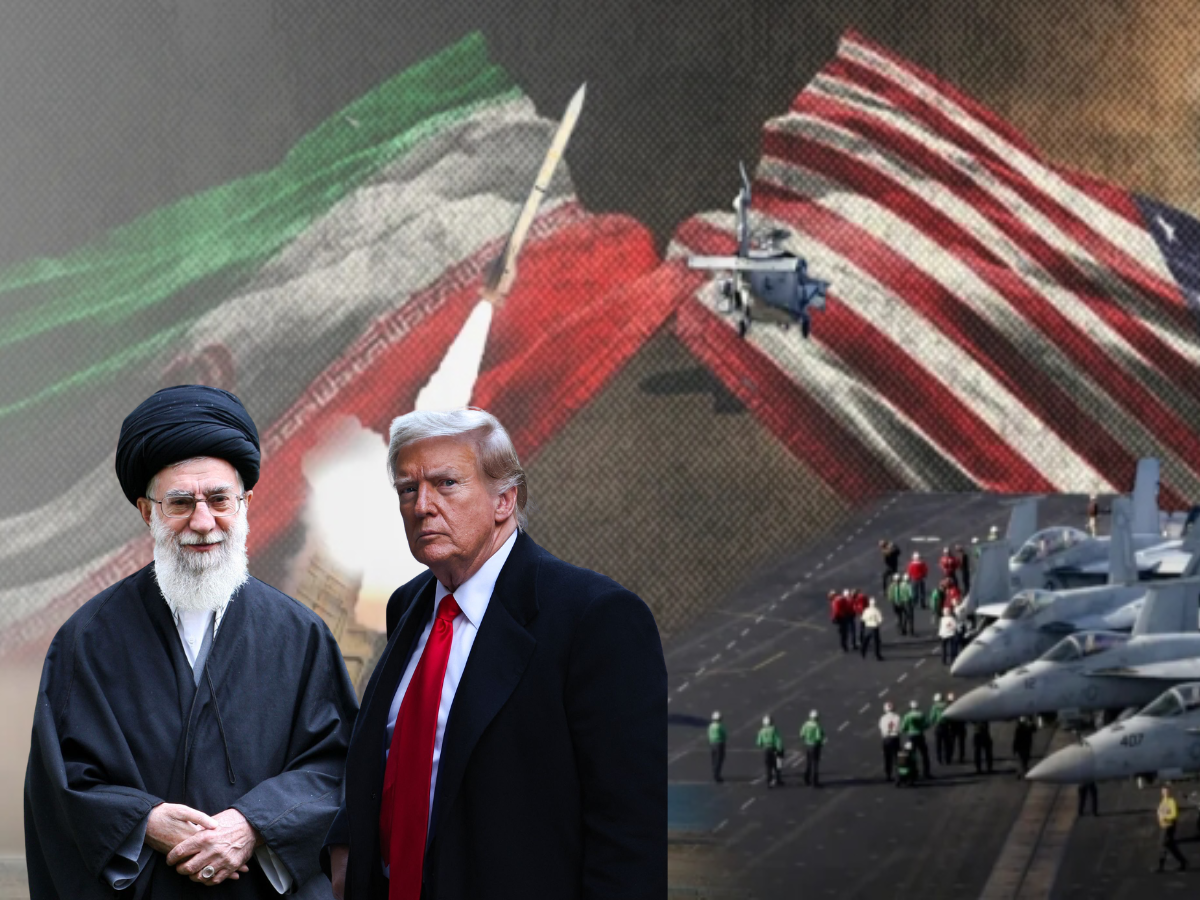
US-Iran Tension: During his State of the Union address on February 25, 2026, President Donald Trump asserted that Iran has missiles that could potentially threaten the U.S. However, experts have a different view on the matter. Iran’s missile program could potentially target US bases in the Middle East but does not have the capability to reach intercontinental targets, as stated by the Institute for National Security Studies.
What’s Behind Trump’s Claim on Iran’s Nuclear Programme?
Trump stated that Tehran is working on missiles that “will soon be reaching the United States.” He pointed to military actions aimed at preventing a nuclear weapons program while Iran, on the other hand, has consistently asserted that it does not seek nuclear weapons but rather peaceful nuclear technology.
Fact Check: Can Iran Really Threaten the United States?
The short and medium range ballistic missiles in Iran’s arsenal have the ability to strike bases in Qatar, Kuwait, Saudi Arabia and the UAE. Currently, there are no operational intercontinental ballistic missiles that have the capability to strike Western Europe or the mainland United States.
How True is the Statement?
Trump’s statement mixes fact with exaggeration:
- Fact: Regional U.S. bases in the Gulf are within Iran’s missile range.
- False or Exaggerated: No verified evidence Iran can hit Europe or the continental U.S.
What a War with Iran Could Look Like
- Iran may choose to attack U.S. allies such as Israel and Gulf countries rather than attacking the United States directly.
- Local proxy forces such as Hezbollah, Iraqi and Syrian militias and the Houthis in Yemen may escalate the conflict.
- Attacks on oil infrastructure or the Strait of Hormuz may impact the global energy market.
- Russia and China may provide diplomatic or economic support to Iran.
- The U.S. would face logistical challenges and a prolonged pursuit without an exit strategy.
What Risks Have History Shown in Major Interventions?
The involvement of the US in Iraq in 2003 and the anti-ISIS mission illustrates how a conflict in the Middle East can be dangerous. Military interventions consume resources, create instabilities in other regions and cause unpredictable political outcomes, even without a full-scale invasion.
FAQ’s: Trump’s Iran Claims
Q1: Does Iran have missiles that can hit the U.S.?
There is no credible evidence of Iranian intercontinental ballistic missiles capable of reaching the continental United States.
Q2: Can Iran threaten U.S. bases in the Middle East?
Iran has bases in the Gulf region including Qatar, Kuwait, Saudi Arabia and the UAE within range.
Q3: Is Iran pursuing nuclear weapons?
Iran claims its nuclear program has peaceful purposes only and does not aim to weaponize.
Q4: Would a U.S.-Iran conflict be regional or global?
The conflict would likely be a regional one, but proxy wars could involve many countries and upset global oil markets.
Q5: What lessons do past U.S. interventions provide?
Historical campaigns suggest that protracted Middle Eastern conflicts drain resources and yield uncertain outcomes.




