Iran’s defence minister Amir Nasirzadeh and IRGC commander Mohammed Pakpour killed in US-Israel strikes, triggering Iranian missile retaliation across the region.
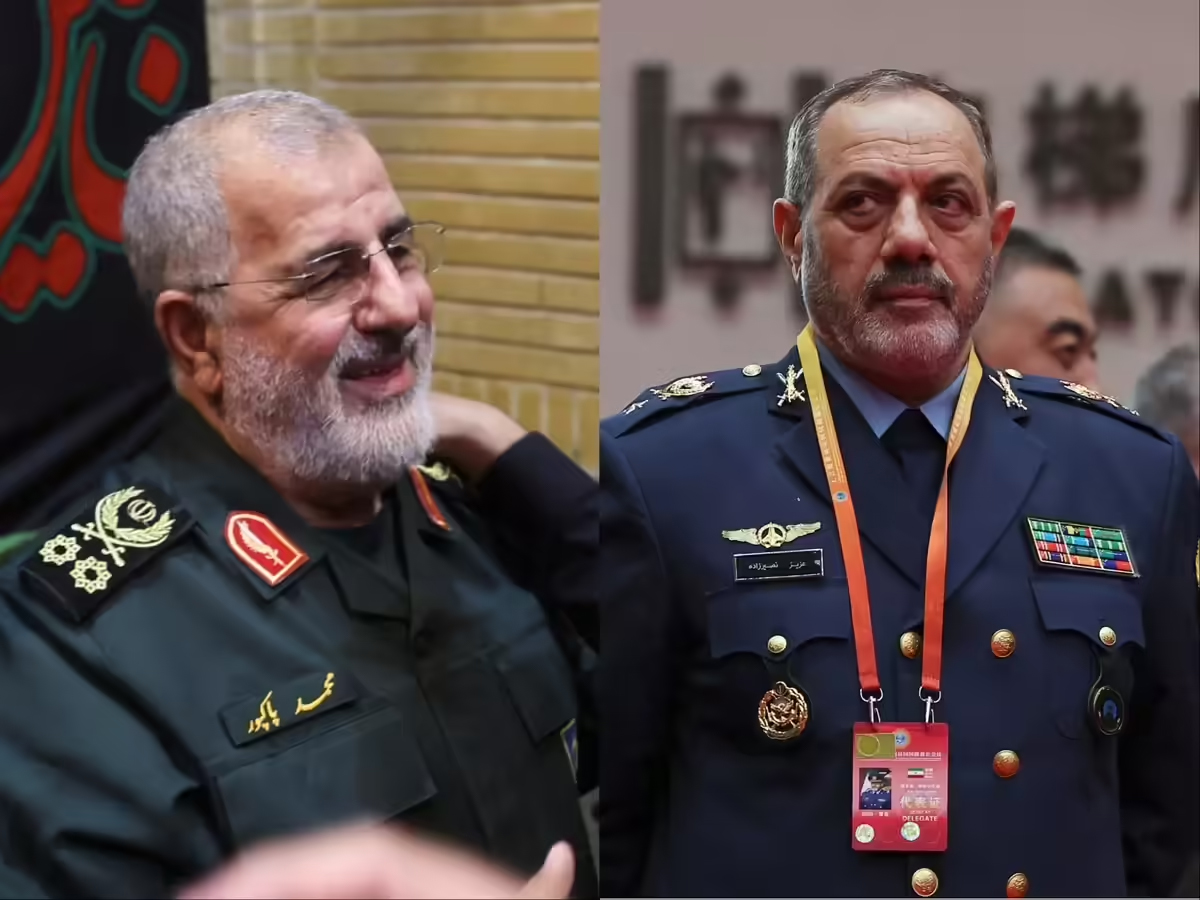
Alongside Nasirzadeh, the strikes killed Mohammed Pakpour, a senior commander of the Islamic Revolutionary Guard Corps. (Photo: Social Media)
Iran’s military leadership suffered a major blow after Defence Minister Amir Nasirzadeh and Revolutionary Guards commander Mohammed Pakpour were killed in joint US-Israel airstrikes, triggering a sharp escalation in an already volatile regional conflict. The strikes, carried out on Saturday, targeted senior figures within Iran’s security establishment and set off a rapid chain of retaliatory attacks across the Middle East.
US and Israeli forces confirmed coordinated military action against Iran, with Tehran responding within hours by launching missiles toward Israel and several Gulf countries hosting American military bases. Explosions were reported across multiple locations, pushing the region closer to a wider confrontation.
Amir Nasirzadeh had served as Iran’s defence minister after rising through the ranks of the armed forces. Before assuming the role, he acted as deputy chief of staff of the Iranian military. Nasirzadeh reportedly began his career as a fighter pilot, later becoming a key figure in Iran’s defence planning and weapons development strategy.
His death marks one of the most significant losses for Iran’s military leadership in recent years.
Alongside Nasirzadeh, the strikes killed Mohammed Pakpour, a senior commander of the Islamic Revolutionary Guard Corps. The IRGC plays a central role in Iran’s military operations, internal security, and regional influence, making Pakpour a high-value target.
Sources close to Iran’s establishment said several other senior Revolutionary Guards commanders and political officials also died in the attacks, though authorities have not released a full casualty list.
The United States and Israel launched the attacks as part of a broader campaign aimed at dismantling Iran’s leadership and military capabilities. US President Donald Trump said the operation sought to end what he described as a security threat to the United States and to prevent Iran from developing a nuclear weapon.
Following the strikes, Iran fired missiles at Israel and at Gulf nations hosting US bases, including the UAE, Bahrain, Saudi Arabia, and Kuwait. Loud explosions were reported across several cities, underlining the scale of the retaliation.
An Israeli official said the strikes also targeted Iran’s Supreme Leader Ayatollah Ali Khamenei and President Masoud Pezeshkian, though the outcome remained unclear. Sources said Khamenei was not in Tehran at the time and had been moved to a secure location outside the capital.
Iranian authorities have not publicly confirmed whether either leader was injured.
Iranian state media reported that an Israeli airstrike hit a school, killing at least 40 people. International agencies said they could not independently verify the claim. The reports added to concerns about civilian casualties as military operations expanded beyond strategic targets.
The conflict followed weeks of mounting tensions, including protests inside Iran and repeated warnings from Washington about possible military intervention.
With senior Iranian commanders dead and retaliatory strikes already underway, analysts warn the conflict could spiral further. Airspace closures, rising oil prices, and emergency alerts across the Gulf region reflect the growing risk of a prolonged confrontation.
As both sides signal readiness for further action, the Middle East remains on edge, with global powers closely watching the next move.
