
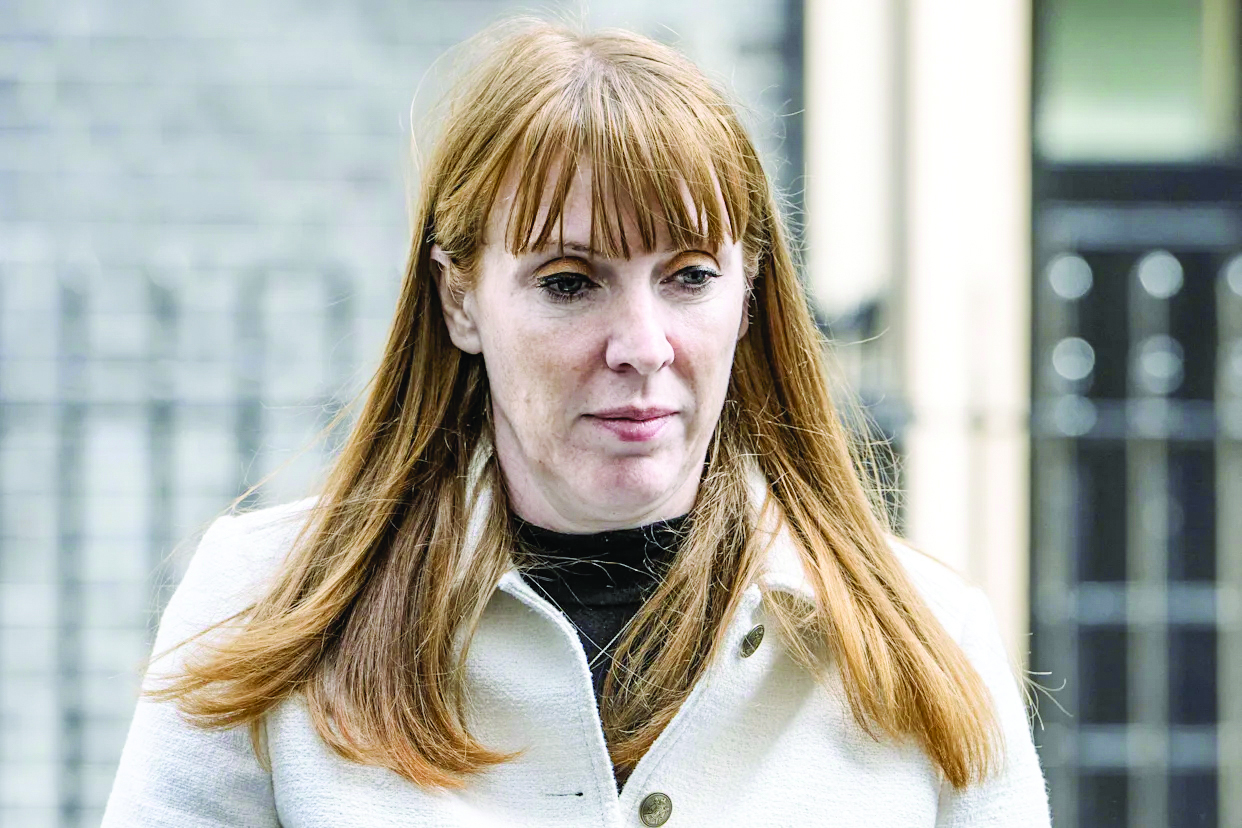
Labour has lost Angela Rayner as Deputy PM, Deputy Leader, and Housing Minister following her resignation.
London: It is all change on the Westminster political scene this past week. Labour has lost Angela Rayner as Deputy Prime Minister, Deputy Leader, and Housing Minister following her resignation, prompted by her failure to pay the correct amount of stamp duty on a property she sold to a Trust established for her disabled son. The stamp duty had been increased by the Labour government in 2024.
In a separate scandal, Rayner and her lawyers are also suspected of inflating the value of her former constituency property to raise enough funds to buy an apartment in the beachside resort of Hove. Ms Rayner has long been a close aide to Keir Starmer, and her departure is a personal blow to the Prime Minister. As Deputy, she was a useful equaliser between the soft left and the Blairites, yet always loyal to the PM’s agenda. Rayner remains unpredictable on the back benches as MP for Ashton-under-Lyne, although it is rumoured she would like to contest a safer seat as ReformUK is anticipated to take Ashton. Meanwhile, questions loom over what penalty HMRC will impose for this carelessness, given Rayner’s career-long advocacy against tax evasion and for higher taxes on the wealthy.
This unexpected development has forced Keir Starmer to reshuffle his cabinet. Only three members of the original top team remain: the Defence Secretary, the Health Secretary, and the Chancellor, now assisted by Torsten Bell. David Lammy moves from the Foreign Office to Deputy PM and Justice Secretary; Lammy was the first Black Briton to earn a Master’s in Law at Harvard, graduating in 1997. Yvette Cooper steps into Lammy’s previous role at the Foreign Office, though observers expect indecisiveness. The Home Office was cleansed of inefficiencies before Shabana Mahmood moved in to tackle the unprecedented number of illegal immigrants housed in comfortable hotels at public expense. Mahmood’s track record on prison policy impressed the PM. During the 2024 general election, she described herself as a “daughter of Kashmir” and advocates visa sanctions for countries refusing to repatriate illegal immigrants.
Pat McFadden takes charge of a new super-ministry combining Work and Pensions with the skills brief from the Department of Education. McFadden, the eminence-grise of many Labour leaders, is expected to exert intellectual influence across ministries. There are many other casualties and non-household-name appointments, with one notable emergence being Torsten Bell, appointed Parliamentary Secretary in the Treasury and Under Secretary in the Department for Work and Pensions in January. Bell, the former head of the Resolution Foundation, has a reputation for extreme tax ideas. The Chancellor, looking for £40 billion, has given him responsibility for drafting the October Budget. Bell’s twin brother, Olaf, is Director of the No.10 Policy Unit, suggesting twin influence across policy decisions.
The role of Deputy Leader of the Labour Party has two qualified contestants, with the winner to be announced on 25 October. This election will be a clear indicator of support for, and direction of, the government.
Starmer’s focus is to accelerate economic growth and pursue his vision of a decade of national renewal, aimed at coalescing groups of voters, teenagers, and ethnic minorities for a consecutive term. He is demanding a team effort across departments to deliver new priorities: getting young people into work, increasing social mobility, and fixing public services. However, the PM’s and Labour’s popularity is on a downward trajectory, unlikely to be helped by the withdrawal of British Ambassador in Washington Peter Mandelson, who was close to Jeffrey Epstein. This sleaze and hypocrisy, emerging just a week before President Trump’s UK State Visit, is politically damaging for Starmer, who campaigned on honesty and integrity.
Meanwhile, the Green Party is competing in the diversity stakes. Former hypnotist and eco-populist Zak Polanski has won the leadership and believes Starmer is terrified of The Green’s ascendency and its power to hold Labour to account. Polanski is already facing calls to replace his deputy, Mohin Ali, who in October 2023 stated that condemnation of Hamas was “white supremacy.” Polanski believes his party is ready to challenge ReformUK, asserting that “migrants are the backbone of this country.”
ReformUK held its first conference in Birmingham, with 5,000 rapt supporters in attendance. ReformUK is the party most likely to oust Labour, though their policies currently remain aspirational; Zia Yusuf, their new Head of Policy, is expected to add substance. ReformUK has received scant press scrutiny, with coverage largely limited to press releases and soundbites: “Ban the burqa,” “Reject a union with Boris,” “Build camps for illegal migrants,” “End Net Zero.” The right-wing media appear unwilling to undermine ReformUK, avoiding coverage that might empower Kemi Badenoch, while the left wing fears early scrutiny might give ReformUK an advantage.
ReformUK has stated it will appoint domain experts with “galactic level talent” as peers and ministers post-election, citing the candidate selection process’s failure to attract high-calibre candidates. ReformUK should encourage experienced business professionals to stand for election, particularly in winnable seats across Surrey, Sussex, Essex, Kent, left-behind coastal towns promised levelling up by Boris in 2019, the Red Wall, and Wales.
ReformUK remains overdue for press scrutiny. While Ben Habib of Restore Britain has attempted coverage, he has yet to gain traction.
The British government has endured a decade of instability. Farage and his allies may take a leaf from Donald Trump’s playbook, lining up a future administration in preparation for victory. Nigel Farage concluded the conference by warning that Britain should be prepared for a general election in 2027.
Former Conservative heavyweights Suella Braverman and David Frost shared a platform with ReformUK’s Richard Tice at the Prosperity Institute, discussing exiting the ECHR. Observers are questioning whether this signals a common policy direction, how it aligns with Kemi Badenoch, and whether Tice’s anti-Tory base will approve of collaborating with two Tories. Braverman had been considered too toxic for ReformUK only two months ago. The coming scrutiny will allow the public to decide.




