
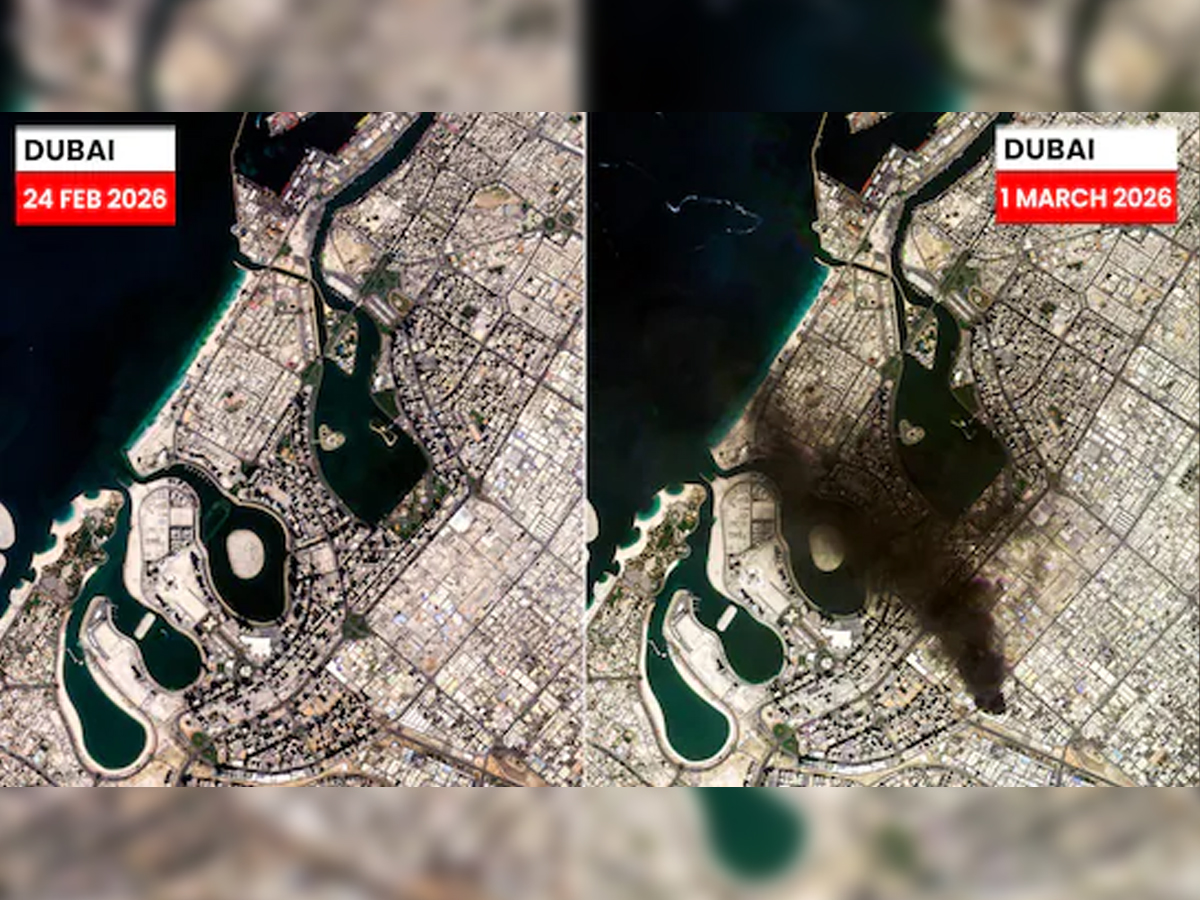
Fresh satellite images have revealed a striking shift in Dubai’s landscape, showing dark smoke rising from parts of the city just days after the emirate appeared calm and untouched by regional conflict. The images highlight how rapidly tensions in the Middle East have spilled into areas long seen as safe and stable.
Damage in Dubai from Iran Today: Satellite Images Show Dubai Before and After Attack
Photographs taken in late February showed Dubai’s highways flowing smoothly beneath clear skies, with its glass towers and artificial islands standing out along the coast. By early March, however, new satellite imagery captured thick black smoke drifting above several areas of the city, particularly near coastal zones linked to ports, logistics hubs, and transport routes.

The contrast between the two sets of images has drawn global attention, underlining how quickly events escalated following Iran’s latest military response in the region.
Iran Launches Retaliatory Strikes Across the Gulf
The smoke appeared after Iran launched hundreds of drones and missiles across the Gulf, targeting Israel and Gulf states hosting US forces. Tehran described the attack as retaliation for United States and Israeli strikes on Iran that killed Supreme Leader Ayatollah Ali Khamenei and other senior officials.
Air defence systems intercepted most of the incoming projectiles, but falling debris triggered fires and caused limited damage in parts of Dubai, according to regional reporting.
Damage in Dubai from Iran Today: Which Areas in Dubai Were Affected?
Satellite images and eyewitness accounts indicate that the damage remained localised rather than widespread. Smoke plumes rose near high-profile locations, including areas close to Burj Al Arab and the luxury waterfront development of Palm Jumeirah.
Residents living in nearby neighbourhoods described waking to loud explosions as interceptor missiles streaked across the night sky. Some said they later watched smoke rise from their balconies, a rare and unsettling sight in a city known for projecting calm and order.
Dubai Damage: Residents React as Normal Life Slows
For decades, expatriates have viewed Dubai as a refuge from instability elsewhere in the Middle East. Around 90% of the UAE’s population consists of foreign residents drawn by low taxes, business opportunities, and political stability. The latest events have shaken that sense of distance from regional turmoil.
By Sunday, many residents described a noticeably quieter city. Traffic thinned in some areas, several small businesses stayed shut, and social media users reported long supermarket queues and instances of panic buying.
Official Warnings and Remote Work Advisory
Dubai’s media office warned that old footage from unrelated fire incidents was circulating online and said authorities would take legal action against those spreading misleading content. Some social media influencers appeared to remove earlier posts following the warning.
The UAE Ministry of Human Resources advised private-sector companies to allow employees to work remotely until Tuesday, signalling official caution as tensions continued to rise.
Damage in Dubai from Iran: Wider Middle East Conflict Intensifies
The broader escalation began with a surprise US-Israeli bombardment of Iran. Since then, Tehran has launched retaliatory strikes toward Israel and Gulf Arab states hosting US forces, vowing revenge. Israel has pledged what it called “non-stop” strikes against Iranian leadership and military targets.
The United States military confirmed that three American service members were killed and five seriously wounded. Iranian authorities said more than 200 people have died since the fighting began, including civilians, as the conflict continues to widen across the region.




