
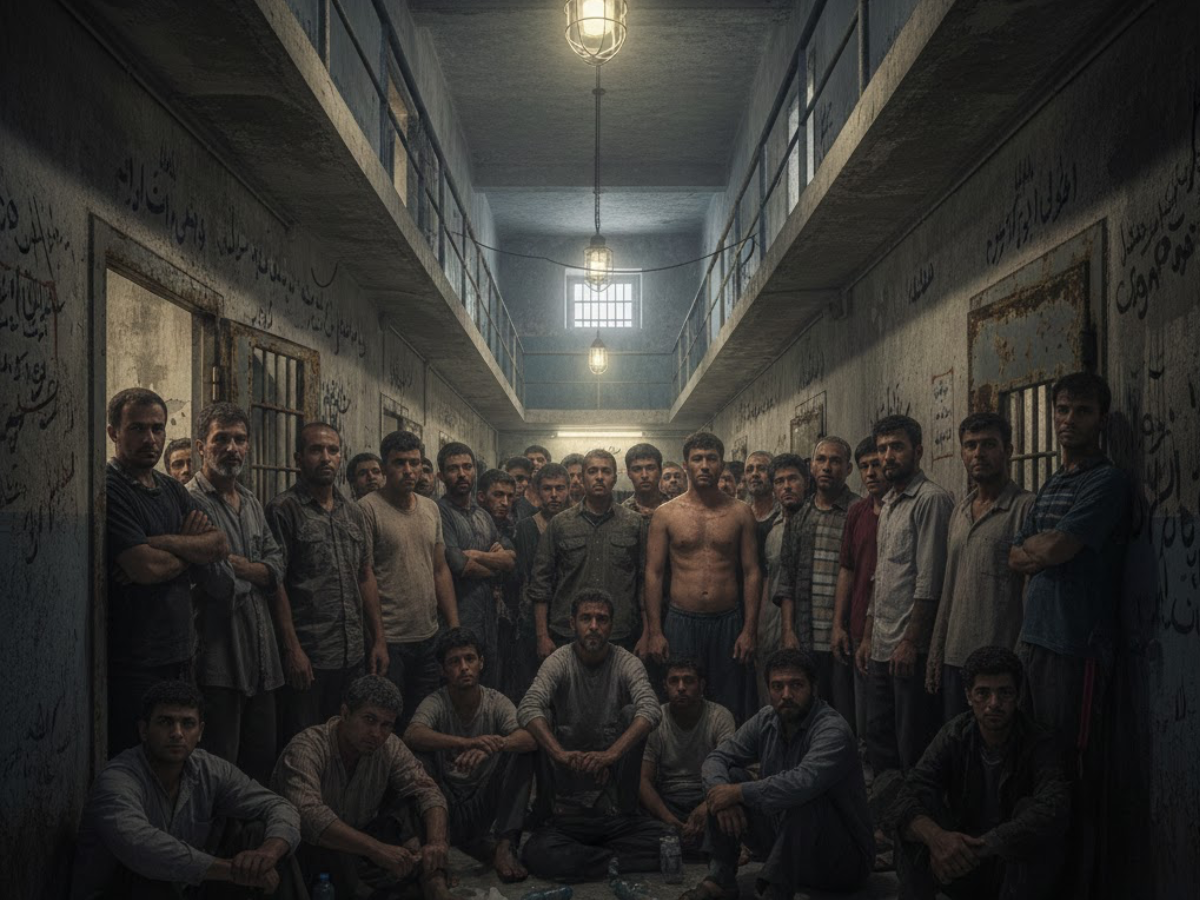
Inside Iran’s Prison: When citizens demonstrate in the street, chanting for change, the focus is on the conflict with the police, the conflict with the government through their rhetoric. The unseen side of demonstrations is the countless number of men and women who never return to their homes. In Iran, recent protests have resulted in large-scale arrests that draw the attention of the international community. Reports from various organizations suggest a somber state of events that occur after citizens are rounded up.
Ahmad Batebi Speaks Out on Iran’s Crackdown at the UN
Ahmad Batebi is an Iranian human rights advocate, reported before the United Nations’ Security Council, “You see, their regime has not managed to silence the anger of the Iranian people through violence,” Batebi told the U.N. security council. He shared his personal experience of having been arrested as a student, condemned to death and held in solitary confinement, as well as having undergone mock execution and torture.
How Many Have Been Detained
An estimation by independent groups indicates that as many as 30,000 arrests have been made throughout the country as protesters demonstrate against the government. The majority of the arrested protesters lack legal status. As much as 40% of those arrested are under the age of 20, which establishes the magnitude of the repression.
How Do Blackouts Conceal Torture & Repression
Activist groups also state that Iran has maintained communication lockdowns, blocking any access to the internet, telephones, and messaging systems to prevent reporting of any kind. Physical and psychological torture, such as beating and solitary confinement, has also been applied to the protesters.
Prison Conditions & Abuse in Detaintion
In the cells, the number of prisoners is grossly exceeded. There is a lack of sanitation facilities and medical treatment. The prisoners are under constant observation. There are accusations of violence inflicted on the prisoners, the imposition of solitary confinement as a punishment, and the use of forced confessions. The prisoners are allegedly tortured to extract confessions to be relayed by the state-controlled media.
Are Detainees Protected & Safe Behind Bars
In most of these inmates, visits from relatives or legal representation never occur. Trials, when conducted, are usually short and held behind closed doors. According to human rights agencies, deaths in detention also occur due to lack of medical treatment, neglect, and violence, as protesters face danger behind bars.
How Do Prisoners Cope with Overcrowding
Arrested protesters are typically moved into prisons which are overburdened with inmates. Prisons designed for a much smaller number of inmates are filled with dozens of protesters, and basic services are hard to come by. Former inmates of such detention centers recall nightmarish sleeping sections with a shortage of clean water and sanitation facilities. There are reported shortages of medical care to inmates, which puts the sick inmates at risk of further illness when treatment is withheld or postponed.
How are Protesters Treated in Custody
Several human rights groups have reported the use of physical and psychological torture in detention. The reported torture methods include beatings, prolonged solitary confinement, threats of harm to families, and forced confessions. There have been different reported torture methods in past repression and although the exact number of instances is not available, the use of torture has been a regular complaint in the reporting on the prison system in Iran.
What Legal Protections Exist for Protesters
Many protesters are detained for long periods without access to lawyers or any family contact. When there are trials, they are often reported to be very brief and closed to any public scrutiny; forced confessions, sometimes broadcast on state media, have been used as evidence.
What Psychological Pressures Do Prisoners Face
The pain of imprisonment is much more than torture. Counseling for long periods, being deprived of the company of loved ones, and the possibility of being punished severely instill fear and powerlessness in the hearts of the prisoners. Mental anguish can be aggravated if the prisoners are coerced into public confession or into renouncing their deeds.
How Dangerous are Iran’s Prisons for Protesters
There are reports of deaths in custody, although the total number is difficult to determine. Human rights observers have noted cases of prison deaths resulting from untreated illnesses, abuse, or poor prison conditions. During previous waves of protests, external sources have reported prisoners’ deaths because of torture or neglect while in prison, the risks they face in prison made apparent.




