
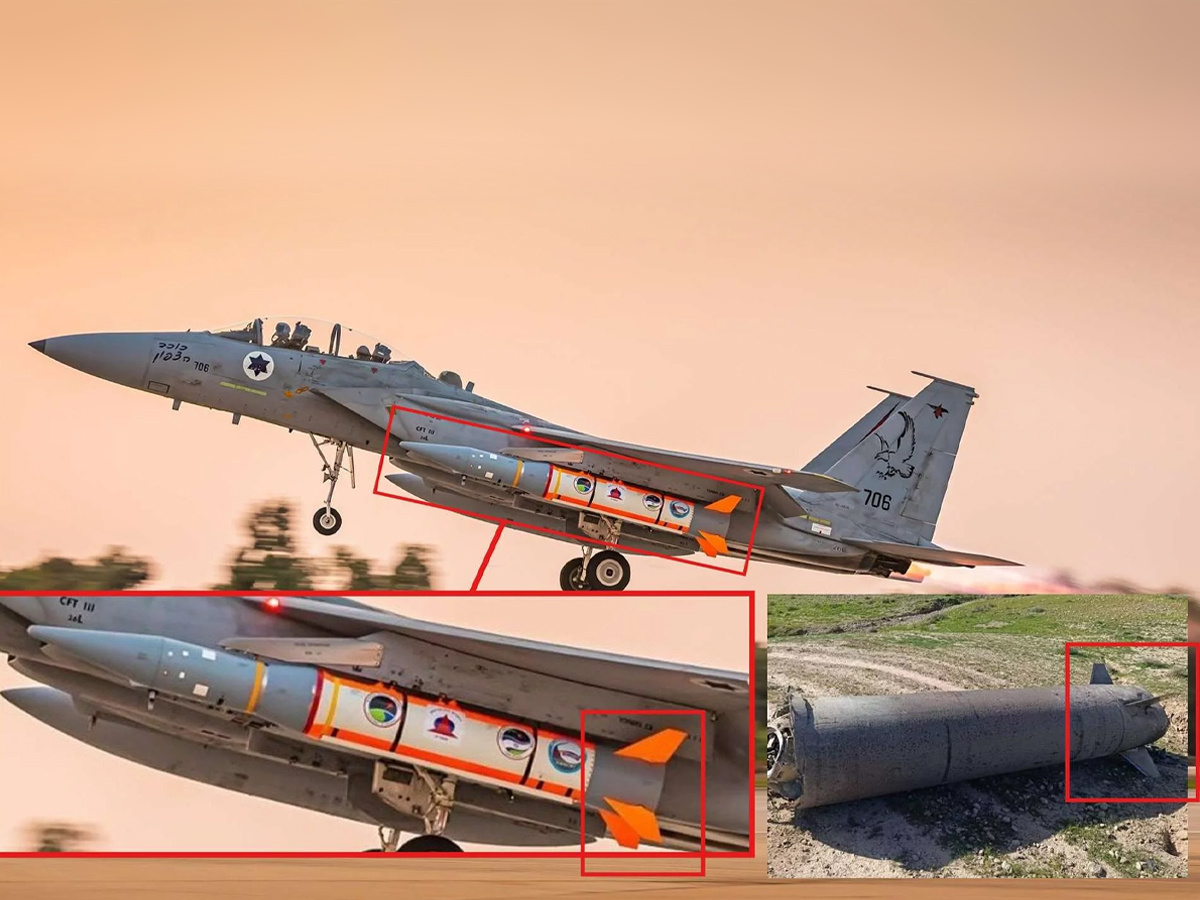
The killing of Iran’s Supreme Leader Ayatollah Ali Khamenei in a powerful missile strike has intensified tensions across the Middle East. Reports say the attack was carried out using the Blue Sparrow missile, a sophisticated air-launched weapon capable of travelling to extremely high altitudes before descending rapidly toward its target.
The strike reportedly took place during a coordinated Israeli military operation targeting senior Iranian leadership inside Tehran. The missile hit Khamenei’s heavily guarded compound on Pasteur Street, where several officials were reportedly gathered for a meeting.
The use of the Blue Sparrow missile has drawn global attention because of its unusual flight path, high speed, and ability to strike fortified locations with very little warning.
What is the Blue Sparrow Missile? That Killed Ayatollah Ali Khamenei
The Blue Sparrow missile is part of Israel’s Sparrow family of missile systems. The missile family also includes the Black Sparrow and Silver Sparrow, which were originally designed for missile defence testing.
Israel initially developed these missiles to simulate ballistic threats such as Soviet-era Scud missiles. Over time, the Blue Sparrow evolved into a powerful operational weapon capable of striking distant targets with high precision.
The missile is approximately 6.5 metres long and weighs nearly 1.9 tonnes. It has an estimated range of about 2,000 kilometres (around 1,240 miles), allowing it to hit targets deep inside enemy territory.
How does the Blue Sparrow missile work?
The Blue Sparrow missile follows a quasi-ballistic trajectory, which means it does not fly in a straight path toward its target.
After launch from a fighter jet, a booster rocket propels the missile upward to extremely high altitudes. In some cases, it climbs close to the edge of space before beginning its descent.
Once the booster separates, the missile re-enters the atmosphere at very high speed and dives steeply toward the target. This sudden downward trajectory makes interception extremely difficult for air defence systems.
Because the missile approaches its target from such a steep angle, it reduces the time defenders have to detect and respond to the threat.
Operation Epic Fury and the Tehran strike
The attack that killed Ayatollah Ali Khamenei reportedly formed part of a larger Israeli campaign known as Operation Epic Fury.
According to reports, Israeli fighter aircraft took off early in the morning and reached their launch positions several hours later. Around 9:40 am, multiple precision-guided munitions, including Blue Sparrow missiles, were launched toward the compound where the Iranian leadership had gathered.
Videos circulating on social media showed thick smoke rising from multiple locations across Tehran, including the area around the supreme leader’s residence.
Satellite imagery later suggested that several buildings inside the compound had suffered major structural damage following the strike.
An intelligence operation behind the attack
Reports indicate that the strike was the result of a long-term intelligence operation involving Israel’s spy agency Mossad and the cyber-intelligence unit Unit 8200.
Israeli intelligence agencies reportedly spent years tracking activity around the compound and monitoring communication networks across Tehran. Analysts developed what officials described as a detailed “pattern of life” for the Iranian leadership.
Israeli planners reportedly waited for a rare moment when Khamenei and several senior military commanders were gathered at the same location.
Shortly before the strike, cyber units allegedly disrupted mobile communication networks around the compound to prevent warnings from reaching security personnel.
When the missiles struck the compound, several senior figures from the Islamic Revolutionary Guard Corps and other military leadership were reportedly present during the meeting. The attack has since become one of the most significant developments in the ongoing conflict in the region.




