Turkey is in advanced talks to join a Saudi-Pakistan mutual defence pact resembling a NATO-style alliance, raising strategic concerns for India and reshaping regional power dynamics.
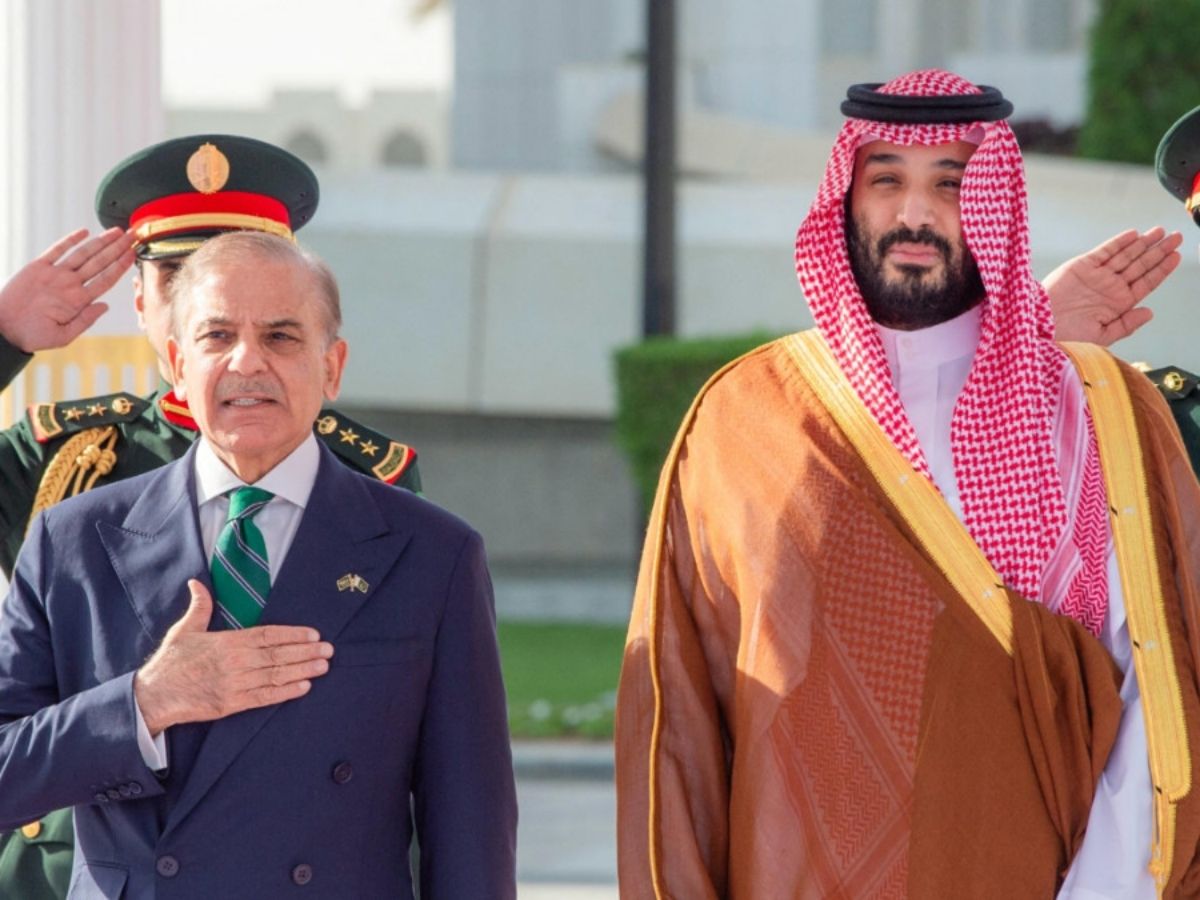
Turkey is in advanced talks to join a Saudi-Pakistan mutual defence pact [Photo: AFP]
Turkey is reportedly in advanced talks to join a mutual defence agreement between Saudi Arabia and Pakistan, a move that could reshape security equations across South Asia and West Asia.
The proposed expansion of the pact has sparked fresh geopolitical debate, with analysts describing it as a potential 'Islamic NATO' due to its collective defence nature. For India, the development is being closely watched, as it could alter regional deterrence dynamics involving Pakistan and Turkey.
The term “Islamic NATO” is not an official name but a description used by analysts to explain a proposed defence framework that mirrors NATO’s collective security principle. Under this idea, an attack on one member would be treated as an attack on all, similar to NATO’s Article 5.
The foundation of this concept lies in the Strategic Mutual Defence Agreement signed between Saudi Arabia and Pakistan in 2025. The pact reportedly includes a collective defence clause and aims to enhance military cooperation, deterrence, and rapid response capabilities among partners.
If expanded, the bloc would combine Saudi Arabia’s financial strength, Pakistan’s nuclear and missile capabilities, and Turkey’s conventional military power and defence industry, forming a powerful regional security alignment.
Observers have dubbed the emerging alignment an “Islamic NATO” because it mirrors the collective defence concept of the original NATO while involving predominantly Muslim nations with complementary strengths.
Unlike NATO, the bloc is rooted in shared geopolitical interests across the Middle East, South Asia and Africa, rather than in Western security guarantees. The phrase captures the idea of a structured mutual defence framework, although formal organisation details are not public, and governments involved have not confirmed a full bloc name.
Turkey is now in talks to formally join the Saudi-Pakistan defence pact, turning a bilateral agreement into a trilateral security arrangement. Sources say that negotiations have progressed significantly and a deal is increasingly likely.
Turkey’s inclusion would add major weight to the alliance. Ankara fields NATO’s second-largest military after the United States and has extensive battlefield experience, advanced drone technology, and a growing domestic arms industry. Its entry would elevate the pact from a regional understanding to a bloc with wider strategic reach.
For Turkey, the move signals a shift toward diversified security partnerships at a time when global alliances are in flux and regional powers are reassessing long-term defence guarantees.
In September 2025, Saudi Arabia and Pakistan signed the Strategic Mutual Defence Agreement (SMDA), a pact in which both nations agreed that an attack on one would be treated as an attack on both, a clause reminiscent of NATO’s Article 5. The deal formalised longstanding military cooperation and aimed to strengthen deterrence amid rising regional tensions.
Saudi officials described the pact as a joint deterrent shield, enhancing security cooperation and signalling Riyadh’s intent to diversify its defence relationships beyond Western guarantees.
Analysts say Turkey’s interest in joining reflects a broader reassessment of alliances as the United States appears to prioritise its own regional interests and those of its partners. Ankara’s move could be seen as hedging against uncertainties in NATO and exercising more regional autonomy.
Saudi Arabia, long reliant on US security guarantees, may see value in a defence relationship with Islamabad and Ankara as a diversified security network. Pakistan gains formal backing from a wealthy Gulf state and the potential reinforcement of shared defence commitments.
India has taken note of the potential trilateral pact as more than a diplomatic experiment. India’s strategic concerns stem from Pakistan’s role in the pact and historical tensions between India and Islamabad.
A formalised alliance including a NATO member like Turkey could complicate India’s deterrence dynamics, particularly given Turkey’s past political support for Pakistan on issues such as Kashmir.
India has also been strengthening ties with Western and regional partners, including Israel, Greece, Cyprus and the United States, partly to balance expanding security networks that could influence its strategic environment.
If formalised, a Saudi-Pakistan-Turkey defence axis could influence the security landscape across multiple theatres. It may affect power balances in West Asia, the Eastern Mediterranean, the Indian Ocean, and South Asia. Some analysts suggest it could push other states to reassess their own alliances and partnerships in response.
The pact could also encourage deeper military cooperation among Muslim-majority states outside traditional Western frameworks, especially if regional uncertainties persist.
Despite momentum, several uncertainties remain. The exact terms of Turkey’s potential entry are not yet public, and the defence ministries of all three countries have remained tight-lipped on specifics. Questions about command structures, nuclear obligations, and interoperability have yet to be addressed.
Furthermore, Turkey’s continued membership in NATO and its parallel pursuit of regional security frameworks raise complex questions about how such a bloc would interact with existing alliances.
Turkey’s possible inclusion in the Saudi-Pakistan defence pact marks a significant evolution in regional security configurations. If realised, the emerging alliance could mirror aspects of NATO’s collective defence model while reflecting a distinct geopolitical logic shaped by shared interests and rising multipolarity.
For India, the development underscores a changing strategic environment that demands careful diplomatic and defence planning.
