F-14 Tomcat Fighter Jet: Iran remains the only nation still flying the F-14 Tomcat, the iconic fighter made famous in Top Gun, using reverse-engineered parts and surviving decades after US retirement.
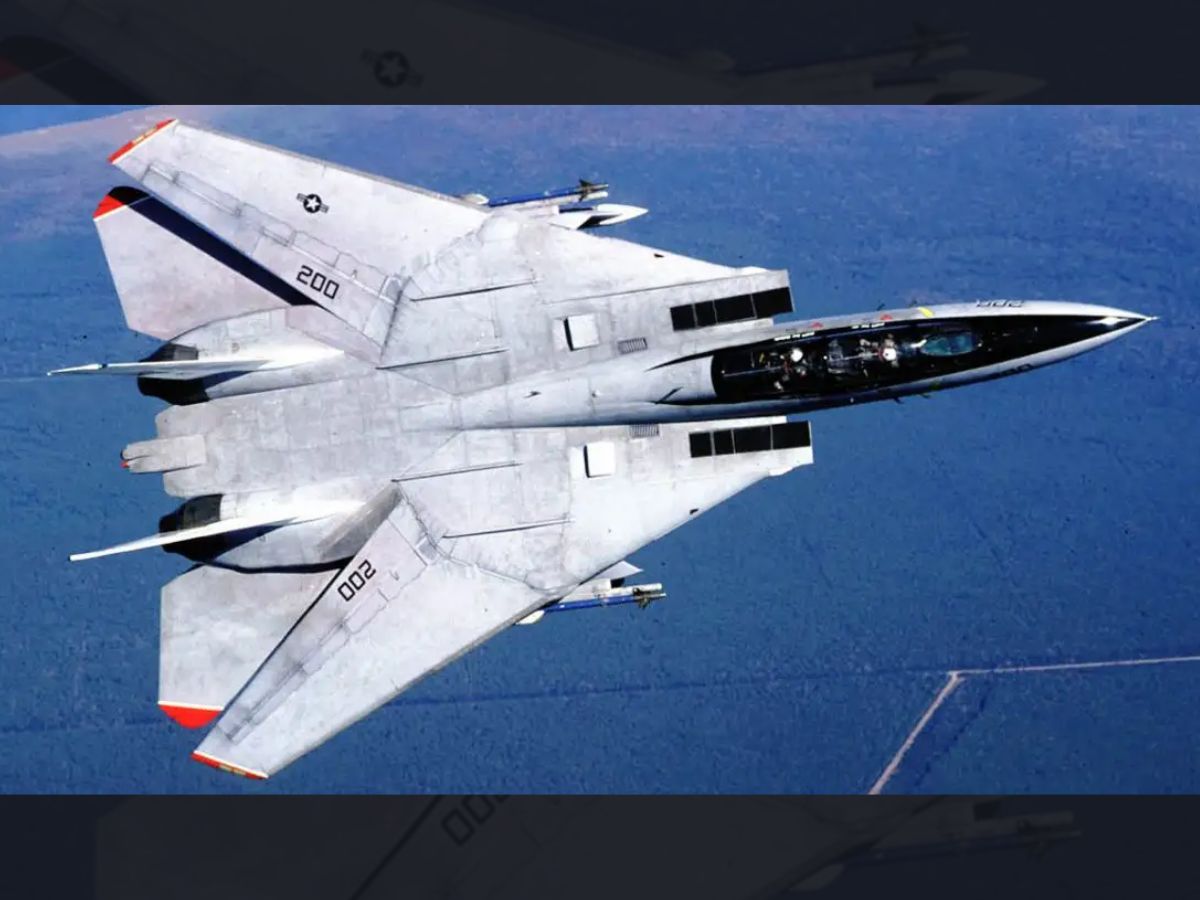
F14 Tomcat Fighter Jet [Photo: X]
The F-14 Tomcat is one of the most famous fighter jets ever built. It became a global icon after starring in the 1986 film Top Gun. While the United States retired its fleet decades ago, Iran continues to fly these ageing fighters even today.
Tehran keeps its F-14s operational through clever maintenance, parts cannibalisation, and local modifications, a rare story in military aviation.
The F-14 Tomcat is a powerful American fighter jet developed for the US Navy in the 1970s. It is a twin-engine, two-seat, supersonic aircraft with variable-sweep wings, allowing it to fly fast and turn sharply in combat. It was built to defend aircraft carriers and fleets from enemy aircraft and missiles using long-range radar and advanced weapon systems.
The F-14 became a cultural icon after starring in the 1986 film Top Gun, where it was shown performing dramatic carrier takeoffs and dogfights that captured the imagination of aviation fans worldwide.
The Tomcat was designed with powerful engines and a radar system that could track many targets at once. Its radar could spot enemy aircraft from far away and guide long-range missiles, like the AIM-54 Phoenix, which only the F-14 could carry. This made the jet a formidable air superiority fighter and fleet defender during the Cold War era.
Its variable-geometry wings helped it adjust for speed and manoeuvrability, extending for takeoff and landing, and sweeping back for high-speed flight. This made it one of the most versatile fighters of its time.
In the 1970s, the United States sold about 79 F-14 Tomcats to Iran when it was a close US ally under the Shah’s regime. These jets were part of Tehran’s efforts to build one of the strongest air forces in the region.
However, the 1979 Islamic Revolution ended the alliance. After the revolution, US support and spare parts for the F-14s stopped almost entirely. Most Western aircraft deliveries were cancelled, but the jets already in Iran stayed in service with the new Islamic Republic of Iran Air Force.
Despite sanctions and severe parts shortages, Iran is the only nation still flying F-14s. Tehran has struggled to maintain the ageing jets, often cannibalising other aircraft to keep a few flying.
Iran also succeeded in reverse engineering parts locally to extend operational life. Estimates suggest only a small number remain operational, and some are outdated or used for spare parts.
Iran has kept its fleet flying in a few key ways:
Maintaining and reverse-engineering parts: Tehran’s engineers have rebuilt and reverse-engineered components that Washington refuses to supply due to sanctions and embargoes. This includes radar and missile system parts that keep the jets airworthy.
Cannibalising older aircraft: Iran often takes parts from grounded or damaged F-14s to keep other jets running. This helps sustain a handful of functional aircraft.
Symbolic and strategic value: The F-14 remains a symbol of Iran’s military heritage and prestige. The tough, adaptable aircraft also provides early warning and patrol capabilities, even if it is no longer a cutting-edge weapon.
Today, estimates suggest that around 20–30 F-14s remain, with perhaps a dozen or so potentially airworthy, though exact numbers are debated.
Originally, only the United States and Iran operated the F-14 Tomcat. The US retired its fleet by 2006 and replaced it with newer jets like the F/A-18 Super Hornet.
After retirement, most American F-14s were scrapped, preserved in museums, or dismantled to prevent parts leaks. Iran remains the sole operator of the jet in active service today.
Key features included variable-sweep wings, powerful long-range radar, and a wide weapons loadout. Its ability to carry the Phoenix missile gave it unmatched reach in air combat during its heyday. These features made it a premier air defence fighter in its era.
During the Iran-Iraq War in the 1980s, Iranian F-14s saw real combat and were credited with many air-to-air victories, using missiles like the Phoenix to defend airspace and strategic assets. These aircraft became a cornerstone of Iran’s air defence during that conflict.
In contrast, the U.S. Navy retired its F-14s in the early 2000s in favour of newer aircraft like the F/A-18 Super Hornet, which was cheaper and easier to maintain.
On January 4, 1989, near the Libyan coast, two F-14As flying from USS John F Kennedy shot down two MiG-23 fighter jets. One of them was hit by an AIM-7 air-to-air missile, and the other by an AIM-9 heat-seeking missile.
Even as Iran maintains its ageing fleet, the country has begun acquiring newer fighters. Reports suggest Tehran is adding Russian Su-35s to its air force, which are far more modern and capable than the 50-year-old Tomcats.
This shift reflects the difficulty of keeping the F-14 operational due to ageing airframes and the lack of Western parts. Iran’s newer jets may eventually replace the iconic Tomcats entirely.
