Trump’s threat to invoke the Insurrection Act in Minnesota reignites debate over military power, protest rights and federal authority.
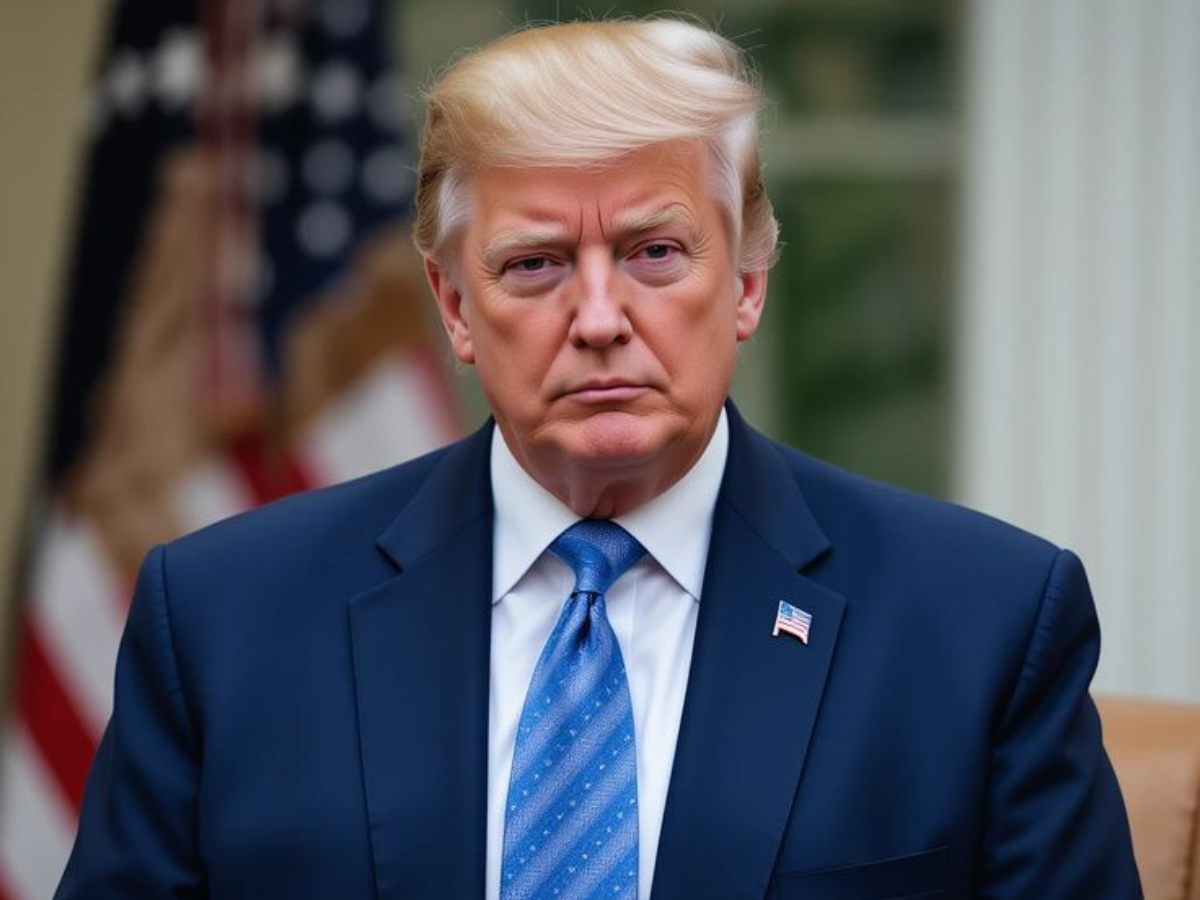
US President Donald Trump speaks after warning he may invoke the Insurrection Act in response to unrest in Minneapolis (Photo: File)
A new battleground in a longstanding national debate concerning immigration enforcement, protest and presidential authority has emerged in Minnesota. Following several days of unrest in Minneapolis, President Donald Trump issued threats to employ the Insurrection Act, a statute previously used in limited capacities within American borders, in response to two ICE shootings, among other protesting incidents. The local conflict escalated to incorporate elements of a broader national constitutional issue.
Trump Threatened to Invokes Immigration Law he expressed the warning on social media platforms by accusing the leadership of Minnesota of allowing professional agitators to assault ICE officers. He explained that if they invoke the immigration law, they would regain order immediately. This is not the first time Trump has expressed such a threat. He considered it during the 2020 national protests but did not do it. Even during this time, Trump expressed the threat but accompanied it with a display of force by bringing nearly 3,000 law enforcers to Minneapolis.
In 1807, the Insurrection Act was passed, which provides a provision to deploy active military forces or the National Guard through federalization to put down a rebellion or execute a federal law. The Act has been a departure measure for the Posse Comitatus Act, which typically forbids using the military for civilian law enforcement. According to reports by the Brennan Center for Justice, this legislation has been invoked only about 30 times in the whole history of America. It has been held by the judiciary that the president alone has discretion regarding when it can be invoked.
Martial law takes this to another level. Its basis is not an ordinary law but constitutional war powers. Once declared, military rule precedes a civilian government in a specific area. Regulation of law and order, judicial systems and administration fall under military rule. Civil law can be superseded by military law through military tribunals. Martial law was never declared throughout the history of the United States. This was only applicable during the Civil War and World War II in Hawaii.
Although both acts include the use of military force within the country, the nature and extent are vastly different. The Insurrection Act is for the support of civilian rule and control. Members of the military are functionally deployed to enforce already established laws and re-establish order. In contrast, the act of martial law is the complete substitution of civilian rule and control with military rule and control as the law of the land. One is the reinforcement of the system and the other is a substitution for a short period of time. Throughout history, the Insurrection Act has been the act of choice for the president because
The Insurrection Act has emerged at critical junctures within US history. It was employed by Abraham Lincoln during the Civil War. Later, it was employed by Ulysses S Grant to repress Ku Klux Klan violence during reconstruction. It was employed again in 1957 by Dwight Eisenhower. The Insurrection Act was last employed in 1992 by President George H. W. Bush. Notice how rare an incident is, and how much weight is carried by it just by virtue of being mentioned.
