Syria’s Kurdish‑led SDF agrees to merge into the national army after losing ground to government forces, marking a major shift in control of northeast Syria.
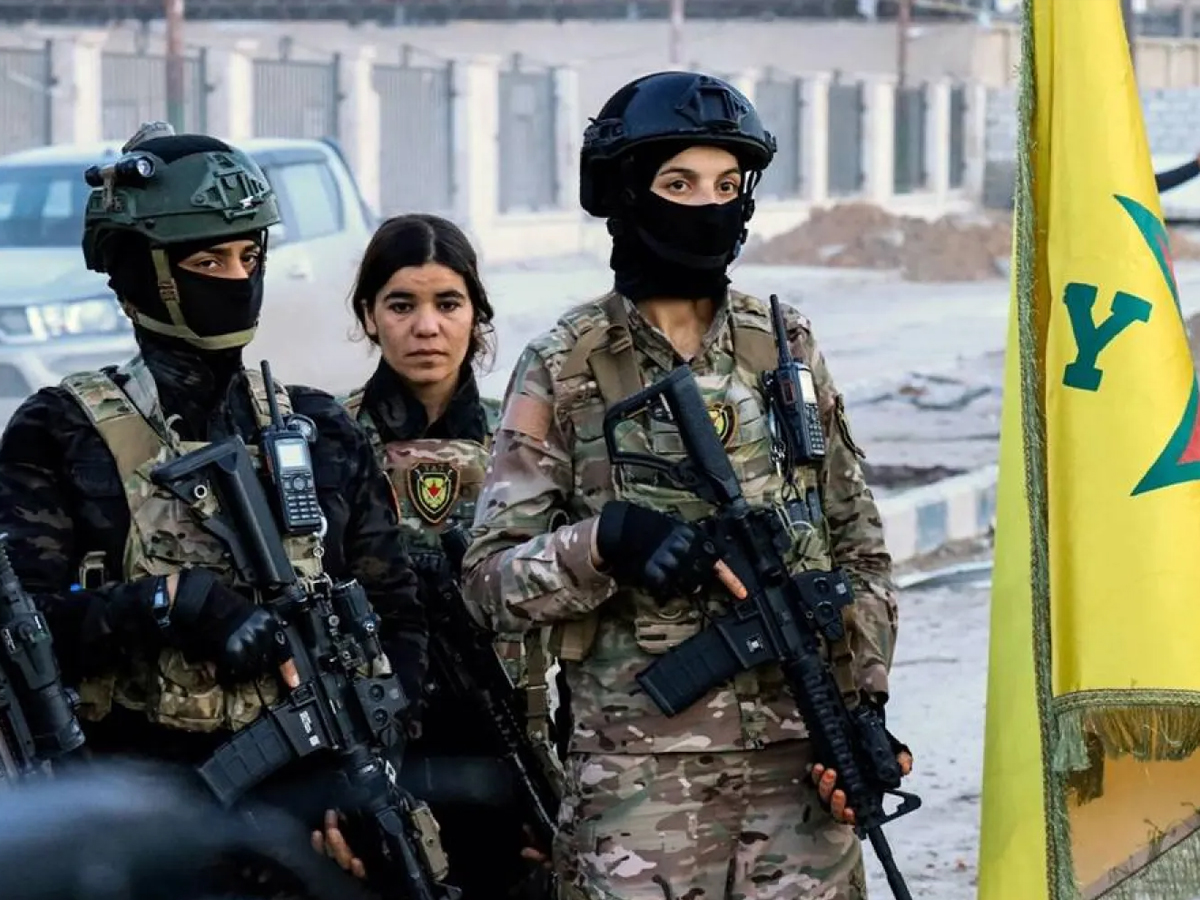
Under the latest agreement, SDF fighters will not join the army as intact units but will instead be integrated individually into the Syrian armed forces and police. (Photo: AFP)
After years of being one of the most powerful forces in Syria’s long civil war, the Kurdish‑led Syrian Democratic Forces (SDF) have agreed to merge into the Syrian national army following major setbacks on the battlefield. Once a leading partner in the fight against the Islamic State group, the SDF has seen its territory shrink sharply as government forces pushed into areas previously under Kurdish control.
The deal comes after intense clashes and a new ceasefire agreement, under which the SDF ceded control of important regions like Raqqa and Deir ez‑Zour to the government of interim President Ahmed al‑Sharaa. The remaining Kurdish‑led fighters are now confined mainly to the northeast, particularly the province of Hassakeh.
Since its founding in 2015 with backing from the United States, the SDF had controlled significant swaths of northeastern Syria, including strategic border towns, oil and gas fields, and key population centres. The group combined Kurdish, Arab, Turkmen, and Christian units under a shared command, though the People’s Protection Units (YPG) — the main Kurdish military force — held dominant influence.
Under the latest agreement, SDF fighters will not join the army as intact units but will instead be integrated individually into the Syrian armed forces and police. This outcome marks a major break from earlier plans, which envisioned the SDF maintaining its structure within a unified Syrian defence.
President al‑Sharaa has sought to consolidate control across Syria after the 2024 ouster of long‑time leader Bashar al‑Assad, using both military pressure and political measures to bring autonomous regions back under central authority.
The ceasefire deal followed a rapid advance by Syrian government forces into territory held by Kurdish authorities, including the key cities and provinces that formed the backbone of Kurdish self‑rule. Government troops recaptured Raqqa and parts of Deir ez‑Zour, bolstering Damascus’s control over former SDF regions.
Under the terms of the ceasefire and integration agreement, administrative authority in SDF areas will return to the Syrian state, including border crossings and resource‑rich zones. Kurdish fighters have also agreed to hand over detention facilities handling thousands of Islamic State group prisoners, a responsibility the SDF had managed since IS’s territorial defeat.
To smooth tensions around the integration, al‑Sharaa issued a decree recognising Kurdish as an official language alongside Arabic, and declared the Kurdish New Year (Newroz) a national holiday. The decree also restored citizenship to many Kurds who had previously lost it, signalling a move to include Kurdish identity within the Syrian political framework.
Though welcomed as steps forward by some Kurdish leaders, critics insist that lasting rights must be embedded in the country’s constitution, not just temporary decrees.
While the SDF’s distinct command structure appears set to dissolve, the integration could bolster Syria’s national military and police capacities. Leaders from both sides have claimed that the unified force will continue to fight remnants of the Islamic State group as part of a US‑backed coalition against terrorism.
However, questions remain over how smoothly the process will unfold. Some clashes continued after the ceasefire was announced, and tensions over the transfer of responsibilities, especially prisons and camps housing thousands of detainees and displaced families, highlight the complexity of this transition.
The agreement marks a historic turning point in Syria’s decade‑long conflict, effectively ending the SDF’s autonomous rule and reintegrating Kurdish forces into the state apparatus. It also represents a victory for al‑Sharaa’s drive to reunify the country under centralized control, even as debates continue about the protection of ethnic and cultural rights within the new Syrian order.
