The EU considers activating its trade 'bazooka', the Anti-Coercion Instrument, to counter US tariff threats over Greenland, heightening transatlantic trade tensions.
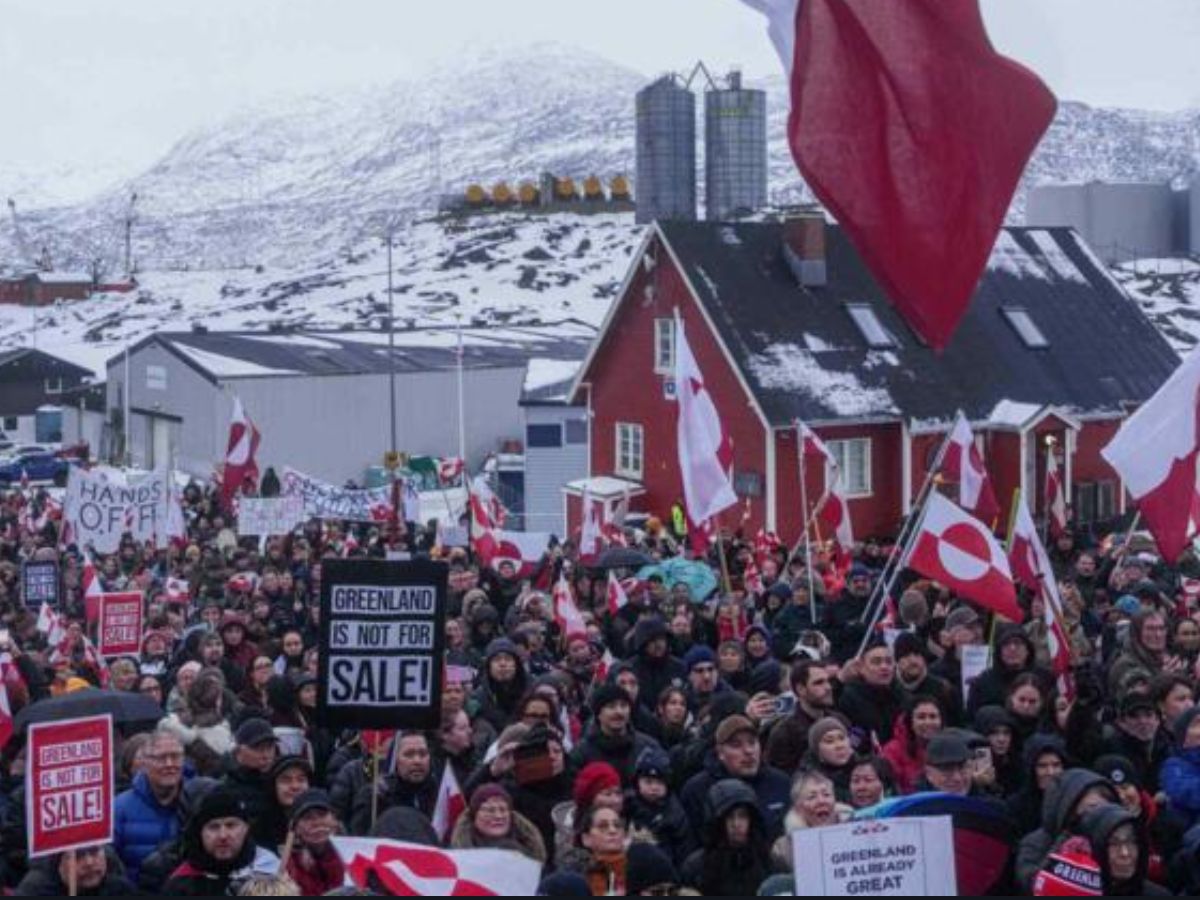
The EU considers activating its trade 'bazooka', the Anti-Coercion Instrument, to counter US tariff threats [Photo: X]
Europe is facing a tense new test in its relationship with the US after President Donald Trump threatened tariffs on European countries that oppose US pressure on Greenland. In response, leaders in the European Union (EU) are seriously discussing the use of an untested but powerful trade tool to push back, a move that could mark a fresh front in transatlantic rivalry.
At the centre of this dispute is Trump's plan to impose tariffs of 10% on goods imported from 8 European and NATO countries from Feb 1, potentially rising to 25% in June if no deal is reached on Greenland's status. The proposed duties target nations that have shown solidarity with Denmark and Greenland amid US efforts to exert greater influence over the remote Arctic territory.
The phrase 'trade bazooka' refers to the EU’s Anti‑Coercion Instrument (ACI), a legal mechanism adopted in 2023 to protect the bloc from economic pressure by non‑EU countries.
It has never been used before. The ACI allows the EU to adopt a range of countermeasures if it determines a foreign power is using trade restrictions to coerce political decisions.
Under the ACI, the EU could:
This makes it a versatile and potentially forceful tool, which European diplomats sometimes call a “nuclear option” in trade defence.
The phrase 'trade bazooka' refers to the EU’s Anti‑Coercion Instrument (ACI), a legal mechanism adopted in 2023 to protect the bloc from economic pressure by non‑EU countries.
It has never been used before. The ACI allows the EU to adopt a range of countermeasures if it determines a foreign power is using trade restrictions to coerce political decisions.
The current dispute began when Trump announced the planned tariff threats as a way to pressure European nations over their support for Greenland, a vast Arctic island whose strategic location the US sees as vital to its national security. Trump has insisted that Greenland plays a key role in defence and has even floated options that echo his past interest in acquiring the territory.
European leaders have condemned the tariffs as coercive and harmful to longstanding alliances. In a joint statement, eight countries, including Denmark, France, Germany and others, reaffirmed their solidarity with Greenland and warned that tariff pressures risked undermining transatlantic cooperation.
French President Emmanuel Macron has been among the most vocal advocates for triggering the trade bazooka. He told fellow EU leaders that the current situation is exactly what the ACI was designed for, protecting member states from external economic pressure.
However, not all EU capitals are ready to act immediately. Some prefer to seek diplomatic channels first, postponing activation of the ACI while exploring negotiations and dialogue with Washington. An emergency meeting of EU ambassadors was held in Brussels to discuss the bloc’s options, but consensus on immediate retaliation has not yet been achieved.
If diplomacy fails and tariffs take effect, the EU could also consider reinstating a €93 billion package of previously prepared retaliatory tariffs against the US on a range of goods, a measure that was suspended amid hopes for a trade deal last year.
European leaders have delivered strong public rebukes of Trump’s approach. Ursula von der Leyen, president of the European Commission, warned that such tariffs would damage transatlantic relations and called for unity among EU member states. Antonio Costa, European Council President, echoed concerns about sovereignty and the importance of a rule‑based international order.
UK PM Keir Starmer also criticised the tariff threat, saying applying tariffs against allies over security cooperation in Greenland was unjustified and risked destabilising relations with NATO partners.
The EU now faces a delicate balancing act. Leaders must decide whether to escalate trade responses, potentially deploying the ACI for the first time, or continue diplomatic engagement with the US in hopes of averting a full‑blown economic standoff. Meanwhile, the imposition of tariffs could have far‑reaching impacts on global markets, supply chains and political alliances.
As transatlantic economic tensions rise, the use of the ACI will be watched closely by other global partners, with implications for how democracies respond to coercive trade policies in the future.
