Pakistan celebrates its Republic Day on March 23 every year to mark the Lahore Resolution of 1940 and the adoption of its first constitution in 1956, symbolising national identity.
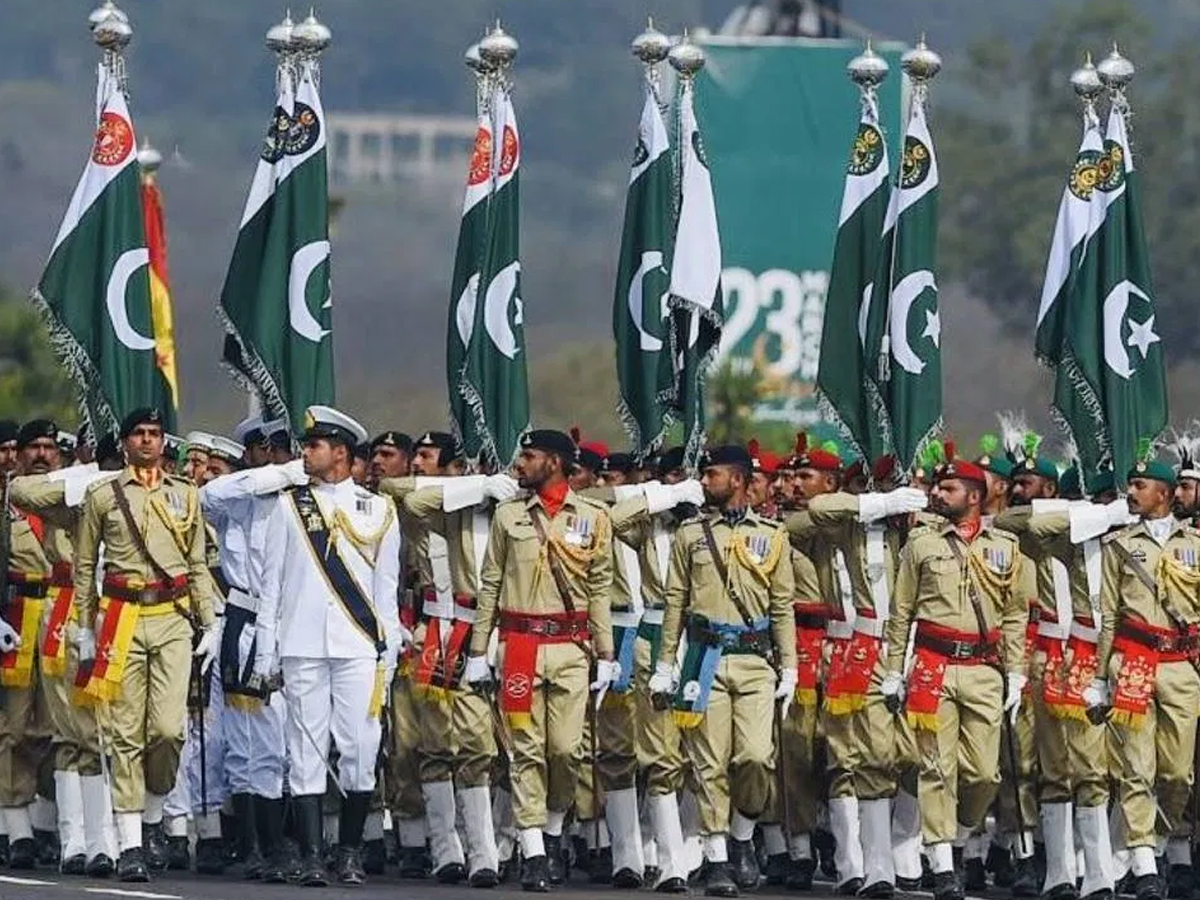
The Lahore Resolution, adopted on March 23, 1940, was a formal statement by the Muslim League calling for the creation of independent states in regions where Muslims were in the majority. (Photo: Social Media)
While India honours its Republic Day on January 26, Pakistan marks a different date for its own celebration of national identity and constitutional history. Every year on March 23, Pakistan observes a major national holiday known as Pakistan Day or Republic Day, highlighting key milestones in the country’s formation and constitutional evolution.
This important date has deep roots in the country’s history, stretching back to pre‑independence political movements and later legal transformations that shaped Pakistan’s identity as a sovereign republic.
Pakistan’s Republic Day is officially observed on March 23 each year, and this date commemorates two major historical moments in the nation’s history:
The Lahore Resolution, adopted on March 23, 1940, was a formal statement by the Muslim League calling for the creation of independent states in regions where Muslims were in the majority. This political declaration laid the foundation for Pakistan’s eventual creation in 1947 after British India was partitioned.
At the time, this resolution symbolised unity and a collective identity for South Asia’s Muslim population. The political struggle that followed eventually led to the establishment of Pakistan as a separate nation on August 14, 1947.
After independence in 1947, Pakistan initially functioned as a dominion under the British Commonwealth. It was only on March 23, 1956, that the country formally adopted its first constitution. That moment marked Pakistan’s transition from dominion status to a fully sovereign Islamic Republic — the first such republic created after the end of British rule.
Under this constitution, Pakistan established a parliamentary system of government, and the term “Islamic Republic of Pakistan” became official.
Pakistan Day is a national holiday celebrated throughout the country with official events and public observances. Military and civilian parades are held, especially in the capital, Islamabad, where the Pakistan Day Parade showcases the strength of the armed forces and national unity. The celebrations often include gun salutes, flag ceremonies, and honours conferred on distinguished citizens.
The day is a public holiday, and government offices, educational institutions, and many workplaces close in observance. Citizens express national pride, and displays of the Pakistani flag appear across cities and towns.
Although both are key national dates, Pakistan’s Republic Day on March 23 is distinct from Independence Day on August 14. The latter commemorates Pakistan’s independence from British rule in 1947, while March 23 celebrates the country’s constitutional milestone and national identity rooted in the Lahore Resolution and transition to a republic.
March 23 carries symbolic weight in Pakistan’s political and social memory. It serves as a reminder of the country’s journey from a political demand for sovereignty to full constitutional republic status. Generations of Pakistanis mark the day with pride and reflection on their nation’s origins and its constitutional history.
The day reinforces national unity and patriotic sentiment, increasingly celebrated with modern parades, public speeches, and renewed expressions of national identity that connect Pakistan’s past to its present aspirations.
