For years, the MSC has served as a barometer of the mood in transatlantic ties. Of late, however, the platform has come to reflect an unmistakable fissure within the global West.
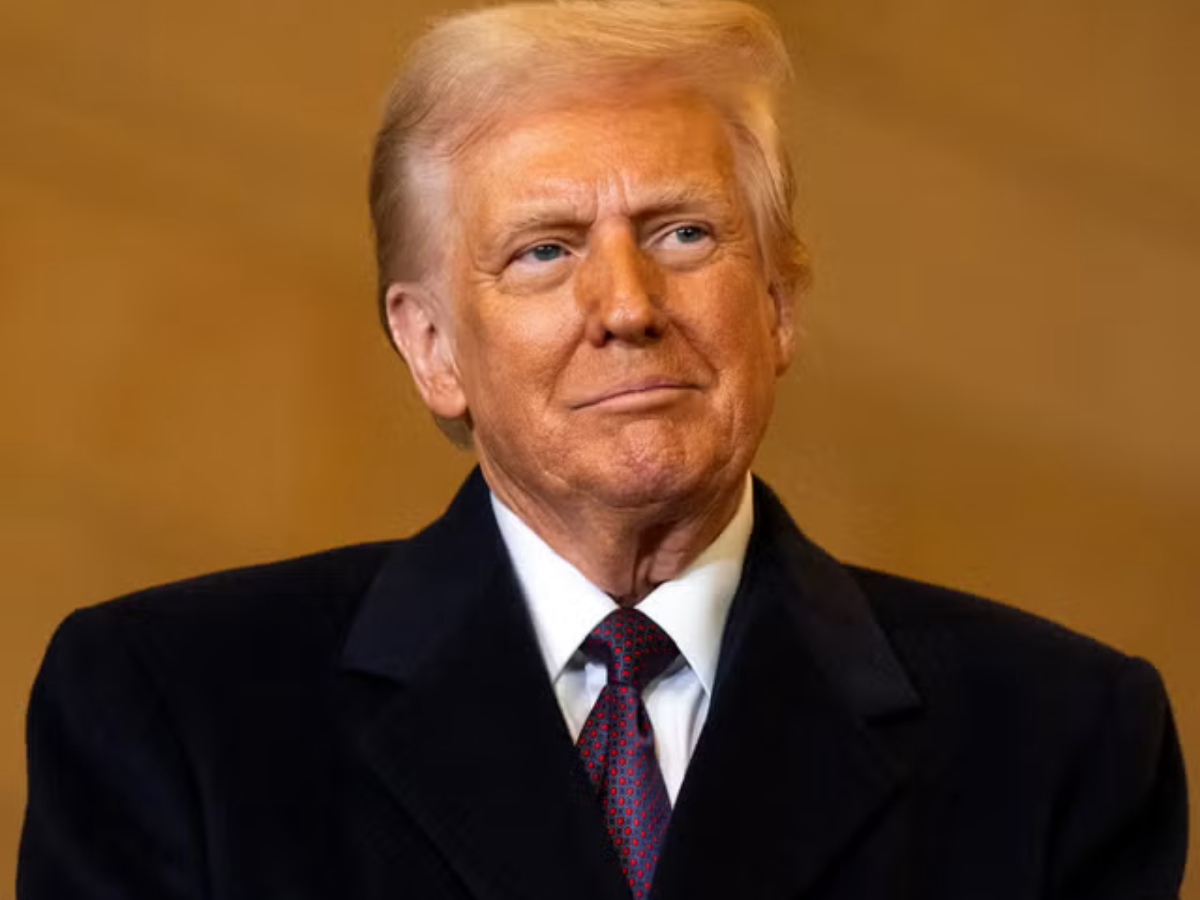
U.S. President Donald Trump
The Munich Security Conference (MSC) Report 2026 opens with a stark warning: "the world has entered a period of wrecking-ball politics." Sweeping destruction rather than careful reforms and policy corrections is the order of the day. The report is anchored in the logic of the three Ds—Destruction, Disruption and Demolition—which shape its assessment of a rapidly transforming global order. Surveying the evolution of transatlantic ties under the Trump presidency, the report captures a turbulent moment in global transition, one in which incremental reform has yielded to structural overhauling. Long-established norms and institutions that once undergirded the West-led international order are being fundamentally challenged and recast. The world now stands at a juncture where "globalism" and "globalist" have morphed into pejorative terms in international relations, signalling not just policy shifts but a deeper ideological rupture in the architecture of the international system.
For years, the MSC has served as a barometer of the mood in transatlantic ties. Of late, however, the platform has come to reflect an unmistakable fissure within the global West. The high watermark of that rupture was last year's eyebrow-raising address by US Vice President J.D. Vance. His speech startled not only the European leaders in the room, but also observers of the transatlantic relationship and US foreign policy worldwide.
"The threat I worry the most about vis-à-vis Europe is not Russia, it's not China, it's not any other external actor," Vance declared. "What I worry about is the threat from within—the retreat of Europe from some of its most fundamental values, values shared with the United States of America," he said.
This year's star speaker, US Secretary of State Marco Rubio, struck a tone of restraint and reassurance, underscoring the durability of the transatlantic relationship and the weight of shared history and shared destiny. "For the United States and Europe, we belong together. America was founded 250 years ago, but the roots began here on this continent long before," Rubio asserted. "We are part of one civilization—Western civilization," he said. Invoking civilizational bonds before a largely European audience, America's top diplomat described the United States as "a child of Europe," separated by geography but united by heritage, and firmly dispelled any notion that the "end of the transatlantic era" was either Washington's goal or its desire.
The immediate reaction in the audience was a palpable "sigh of relief"—coming after a year of unrestrained rhetoric that struck at the very foundations of the values and interests binding the Western alliance. Yet reassurance cannot rest on mood or momentary atmospherics. It must be anchored in credible capability and clear intent to uphold the security and economic architecture that sustains the transatlantic compact. The central question, then, is stark: can the United States still reassure an anxious world, or must allies and partners begin constructing their own mechanisms of reassurance—preparing for greater strategic autonomy even as they continue to engage Washington?
The speech delivered by Vance at the previous edition of the MSC, alongside President Trump's address to the UN General Assembly, foreshadowed the widening rift over values and interests within the West. The Trump administration's National Security Strategy (NSS) 2025 sharpened this line of argument, asserting that Europe's economic decline is "eclipsed by the real and starker prospect of civilizational erasure." Pointing to demographic shifts and immigration patterns across the continent, the document warned that "should present trends continue, the continent will be unrecognisable in 20 years or less."
Vice President of the European Commission Kaja Kallas, taking the podium at this year's MSC, forcefully pushed back against critics, declaring that "contrary to what some may say, woke, decadent Europe is not facing civilisational erasure." She underscored the European Union's economic weight, noting that "the European Union has built the largest free trade network in the world. Close to 60 countries are now covered by EU trade agreements." She stressed that "countries want to diversify their partnerships to manage the risks of a rougher world, including the constant threat of tariffs."
On the same stage, German Chancellor Friedrich Merz offered a stark assessment of global disorder, lamenting the erosion of the rules-based order. "Here we must put it even more bluntly: this order, however imperfect it was even at its best, no longer exists in that form," he remarked.
For some time now, academic and policy circles have been animated by debates over a changing world order and the imperative for multilateral institutions to adapt and reform. It was widely acknowledged that the post-World War II security and financial architecture was in flux, with multiple actors asserting greater agency in shaping global outcomes. Yet the mood in Munich this year was unmistakably darker and unprecedented. As global leaders and policymakers convened, scepticism hung heavy in the air.
The post-1945 order was no longer seen merely as undergoing transition. It was increasingly portrayed that Washington perceives the prevailing order as a constraint, in fact, an impediment to the project of "Making America Great Again" and the primacy of "America First." A recurring theme in international relations over the years has been America's relative decline vis-à-vis other rising powers—often framed as the advent of a "post-American" world. That thesis is now being turned on its head.
While countries of varying capabilities and diverse relationships with the United States have responded differently to Washington's actions, the sheer weight of American coercive power on the international system has laid bare an era of naked realism, rewiring the debate on power realignment and the terms of global negotiation. While his predecessors sought to recalibrate the full spectrum of American national power to adjust to the shifting distribution and diffusion of power in the international system, the Trump administration—particularly in its second term—has unveiled a distinctly neo-Machiavellian expression of US power, unprecedented in recent times and widely consequential irrespective of its undesirability.
Thus, even as Marco Rubio struck a measured, reassuring tone from the lectern in Munich—markedly different from that of Vance's sharper posture earlier—the deeper shift in perceptions, perspectives, and projections across the transatlantic space is unmistakable. The alliance now appears to be entering either an inevitable rupture or a painful transition towards a new strategic geometry. How the "New West" morphs and transforms will profoundly shape how other major stakeholders in the international system reimagine, recalibrate, and reshape their ties with the United States and Europe.
In the final analysis, international relations must confront a defining question: what does "predictability" now mean in alliances, partnerships and in the broader pursuit of a rules-based order? From new terms of economic engagement to shifting configurations of security commitments, predictability has suffered a severe blow. The trajectory of any emerging world order will ultimately hinge on how this challenge is addressed.
*Monish Tourangbam is Fellow at the Chintan Research Foundation (CRF), New Delhi.
