
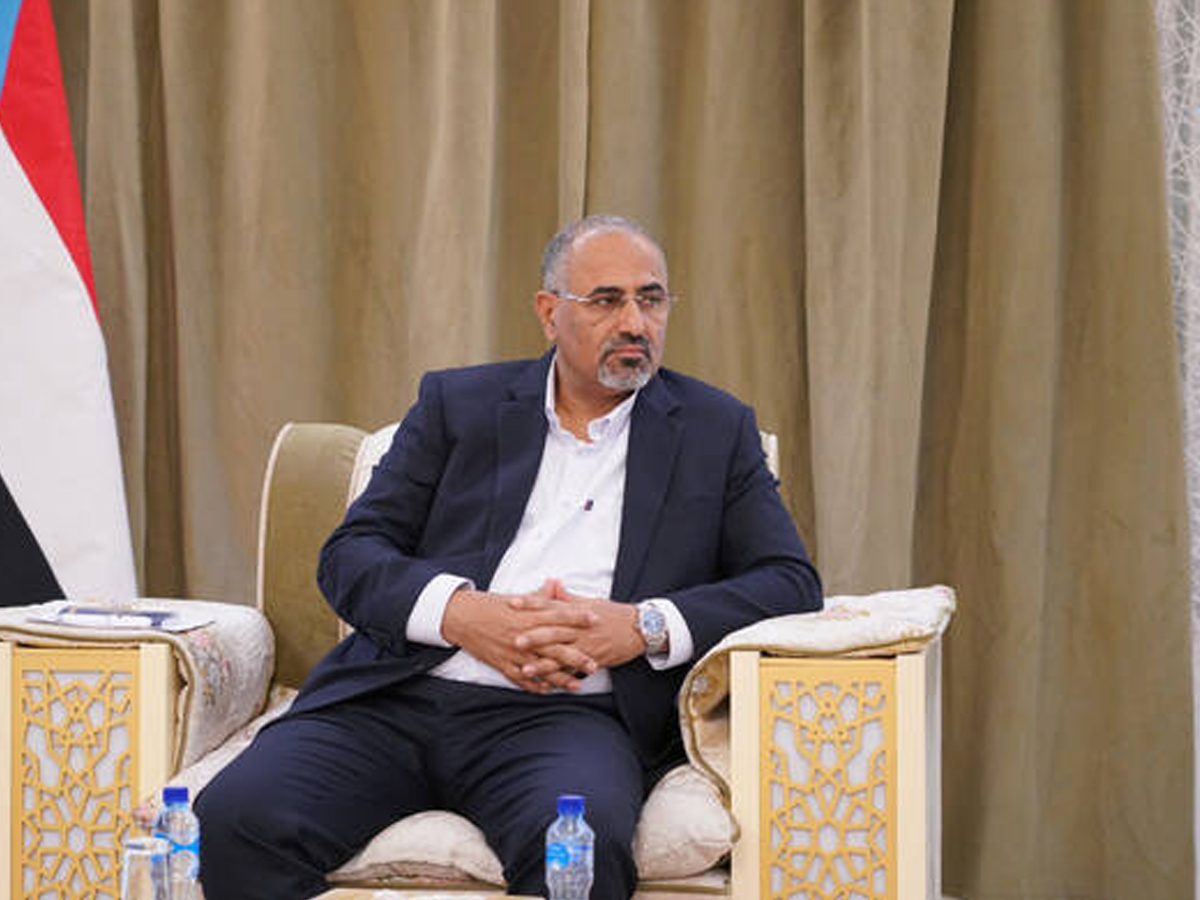
The sudden disappearance of Aidarous al-Zubaidi, leader of Yemen’s southern separatist movement, has added a fresh layer of uncertainty to the country’s fragile political and security landscape. His absence comes as the Saudi Arabia-led coalition launched new airstrikes in southern Yemen, describing them as “limited pre-emptive strikes” aimed at preventing further escalation of fighting.
Coalition officials claimed the strikes targeted areas linked to al-Zubaidi’s supporters in Al-Dhale governorate and said he had “fled to an unknown location, leaving members and leaders without any information about his whereabouts.” The developments have raised urgent questions about the future of Yemen’s south and the unity of the regional coalition involved in the conflict.
Who is Aidarous al-Zubaidi?
Aidarous al-Zubaidi heads the Southern Transitional Council (STC), a powerful group that seeks independence for southern Yemen. The STC has built strong military and political influence in the south and has long challenged the authority of Yemen’s internationally recognised government. Al-Zubaidi previously held a senior leadership role in Yemen’s governing framework, positioning himself as a central figure in southern politics.
What Triggered the Latest Crisis in Southern Yemen?
In December, al-Zubaidi launched an offensive against government-aligned forces, allowing STC fighters to seize large areas, including parts of Hadramawt, a strategically important province bordering Saudi Arabia. The Saudi-led coalition responded with airstrikes and supported counter-offensives that forced the separatists to retreat.
Saudi Arabia backs Yemen’s recognised government, while the United Arab Emirates supports the STC, exposing growing differences between the two Gulf allies. Recent Saudi airstrikes against STC positions have highlighted these tensions and shifted the balance of power in the south.
Where is Aidarous al-Zubaidi?
Al-Zubaidi was scheduled to travel to Saudi Arabia for talks aimed at calming the clashes. His flight was delayed, and he did not board when it eventually departed. Soon after, coalition aircraft intensified strikes in areas linked to his supporters.
The STC rejected claims that he fled, insisting he remained in Aden overseeing military and security operations. An STC official said it was unsafe for him to travel and added that the group had lost contact with its political delegation in Riyadh. No independent confirmation has clarified his exact location.
Why Al-Zubaidi’s Disappearance Raises Bigger Questions
Al-Zubaidi’s absence has dashed hopes of a quick resolution to the latest turmoil in southern Yemen. The situation has exposed deep divisions within the coalition originally formed to fight the Iran-aligned Houthis, who still control large parts of northern Yemen.
The crisis also reflects broader regional rivalries. Saudi Arabia and the UAE, both close partners of the United States, have increasingly pursued different strategies across the Middle East. Yemen has now become a visible stage for these competing ambitions.
Fragmentation Beyond the Battlefield
Beyond the airstrikes and political claims, al-Zubaidi’s disappearance signals something deeper — the fragmentation of authority in Yemen’s south. Power is no longer concentrated in a single command structure. Instead, it shifts between local forces, regional sponsors, and competing political visions.
Whether al-Zubaidi re-emerges publicly or remains out of sight, the episode underscores how leadership uncertainty can quickly destabilise already fragile regions, with consequences that extend far beyond Yemen’s borders.




