Donald Trump said Iran’s regime could collapse but stopped short of backing Reza Pahlavi, saying he is unsure if Iranians would accept his leadership
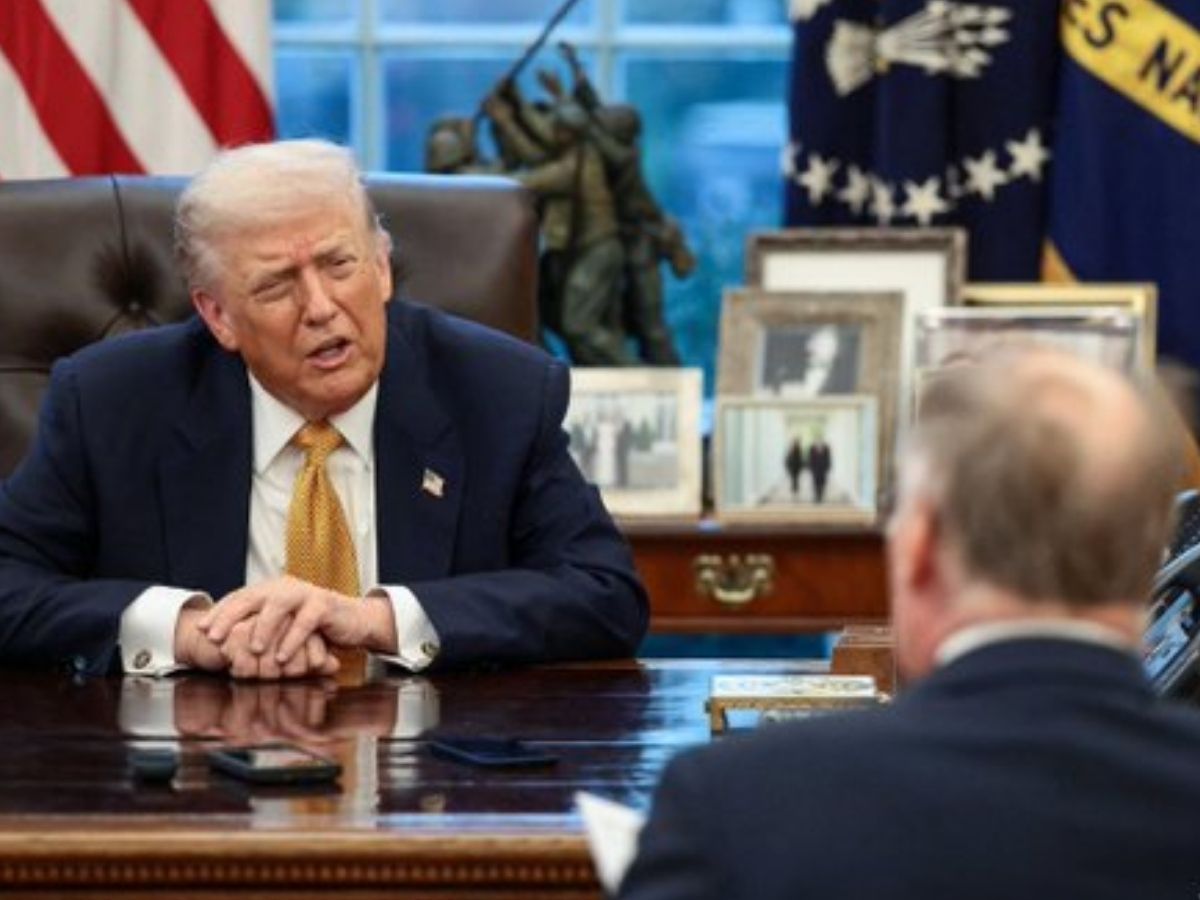
Is Trump Holding Back Support for Reza Pahlavi as Iran’s Regime Faces Collapse? (Source: Reuters)
Iran Protest: US President Donald Trump said on Wednesday that Iran’s clerical government could fall, but he also made it clear that he is unsure whether exiled Crown Prince Reza Pahlavi has enough support inside Iran to lead the country if that happens. Speaking in an exclusive interview with Reuters from the Oval Office, Trump said the ongoing protests could bring down the Iranian government, but added that no outcome is guaranteed.
“Whether or not it falls or not, it’s going to be an interesting period of time,” he said. He also noted that any regime can fail. These comments come as Iran faces massive protests, during which more than 3,400 people have reportedly been killed in a violent crackdown by security forces. Trump has earlier warned that the US could step in if protesters continue to be targeted.
Trump said he had received information “on good authority” that Iran has stopped plans for fast trials and executions of protesters. This followed his strong warnings to Tehran. Iran, however, has pushed back, threatening to strike US military bases and Israel if Washington interferes.
Despite the growing unrest, Trump was cautious about supporting Reza Pahlavi, the son of Iran’s last king. “He seems very nice, but I don’t know how he’d play within his own country. And we really aren’t up to that point yet, we’re looking and studying a lot of things,” Trump told Reuters.
He added, “I don’t know how he gets along with his country. I don’t know whether or not his country would accept his leadership, and certainly if they would, that would be fine with me.” Pahlavi, who is now 65, has lived outside Iran since before the 1979 Islamic Revolution removed his father from power. In recent months, he has become one of the most visible voices supporting the protests.
On Wednesday, US Senator Lindsey Graham, a close Trump ally, met Pahlavi and again voiced US support for the Iranian people against the “brutal regime” in Tehran.
Pahlavi has urged Iranians to keep protesting and said those responsible for violence will one day be punished. He has also spoken with White House envoy Steve Witkoff and supported Trump’s strong words against Supreme Leader Ayatollah Ali Khamenei.
He has said he is ready to return to Iran immediately if needed. Pahlavi has described a future “free Iran” that would end its nuclear military programme, stop supporting terrorist groups, and rebuild relations with the United States.
However, many Iranians do not support a return to monarchy, seeing it as another form of dictatorship. There is also no clear legal or political system in place to bring back a king. Because Pahlavi has lived in exile for decades, his direct influence inside Iran is limited, especially compared with the country’s powerful institutions.
Reza Pahlavi is the eldest son of Iran’s last ruler, Mohammad Reza Pahlavi. Born in 1960, he has spent most of his life in exile, mainly in the United States, since the monarchy was overthrown and Iran became an Islamic republic.
From abroad, he has become a strong critic of Iran’s clerical leadership. He has spoken in support of human rights, freedom, and political change. During the latest protests, he has called on Iranians to keep resisting peacefully and asked the international community to stand with them.
While he supports a new, democratic and secular Iran, Pahlavi has said he is not trying to rule the country himself, but wants a peaceful transition away from clerical control.
