
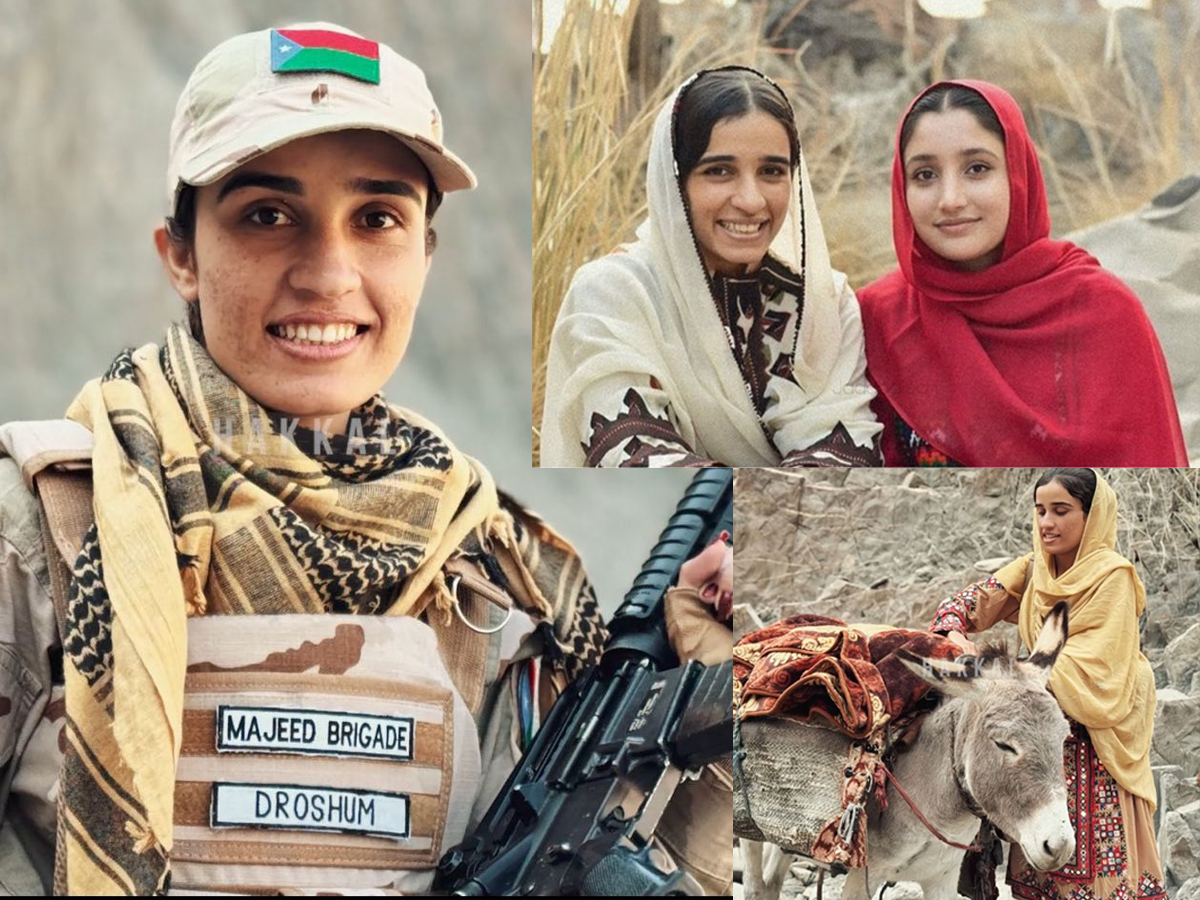
Pakistan’s long-running conflict in Balochistan has taken a striking and disturbing turn. After days of coordinated, high-intensity attacks across multiple regions, the Balochistan Liberation Army (BLA) has pushed two women to the forefront of its narrative, Asifa Mengal and Hawa Baloch.
Their emergence marks a shift in how the insurgent group projects its struggle, blending violence with symbolism. As Pakistan counts casualties from one of the deadliest security operations in years, these two names now dominate discussions around the future trajectory of the Baloch insurgency.
Pakistan’s security forces said they killed 145 militants in less than two days during operations in the southwestern province of Balochistan. The situation marks one of the most serious periods of violence in the region in recent times.
Who Is Asifa Mengal? The Young Woman at the Centre of the Attacks
Asifa Mengal, aged 24, has been identified by the BLA as one of the female attackers involved in the latest wave of violence. According to the group, she belonged to the Nushki district in Balochistan and was the daughter of Mohammad Ismail.
Born on October 2, 2002, Asifa reportedly joined the BLA’s elite Majeed Brigade after turning 21. The outfit claims that she decided to become a “fidayee” last year in January, committing herself to a suicide mission.
The BLA alleges that Asifa Mengal played a key role in the attack targeting the Inter-Services Intelligence (ISI) headquarters in Nushki. Images released by the group show her in militant attire, a move widely seen as an attempt to turn her into a recognisable symbol of resistance.
Her story has generated intense debate, with Pakistani authorities rejecting the BLA’s casualty claims while acknowledging heavy fighting across the province.
Who Is Hawa Baloch? A New Symbol Emerges
Alongside Asifa Mengal, another woman, known as Hawa Baloch, has emerged as a powerful figure in the insurgent narrative.
Hawa Baloch, whose nom de guerre is Droshum, was a member of the BLA’s Majeed Brigade and participated in the Gwadar front during Operation Herof. Her role has drawn comparisons to Mahsa Amini, whose death in Iran sparked nationwide protests in 2022.
The BLA presents Droshum not just as a fighter, but as a symbol of ideological resistance. Reports suggest she was a writer and intellectual before joining the armed movement, highlighting the deep political consciousness driving some recruits.
Her father had earlier been involved in the Baloch armed struggle and was killed in combat years ago, reinforcing the intergenerational nature of the conflict.
What Is Operation Hero Phase II?
The BLA stated that the attacks were part of “Operation Hero Phase II,” which it said continued for over 35 hours across several areas of Balochistan.
According to the group, fighters carried out coordinated assaults on security installations and strategic locations. Pakistan’s Chief Minister Sarfaraz Bugti said that security forces launched a massive counter-terrorism operation, killing at least 145 terrorists while losing 17 personnel over nearly 40 hours.
The government described the operation as a major success, while the BLA projected it as one of its most effective campaigns in recent years.
Hawa Baloch’s Role in Gwadar Attacks
During the late January and early February offensive, Hawa Baloch reportedly fought on the front lines in Gwadar, a city central to the China-Pakistan Economic Corridor (CPEC).
The BLA claimed that she engaged in prolonged clashes near the port and nearby security installations. Its media channel said her role was combat-focused rather than supportive, placing her directly in urban warfare that disrupted life in the city for nearly two days.
Following her death, the group described it as “martyrdom,” portraying the mission as strategically successful despite the losses.
Why the BLA Is Highlighting Women Fighters
By placing women in its most lethal units, the BLA challenges traditional norms of conflict in the region. Analysts believe this tactic aims to amplify psychological pressure on the Pakistani state while drawing global attention.
Videos released by the group show one of the women stating that Pakistan’s government has long targeted Baloch women and families, framing the violence as retaliation rather than aggression.
This messaging reflects a calculated attempt to reshape the insurgency’s image—from a regional armed movement to a broader ideological struggle.
Most Lethal Attacks in Years: What Happened on the Ground
Officials said the attackers disguised themselves as civilians and entered schools, markets, banks, and hospitals before opening fire. Pakistan described the incidents as among the deadliest in recent years in the province, which borders Iran and Afghanistan.
The violence has once again exposed the fragile security situation in Balochistan and raised questions about whether the conflict is entering a more radical and unpredictable phase.
What This Means for Pakistan and the Region
The rise of figures like Asifa Mengal and Hawa Baloch signals a shift in both tactics and messaging by the BLA. By turning individuals into symbols, the group appears focused on sustaining momentum beyond the battlefield.
As security operations continue, Pakistan faces the challenge of containing not just armed violence, but the narratives that fuel it—narratives now increasingly carried by female faces of the insurgency.




