Iran-US Tensions: The IRGC is Iran’s most powerful security force, driving regional conflict through proxies, missiles and ideology that threaten Israel and the West.
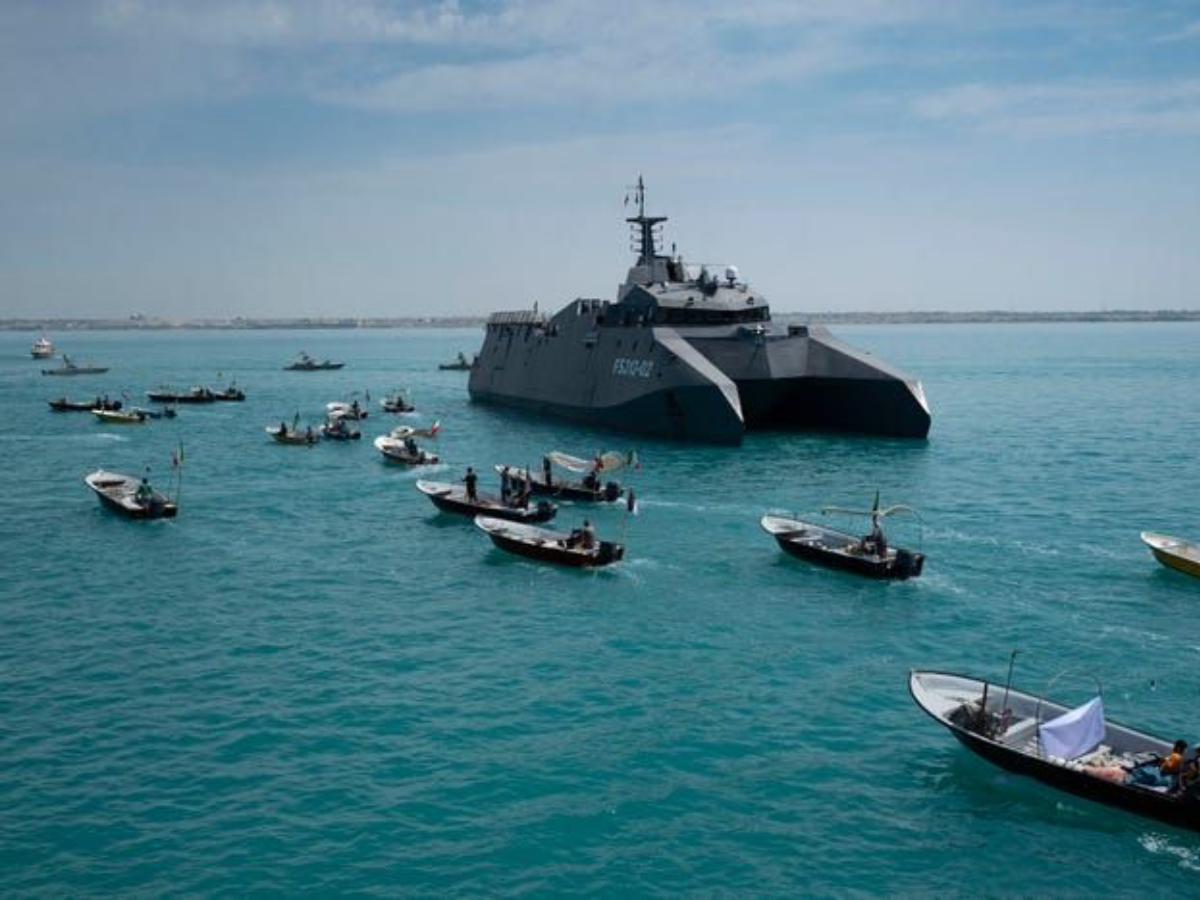
IRGC forces during a military exercise, highlighting Iran’s parallel power structure and regional reach (Photo: X)
Iran-US Tensions: The Islamic Revolutionary Guard Corps in Iran has few state actors that have transformed the security dynamics in the Middle East to the extent that it has transformed the security relations. The IRGC has been formed with the purpose of safeguarding a revolution, and has become a proxy war, a cross-border power broker incorporating elements of military force, ideology and proxy warfare. Its impacts have now reached the furthest corners of the Mediterranean region all the way to the Red Sea and the effects of the same are felt far beyond the area.
The IRGC was formed in 1979 following the Islamic Revolution in Iran but it functions alongside the conventional army but is only answerable to the Supreme Leader. It controls ground and naval forces, the aerospace forces and supervises Basij paramilitary network. Its workforce is estimated to be in excess of 120,000 workers. The Quds Force is its extradiegetic operations arm in charge of managing foreign militia and covert missions in the Middle East.
An IRGC naval commander warned that Iran would view any neighbouring country as hostile if its land, airspace or waters are used to launch attacks against Iran ands txhe statement underscores Tehran’s readiness to respond beyond its borders amid rising regional tensions.
“Neighbouring countries are our friends, but if their soil, sky, or waters are used against Iran, they will be considered hostile,” Mohammad Akbarzadeh, political deputy of the IRGC naval forces, was quoted as saying by the Fars news agency.
Israel has always regarded the IRGC as a powerhouse of aggressive action in its borders. The IRGC provides missiles, rockets, drones, and precision-guided ones through Hezbollah in Lebanon and armed groups in Gaza and Syria. It is estimated that Hezbollah alone has over 150,000 rockets and most of these are obtained or financed by Iran. These networks enable Iran to coax Israel without having a direct confrontation.
The IRGC’s footprint extends far beyond Israel and IRGC-affiliated militias have repeatedly attacked US military installations in Syria and Iraq. IRGC networks have been connected by European intelligence services to illegal funding, cyberattacks and assassination schemes. Iran's missile program, which is partially supervised by the IRGC has built systems that can reach areas of Europe with a range of more than 2,000 kilometers.
In 2019, Washington made history by designating the IRGC as a Foreign Terrorist Organization with a first for a state military organization. This action made material support illegal, limited travel and increased sanctions. IRGC-affiliated businesses that control Iran's maritime, crude oil and construction sectors are subject to further financial penalties.
While the IRGC and its Quds Force are regarded as terrorist organizations by a number of Middle Eastern states, the United States officially upholds the categorization. Momentum is growing across Europe. Formal discussions are anticipated in early 2026 and nations like Germany, Italy and the UK have supported moves toward an EU-wide designation.
Iran transfers hundreds of millions of cash to its allies every year. Hezbollah serves as Iran's most sophisticated proxy, possessing cutting-edge missile systems and combat experience from Syria while Hamas receives cash, weapons designs and training support where tehran is able to influence conflicts without using its own forces because to this backing.
The IRGC protects the regime and exports its ideology, while Iran's regular army concentrates on defending its territory while the other reshapes regions, the former protects borders. This contrast explains why Iran's foreign policy aspirations revolve around the IRGC rather than the army.
