List of all Supreme Court justices in the landmark 6‑3 ruling striking down Trump’s global tariffs, names of majority and dissenting judges and what their votes mean.
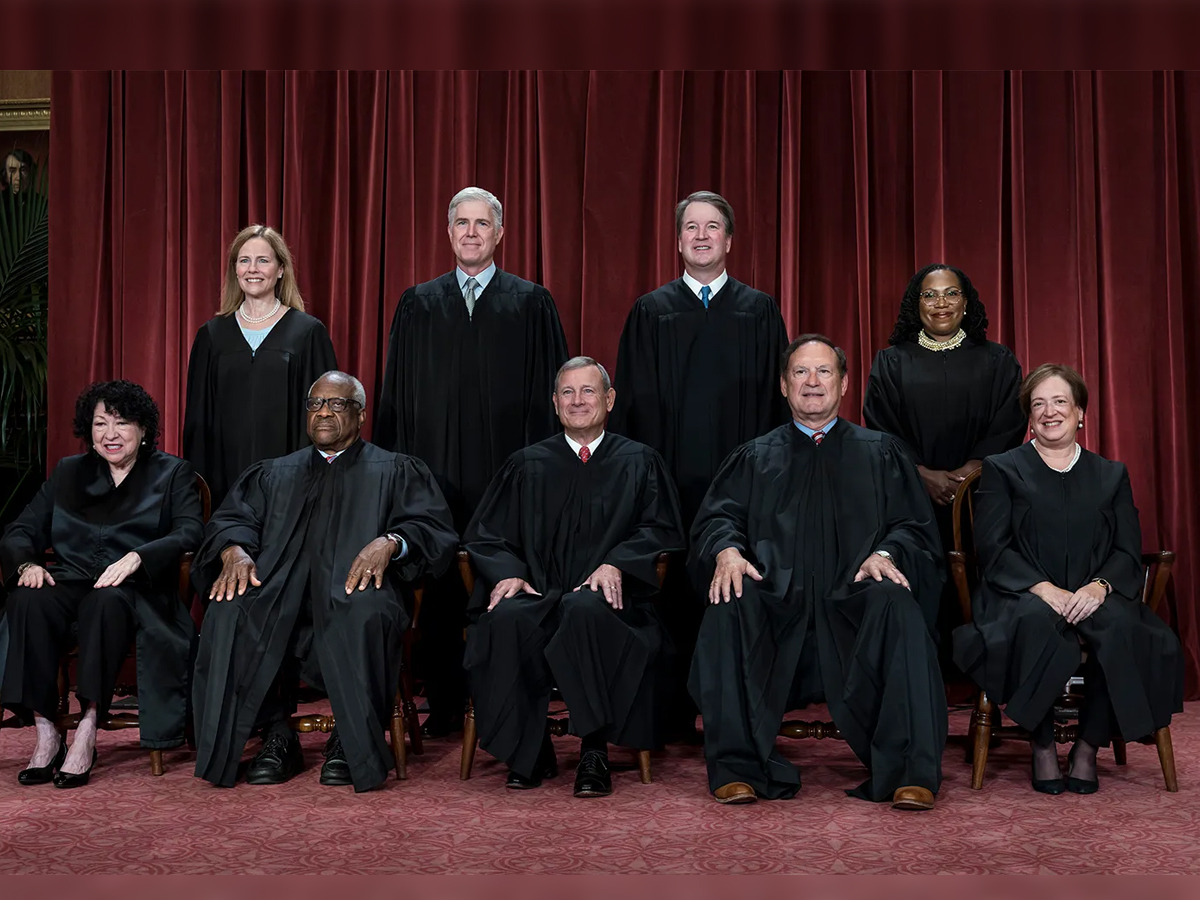
This ruling marks a major judicial check on the executive branch’s use of the International Emergency Economic Powers Act (IEEPA) to impose broad import taxes. (Photo: AP)
In a landmark decision that reshapes presidential power over trade, the U.S. Supreme Court on Friday struck down former President Donald Trump’s sweeping tariffs in a 6‑3 judgment, declaring that he exceeded his authority under federal law. The justices’ vote split along clear majority and dissent, spotlighting the nine judges’ interpretation of constitutional limits on executive tariff powers.
This ruling marks a major judicial check on the executive branch’s use of the International Emergency Economic Powers Act (IEEPA) to impose broad import taxes, affirming that only Congress holds the power to levy tariffs unless it clearly delegates that authority.
Chief Justice John Roberts wrote the opinion for the majority, saying the law Mr. Trump relied on — the International Emergency Economic Powers Act (IEEPA) — “does not authorize the President to impose tariffs”.
Roberts explained that tariff powers belong to Congress, and if lawmakers wanted to let a president use IEEPA that way, they would have said so clearly. The ruling affirms earlier court decisions that the emergency law was being stretched beyond its original purpose.
The Supreme Court’s decision struck down the broadest tariffs Mr. Trump imposed — including “reciprocal” duties on imports from many countries — but did not touch sector‑specific levies like those on steel and aluminum that used a different legal authority.
The six justices who joined the majority opinion ruled that Trump lacked the legal authority to impose unlimited tariffs under IEEPA and went beyond the powers Congress granted the president:
These six justices agreed that Congress, not the president, has constitutional power to tax and impose duties on imports, and that IEEPA did not grant such sweeping tariff authority.
Three justices opposed the majority’s decision and would have upheld the president’s authority to impose tariffs under the law:
In their dissent, these three conservative justices contended that past precedents and broad executive discretion in trade matters supported the president’s authority.
This alignment shows a rare coalition of conservative and liberal justices in the majority against the executive’s tariff claims, underscoring how federal law and constitutional powers were interpreted beyond traditional ideological lines.
The Supreme Court’s 6‑3 split confirms that significant economic policies like sweeping tariffs require clear authority from Congress, not just an emergency law. The decision also signals judges’ growing application of the “major questions doctrine,” which holds that courts should not assume broad powers without explicit legislative direction.
The ruling could potentially lead to refunds of billions in tariffs already collected and affect how future presidents might pursue trade policy without congressional backing.
