Bangladesh election row erupts after Jamaat candidate’s Quran-based parliament remarks go viral, raising minority rights and democracy concerns.
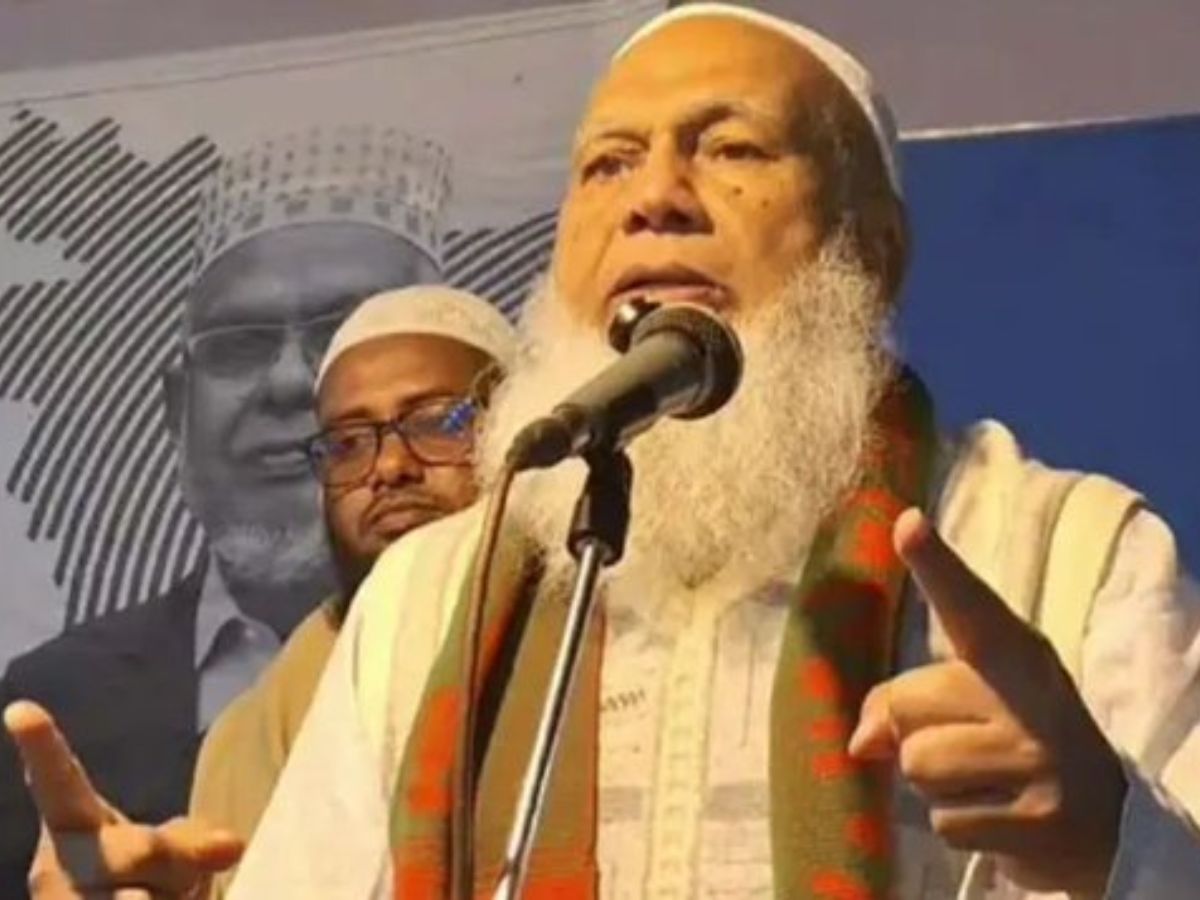
Bangladesh election row erupts after Jamaat candidate’s Quran-based parliament remarks [Photo: X]
Bangladesh’s high-stakes parliamentary election has taken a sharp turn as religion enters the political spotlight. A viral speech allegedly made by a Jamaat-e-Islami candidate, Afzal Hossain, has sparked outrage, debate, and concern across the country.
The remarks, which call for a Quran-based parliamentary system and question the role of non-believers in Parliament, have intensified fears among minority communities and deepened political tensions ahead of the February 12 vote. While the authenticity of the clips remains unverified, the controversy has already reshaped the election narrative.
Afzal Hossain is a candidate of Jamaat-e-Islami contesting from the Barguna-2 constituency in southern Bangladesh. Jamaat-e-Islami is an Islamist political party that has long advocated a stronger role for religion in governance.
The party has remained influential despite facing bans and legal challenges in the past. Hossain has now come into the national spotlight after clips of his alleged campaign speech circulated widely on social media.
At a campaign rally, Afzal Hossain reportedly told supporters that Bangladesh’s Parliament should have “no non-believer or ‘immoral’ representative.” He framed the upcoming election as a choice between faith and moral decline, saying:
“In a country where nearly 80 per cent of the population is Muslim, there should be no non-believer or ‘immoral’ representative in Parliament. Do you want the Quran or do you want deviation?”
Those lines have been widely shared in viral clips online. However, many mainstream Bangladeshi news outlets have yet to publish full videos or transcripts verifying the remarks.
At a campaign rally, Hossain allegedly made remarks suggesting that Bangladesh’s Parliament should exclude non-believers and so-called “immoral” individuals. In the viral clips, he is heard saying:
“In a country where nearly 80 per cent of the population is Muslim, there should be no non-believer or ‘immoral’ representative in Parliament. Do you want the Quran or do you want deviation?”
According to the same clips, Hossain also spoke in favour of a Quran-based parliamentary system and rejected the idea of a constitutional framework. He reportedly supported Quran-based punishments, including cutting off thieves’ hands, claiming such measures would eliminate crime.
There is no confirmation from major Bangladeshi news outlets verifying the speech. However, the remarks have triggered strong reactions online and offline.
A Quran-based parliamentary system refers to a model of governance where laws and political decisions are guided primarily by Islamic religious texts, especially the Quran, rather than a secular constitution.
In such a system, legislation must align with Islamic principles. Religious scholars often play a key role in interpreting laws. The authority of Parliament is shaped by religious doctrine instead of constitutional provisions.
Supporters argue that this framework promotes moral governance and social order. Critics warn that it can limit democratic freedoms and reduce political space for religious minorities.
In some interpretations of this system, non-believers or individuals considered “un-Islamic” may be barred from holding political office, including membership in Parliament. Opponents say this directly conflicts with constitutional guarantees of equal political rights.
Bangladesh currently operates under a constitutional system that allows citizens of all faiths to contest elections and serve in Parliament. Any shift toward a Quran-based parliamentary framework would require sweeping constitutional changes and could significantly reshape the country’s political structure.
Bangladesh’s constitution guarantees equal political rights to all citizens, regardless of religion. Critics argue that calls to exclude non-believers from Parliament directly challenge these principles.
The controversy comes at a sensitive time, as reports of violence against minority communities have increased following renewed unrest after the death of July uprising organiser Sharif Osman Hadi. Human rights voices warn that religious polarisation during elections could deepen social divisions and threaten minority safety.
Bangladesh will vote on February 12 in its next general election. This will be the first national poll since the 2024 uprising that forced Prime Minister Sheikh Hasina out of power. Nobel Peace Prize winner Muhammad Yunus has been leading the country as interim head since her exit.
The election has already drawn criticism from Hasina, who has described the process as a “sham.” She has said, “Bangladesh will never experience free and fair elections until the shadow of the Yunus clique is lifted from the people of Bangladesh.”
Bangladesh is gearing up for elections that will be the first since the 2024 mass movement toppled long-time leader Sheikh Hasina and brought an interim government to power. Nobel Peace Prize laureate Muhammad Yunus is overseeing the transition.
The election landscape is unusual and charged. Major parties, such as Hasina’s Awami League, are not contesting due to the suspension of party activities. Critics, including Hasina from exile, argue that the process is unfair and lacks democratic legitimacy.
Meanwhile, the Bangladesh Nationalist Party (BNP) and religious-leaning parties like Jamaat are major contenders in the race, forming alliances and campaigning across the country.
