Who is Ali Larijani? Meet the powerful insider running Iran’s security, nuclear talks and war planning as US-Israel-Iran tensions escalate.
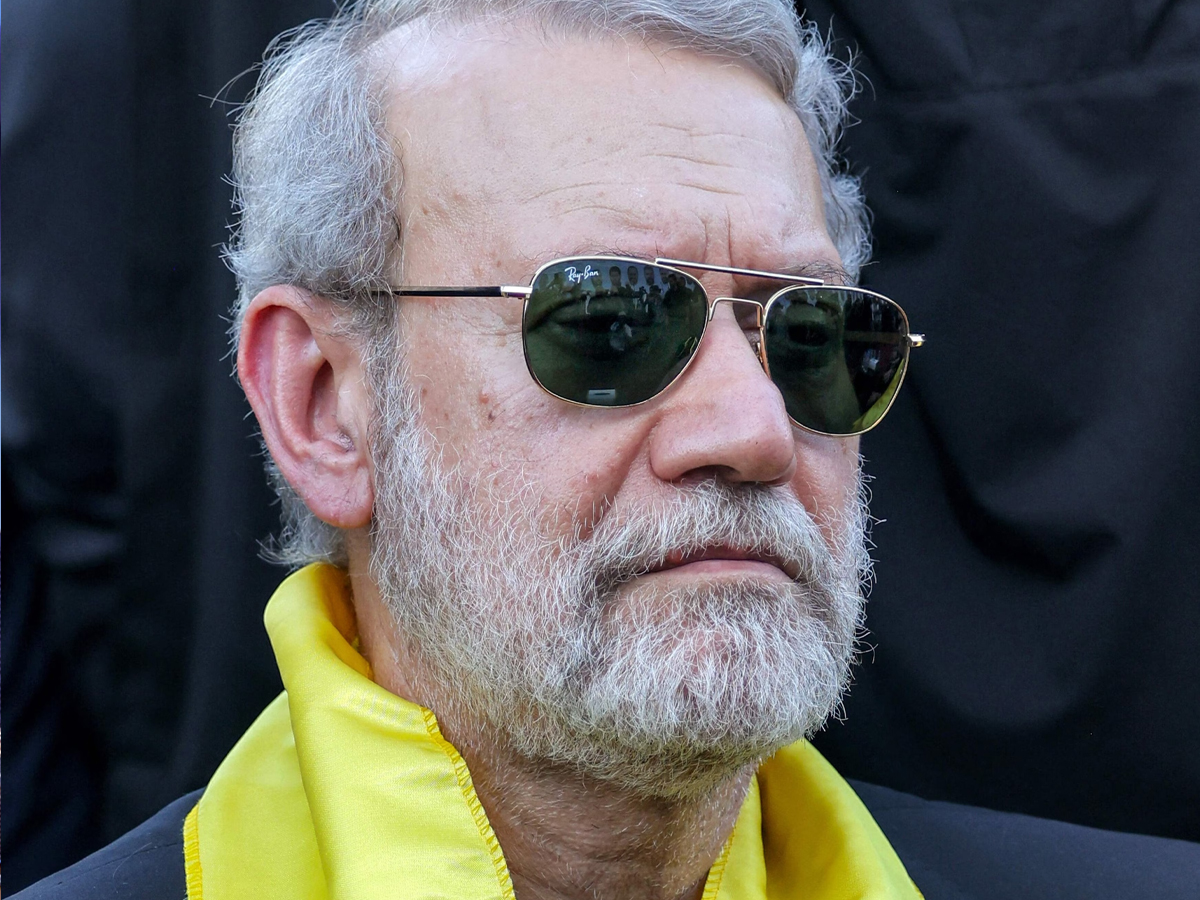
Larijani currently serves as secretary of Iran’s Supreme National Security Council, the country’s most powerful body on defence, nuclear policy, and regional strategy. (Photo: Social Media)
As the confrontation between the United States, Israel, and Iran sharpens, a familiar but increasingly dominant figure has moved to the centre of power in Tehran. Behind closed doors and far from the spotlight, Ali Larijani has emerged as the man managing Iran’s most sensitive political, military, and diplomatic decisions during one of the country’s most dangerous moments in decades.
In early January, as protests spread across Iran and fears of possible US military action grew, Supreme Leader Ayatollah Ali Khamenei turned to Larijani to stabilise the system. Since then, senior insiders say Larijani has taken charge of crisis management, effectively sidelining the elected government as Iran prepares for the possibility of wider war.
Ali Ardashir Larijani, 67, comes from one of Iran’s most influential religious and political families. Over four decades, he has built deep ties across Iran’s clerical, military, and intelligence institutions. Those connections now place him at the heart of decision-making.
Larijani currently serves as secretary of Iran’s Supreme National Security Council, the country’s most powerful body on defence, nuclear policy, and regional strategy. In practical terms, this role gives him authority over issues that normally cut across ministries, the military, and the presidency.
While President Masoud Pezeshkian remains the public face of government, his influence has visibly shrunk. Pezeshkian himself has played down his political role, once remarking, “I’m a doctor, not a politician.”
Larijani’s responsibilities have expanded rapidly in recent months. He oversaw the state response to nationwide protests demanding an end to Islamic rule. At the same time, he led sensitive nuclear discussions with Washington while coordinating behind the scenes with regional intermediaries, including Qatar and Oman.
On the global stage, Larijani has acted as Iran’s key channel to major allies. He travelled to Moscow to meet Vladimir Putin, holding talks focused on security coordination and the growing Western military presence in the region.
As the US increased troop deployments, Larijani also began preparing contingency plans for a confrontation. Speaking during a visit to Doha, he warned, “We are ready in our country. We are not looking for war, and we won’t start the war. But if they force it on us, we will respond.”
Larijani’s rise did not happen overnight. He was among the early members of the Islamic Revolutionary Guard Corps and later became Iran’s chief nuclear negotiator. He also headed the state broadcaster IRIB, shaping Iran’s media narrative for years.
From 2008 to 2020, Larijani served as speaker of parliament, making him one of the longest-serving figures in the post-revolutionary era. In 2021, Khamenei appointed him to negotiate a 25-year strategic agreement with China, a deal worth billions and central to Iran’s long-term economic survival.
Speculation about Iran’s leadership future has intensified amid regional conflict. While Khamenei has reportedly named potential successors in private, Larijani is unlikely to formally replace him because he is not a senior Shiite cleric — a key constitutional requirement.
However, that limitation does not reduce his influence. Analysts see Larijani as a stabilising power broker who could manage the system during war or a leadership transition.
At a time when Iran faces external military pressure and internal unrest, Larijani represents continuity and control. Trusted by the Supreme Leader and respected across institutions, he has become the quiet centre of gravity in Tehran — a man shaping Iran’s response to one of the biggest crises in its modern history.
