Bangladesh Elections 2026: Surveys predict close BNP vs Jamaat contest as voters decide next government, seat projections, vote share and key political impact.
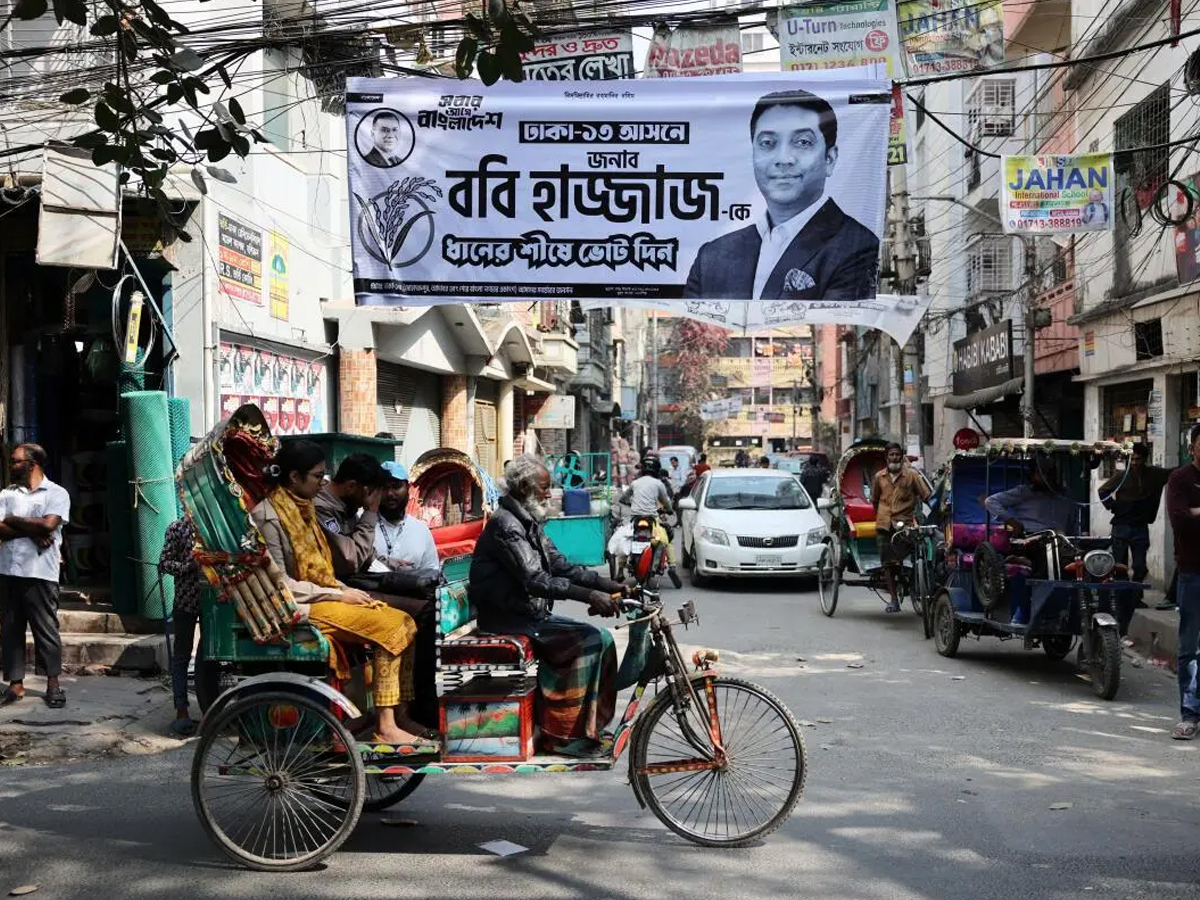
Campaigning has ended across the country as candidates compete for 299 directly contested seats. (Photo: Reuters)
Bangladesh prepares for one of its most crucial elections in recent history as voters head to the polls to choose a new government after major political upheaval. The February 12 parliamentary election marks the first national vote since the fall of the previous regime and could reshape the country’s political future. Apart from deciding leadership, citizens will also weigh in on broader political changes and the future direction of governance.
Campaigning has ended across the country as candidates compete for 299 directly contested seats. With around 127 million registered voters expected to participate, analysts describe the election as one of the most closely watched contests in South Asia this year.
Recent surveys show a tight race between the Tarique Rahman-led Bangladesh Nationalist Party (BNP) alliance and the Shafiqur Rahman-led Jamaat-e-Islami coalition. One survey projects the BNP alliance securing about 44.1 percent of the vote, while the Jamaat-led bloc could receive around 43.9 percent, indicating an extremely close national contest.
Despite the narrow margin in vote share, analysts say the outcome may depend more on constituency-level battles rather than overall popularity.
Survey findings suggest that Islamist parties could win around 105 constituencies, while the BNP alliance may secure approximately 101 seats, considered relatively safe. Another opinion poll indicates a much larger potential victory for BNP, projecting roughly 208 seats for its alliance compared to about 46 seats for Jamaat’s coalition.
Political observers believe these differing projections reflect regional variations and uncertainties in voter turnout. Around 75 constituencies reportedly remain highly competitive, where even small shifts in support could change the outcome.
Tarique Rahman’s BNP appears to maintain strong nationwide popularity according to survey data. One poll suggests that a majority of voters continue to favour the BNP as their political choice. Analysts say the party has positioned itself as a liberal-centrist alternative in the current political landscape.
The BNP promotes a national-first approach under the slogan "Friend Yes, Master No", emphasizing sovereignty while maintaining diplomatic ties.
Despite trailing slightly in national vote share, Jamaat-e-Islami’s alliance shows strong local organizational networks in several regions. Surveys indicate the coalition may perform better in constituencies where grassroots mobilization plays a decisive role.
Analysts note that constituency-level strength could translate into significant seat wins even if overall vote share remains marginally lower than BNP’s.
The latest electoral data confirms that of the 12.77 crore eligible voters:
This gender balance reflects continued efforts to make the electoral process inclusive and representative of the country’s diverse population.
The election outcome could influence regional diplomacy, particularly relations with India. Observers suggest that New Delhi may seek to strengthen ties with whichever government emerges victorious. Analysts say the BNP currently occupies political ground once dominated by earlier ruling parties, potentially affecting future foreign policy decisions.
