Newly released Epstein files detail how Karyna Shuliak secured a US visa, green card and citizenship through legal strategies, marriage and university links.
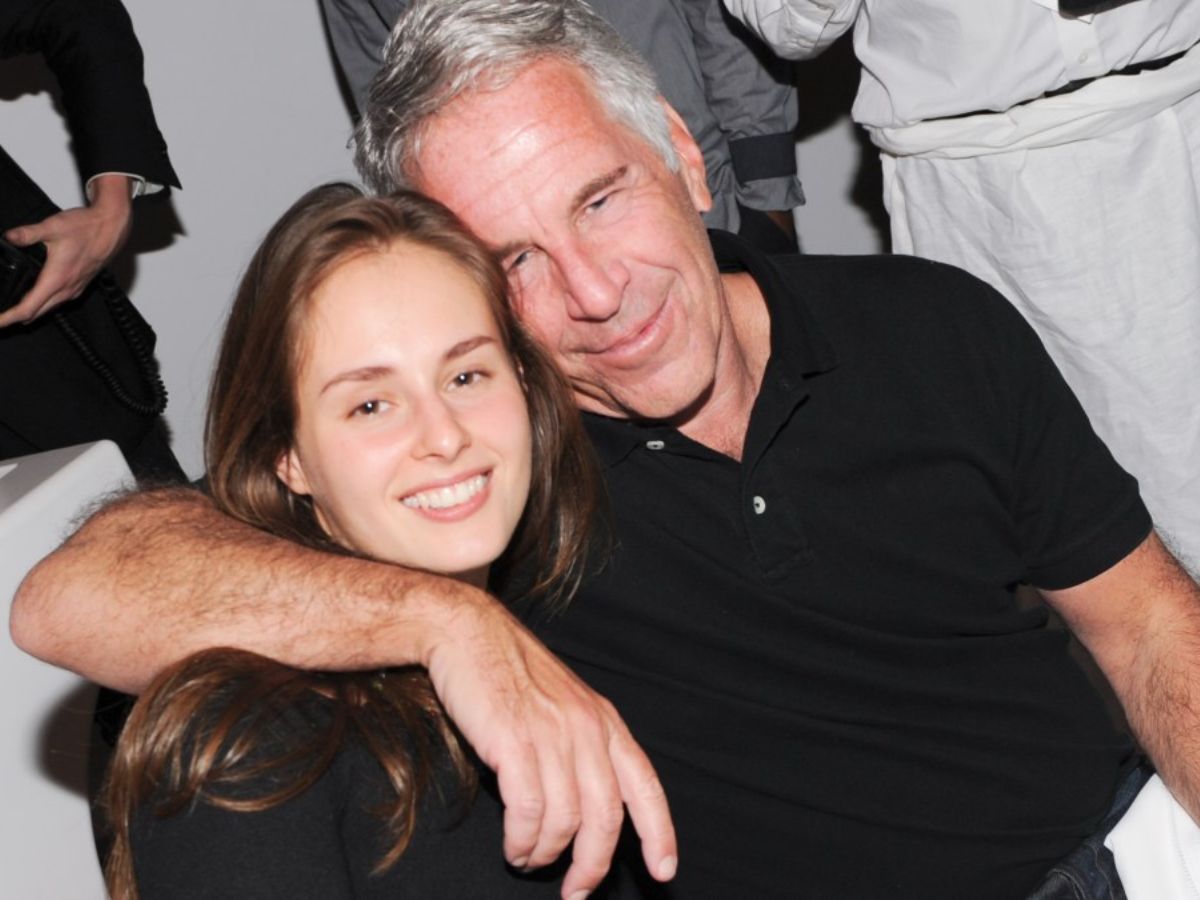
Newly released Epstein files show how Karyna Shuliak secured a US visa, green card and citizenship [Photo: X]
Freshly released US Justice Department records have shed new light on how convicted sex offender Jeffrey Epstein and members of his inner circle handled immigration matters for foreign women connected to him.
The documents reveal a pattern of legal manoeuvring that included student visas, English-language programs, work petitions and, in at least one case, marriage to an American citizen. One of the most detailed accounts centres on Karyna Shuliak, a Belarus-born woman who was in a long-term relationship with Epstein and later became a US citizen.
Karyna Shuliak was born in Belarus and moved to the United States in the early 2010s. Court documents and public records describe her as a dental student who later attended Columbia University. She remained closely associated with Jeffrey Epstein for several years and reportedly lived at properties linked to him.
The newly released records offer insight into her immigration journey, including her transition from a student visa holder to a lawful permanent resident and ultimately to a naturalised US citizen.
By 2013, Shuliak’s immigration status in the United States had become uncertain. Emails in the Justice Department records show that she had overstayed her visa while also pursuing asylum, two paths that created legal complications.
"She's overstayed," one lawyer warned in an email exchange. The attorney also pointed out that seeking asylum conflicted with the temporary intent required for a student visa.
Epstein personally discussed strategy in writing. "We will need to decide if pushing the asylum and redoing it is a more likely path to success than the prosecutorial descretion re the reinstatement," he wrote while weighing legal options. Within months, a new solution emerged.
On October 9, 2013, Shuliak married a US citizen in New York. The spouse’s identity remains redacted in official documents. Records show that both individuals listed the same Manhattan address, 301 East 66th Street, a location that appears repeatedly in documents linked to Epstein’s network.
Soon after the marriage, Shuliak and her immigration attorney began the process of applying for a family-based green card. By early 2015, she confirmed her success in an email to her lawyer: "I have received my green card!! Thank you so much for all your help!!!" She later became a naturalized US citizen in 2018.
On the day of her naturalization interview, one of Epstein’s regular immigration lawyers wrote jokingly: "Now that she's an american you should throw her a big ole party," suggesting "a mechanical bull, red, white and blue balloons, and deep fried snickers bars on flag toothpicks."
Later that same year, Shuliak filed for divorce. The divorce was concluded within a year.
The files also indicate that Epstein helped facilitate Shuliak’s admission as a transfer student to Columbia University’s dental school.
In 2012, university officials corresponded with her regarding immigration questions. One email read: "I am so sorry if you were given the run around with the immigration office today. At this time, I believe that everything is fine with your immigration status."
Behind the scenes, Epstein sought additional legal guidance. In a message to a British associate, he asked about "a good lawyer friend for immigration in Washington."
The associate replied that a contact had "links to the highest level" of immigration authorities. Emails suggest that legal professionals participated in discussions regarding her status, though records indicate no formal retention occurred in at least one instance.
Documents suggest that English-language programs often served as an entry point into the US immigration system for women associated with Epstein. In 2010, Shuliak enrolled at the Spanish American Institute in Manhattan. Emails show that Epstein funded tuition for multiple women in similar programs.
In one message about another individual, he wrote: "This is the English language school that Anna in Paris would like to join. Get an I-20 issued and get a visa, shees russian but staying in Paris." The I-20 form is required to apply for a US student visa.
In another internal exchange, an employee requested standardised test materials, writing, "Jeffrey needs TOEFL books again for the island," highlighting the need for coordinated preparation for visa requirements.
The files also reveal attempts to secure work visas for women in Epstein’s circle. Lawyers filed petitions for O-1 visas, which are reserved for individuals with “extraordinary ability or achievement.” One associate reportedly filed work petitions citing volunteer work and modelling careers as justification. It remains unclear how many of these applications succeeded.
Epstein also financially backed a modelling agency connected to visa sponsorships. A former bookkeeper testified: "Epstein was paying for the visas," adding that visa processes were handled through agency channels.
In another exchange, Epstein wrote: "Call immigration, does she need an I-20 with her visa ???" Follow-up messages showed concern about travel risks. One associate later remarked, "I am glad she didn't go. I felt sick at the thought of her coming back on the plane and something going wrong."
Taken together, the newly released documents depict a sustained effort to navigate, and at times strategically use, the US immigration system to maintain the presence of foreign women within Epstein’s circle.
The records show legal consultations, educational enrolments, marriage-based green card applications and work visa petitions operating simultaneously. While the documents do not confirm the outcome of every case, they provide a clearer picture of how immigration channels were used and managed behind the scenes.
The revelations add another layer to the ongoing examination of Epstein’s network and influence, even years after his death.
