Supreme Court scrutiny of Trump’s bid to fire Fed Governor Lisa Cook raises urgent questions about central bank independence and presidential power.
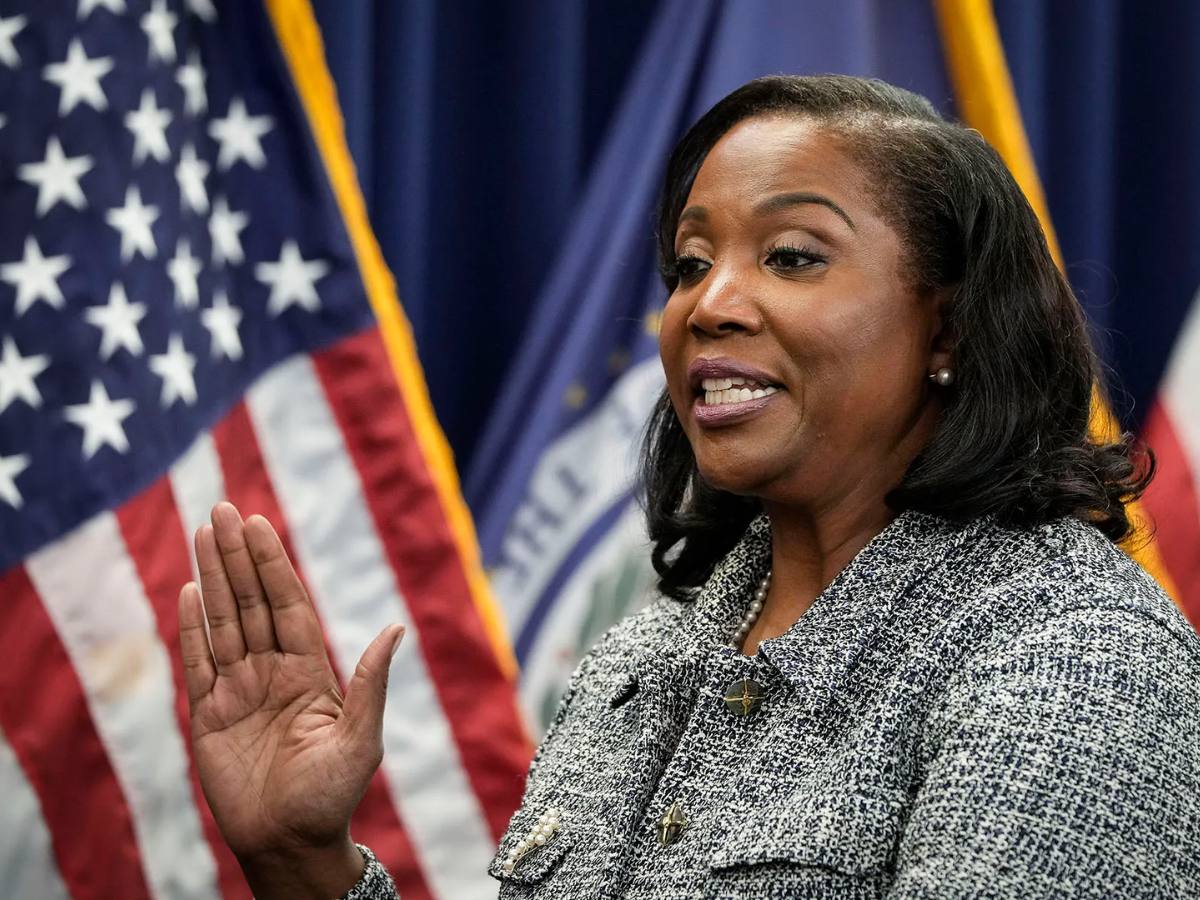
Federal Reserve Governor Lisa Cook during a public policy discussion amid a landmark Supreme Court battle over Fed independence (Photo: X)
The Lisa Cook Federal Reserve governor legal showdown has emerged as one of the most consequential institutional battles of Donald Trump's second term. The balance is not just a single appointment but, rather its the broader question of whether the White House can breach the centuries-old shield that keeps America's central bank insulated from political pressures. The Supreme Court's decision on this case with world markets watching, will reshape a delicate balance between presidential power and economic independence.
Lisa Cook is a senior governor at the Federal Reserve because of that she is one of the most important voices in framing the economic policy of the nation. She was appointed in 2022 as the first Black woman to take a seat on the Fed's Board of Governors. Her term extends through 2038, an overt expression from Congress that monetary policy leadership should be insulated from winds of political change. Specifically, she is highly regarded for her research-led approach, particularly on labor markets, inequality, and financial stability.
The academic odyssey of Cook involves some of the most prestigious institutions in the world, across the Atlantic. She started off with a Bachelor of Arts in philosophy from Spelman College. She subsequently acquired another undergraduate education in philosophy, politics and economics from Oxford University and later, she acquired her PhD in economics from the University of California, Berkeley.
Prior to her appointment in the Fed, Cook developed a diverse professional life. She was a senior member of President Barack Obama’s Council of Economic Advisers. In addition, Cook worked in the US Treasury’s Office of International Affairs. Cook taught economics as well as international relations in Michigan State University. In the Fed, Cook serves as a member of the seven-member Board of Governors. The Board of Governors supervises the Federal Open Market Committee which sets rates governing everything from mortgages to business borrowings.
During the oral arguments in the Supreme Court case, justices across the partisan divide seemed uncomfortable with Trump’s attempt to remove Cook." They question the haste, and this tight and narrow construal of "for cause" removal. Justice Brett Kavanaugh warned that allowing a president to act with little actual judicial review might "seriously jeopardize" the independence of the Fed. Justices Sotomayor and Amy Coney Barrett focused on economic risk: "the potential economic harm from haste—a decision that might destabilize confidence.
Indeed, Cook has leaned more toward the dovish camp in the Fed. Cook has been part of the group calling for cuts in interest rates in the past three meetings. As a labor economist, Cook is reportedly interested in employment and, more specifically, the problem of borrowing for consumers. As inflation has moderated, but growth has been uneven, her views express concern for consumer credit, housing, and job market wage conditions.
Legally, ‘a president may remove only for cause,’” meaning only if there is reason, hence protecting the central bank from any form of political reprisal. Trump argues that mistakes found on Cook's 2021 residential loan documents constituted sufficient reason. Cook says she did not break any rules when she made the loan decisions. Currently, decisions not to remove Cook have been upheld by lower courts, while the Supreme Court appears reluctant to overturn these decisions. The final outcome may establish how much direct presidential pressure the central bank is subject to.
