Reza Pahlavi, son of Iran’s last Shah, says millions want him as a transitional leader after Ayatollah Ali Khamenei’s death. Know his life, family and net worth.
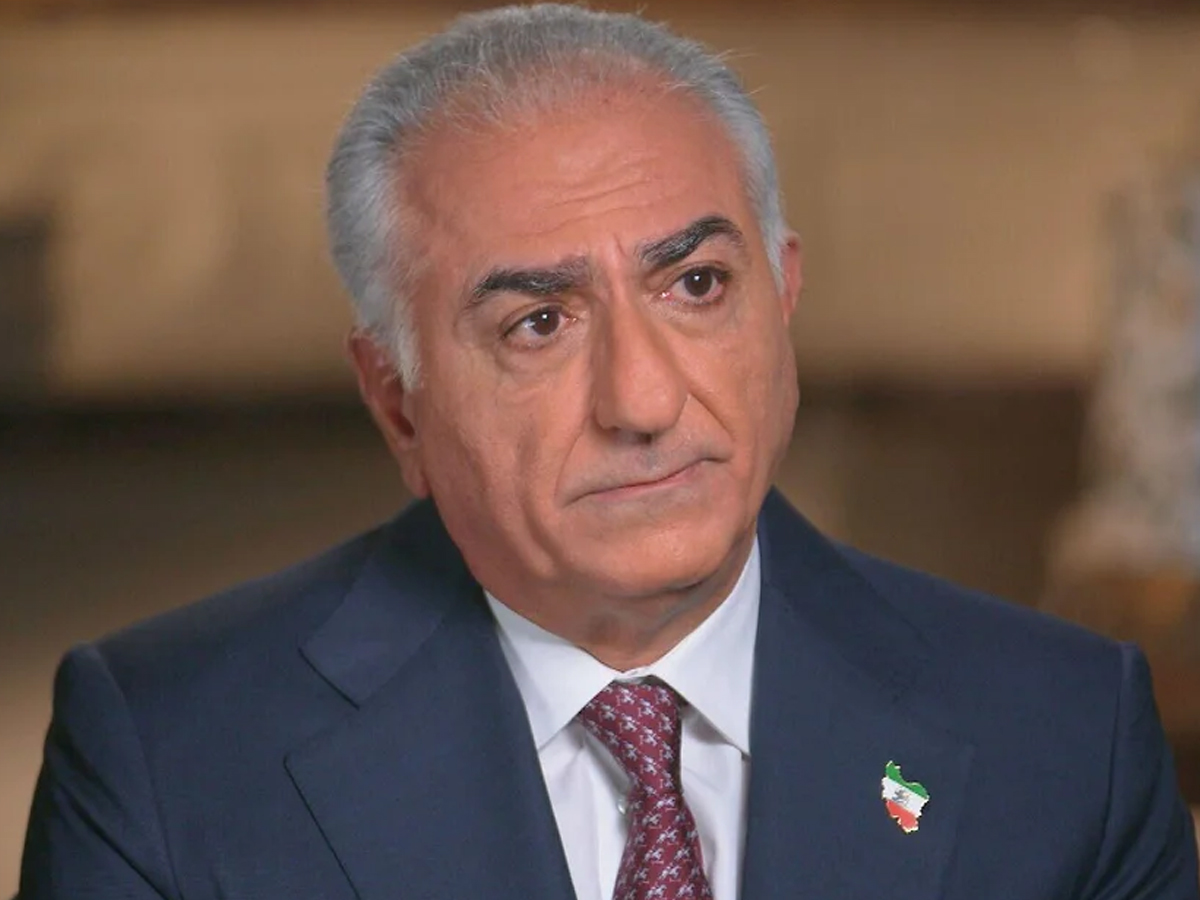
In a recent interview with 60 Minutes, he claimed broad popular support, saying, “millions of Iranians inside and outside Iran are calling my name”. (Photo: 60 minutes)
Following the death of Ayatollah Ali Khamenei in joint US-Israeli airstrikes, Reza Pahlavi, the son of Iran’s last Shah, has re-emerged on the global stage, presenting himself as a possible transitional leader for a post-theocratic Iran. From exile, Pahlavi says millions of Iranians want him to guide the country toward democracy, secular governance, and free elections at a moment when Iran faces one of the most uncertain chapters in its modern history.
In the wake of Ayatollah Ali Khamenei’s death during joint US-Israeli strikes, Reza Pahlavi, the son of Iran’s last monarch, has stepped forward as a possible face of Iran’s future. Speaking publicly from exile, Pahlavi has described himself not as a ruler-in-waiting but as a bridge to democracy.
In a recent interview with 60 Minutes, he claimed broad popular support, saying, “millions of Iranians inside and outside Iran are calling my name” and view him as a transitional leader who can guide the country toward free choice and democratic rule.
Pahlavi has outlined a clear political roadmap if he plays a role in Iran’s transition. He says his goal is not power for himself, but creating conditions where Iranians can decide their own future.
“They [Iranians] trust me as a transitional leader. Not as the future king, or future president, or future whatever. I’m totally focused on my mission in life, which is to bring the country to a point where it can make that free choice. That would be enough for me, having said ‘mission accomplished,” said Pahlavi.
He has repeatedly stressed that secularism is essential, calling it a “prerequisite to democracy,” and arguing that Iranians understand the cost of living under a religious dictatorship.
Reza Pahlavi is the eldest son of Mohammad Reza Shah Pahlavi, who ruled Iran until the 1979 Islamic Revolution. His father’s reign ended amid widespread protests, accusations of political repression, and deep economic inequality, paving the way for the establishment of the Islamic Republic.
Pahlavi often contrasts his own platform with that of the era, emphasizing equality before the law, civil liberties, and electoral democracy. He has listed four core principles for a future Iran: territorial integrity, separation of religion and state, equal rights for all citizens, and free elections.
Now 65, Pahlavi has lived outside Iran for nearly five decades. He left the country as a teenager after the monarchy collapsed and has since built his life largely in the United States. His exact net worth is not publicly disclosed, but it is believed to stem from inherited family assets, investments, and speaking engagements rather than direct political funding.
Despite his high profile abroad, analysts note that he lacks a strong organisational base inside Iran, with most of his visible support coming from sections of the Iranian diaspora.
Reza Pahlavi is married to Yasmine Pahlavi, a lawyer and human rights advocate. The couple has three daughters, one of whom has drawn public attention for openly supporting democratic reforms and human rights for Iranians, especially women.
His family life, often highlighted in interviews, reinforces his image as a modern, reform-minded figure rather than a traditional monarch.
Pahlavi has acknowledged backing from some figures aligned with Donald Trump, though he remains cautious about foreign endorsements. He has said he does not expect formal support from any government but hopes international leaders will support the Iranian people’s democratic aspirations.
“I don’t think that somebody in my position will ever expect to have an official endorsement of a foreign government or a foreign leader. What I do know now is that millions of Iranians inside Iran and outside of Iran are calling my name. They recognise in me the person uniquely placed to play a role of transitional leadership,” said Pahlavi.
As Iran stands at a historic crossroads, Reza Pahlavi’s claim places him once again at the centre of debate over who could shape the country’s next chapter.
