
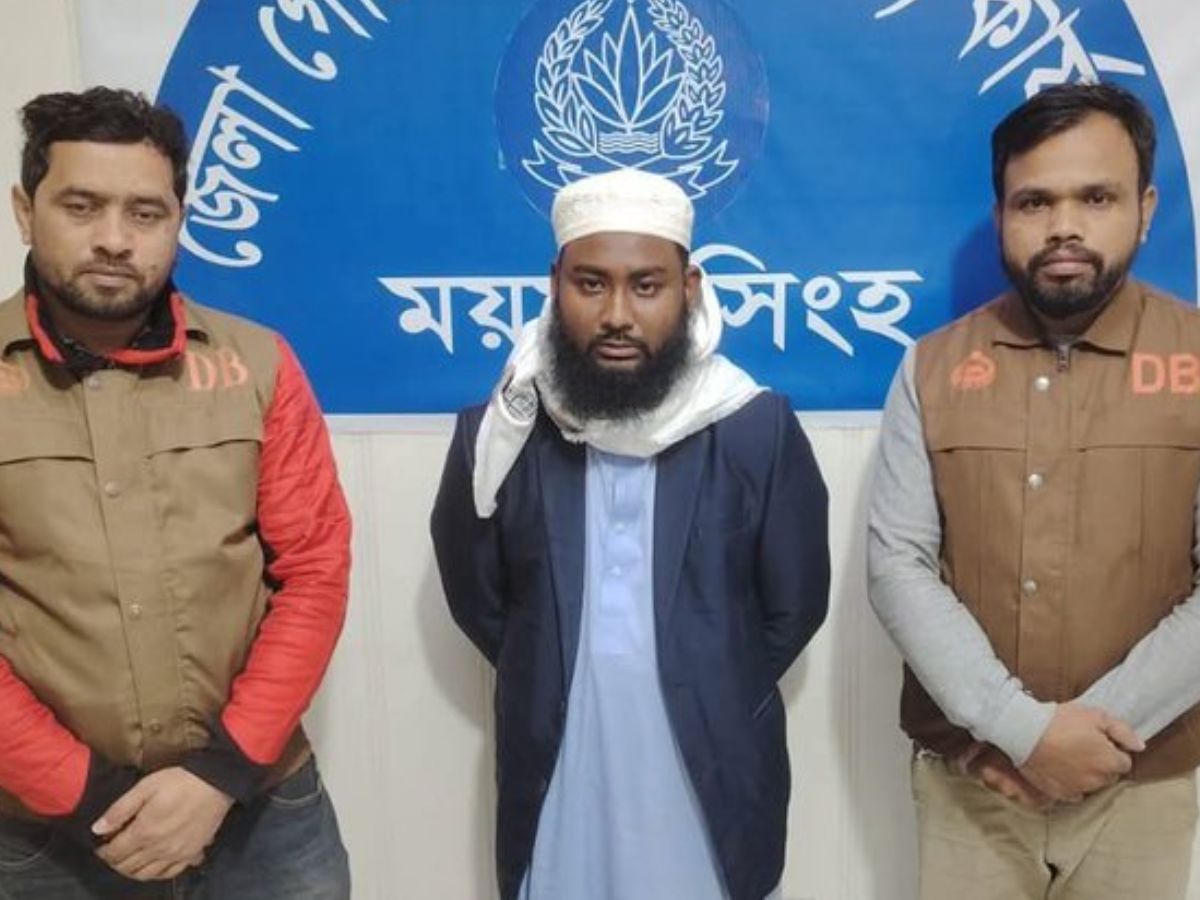
Bangladesh police have captured a key suspect believed to have led the brutal lynching of Hindu garment worker Dipu Chandra Das in Mymensingh’s Bhaluka area. The arrest of 25-year-old Mohammad Yasin Arafat, who allegedly mobilised the violent mob, marks a major development in a case that outraged communities in Bangladesh and beyond. The incident and investigation have revived intense focus on mob justice and the safety of minority groups in the country.
Who is Yasin Arafat? Mastermind Behind Dipu Chandra Das Mob Lynching
Police arrested Mohammad Yasin Arafat on Thursday afternoon in the Sarulia area of Dhaka with help from the Dhaka Metropolitan Police. Authorities say Arafat played a central role in orchestrating the attack on Das.
Yasin Arafat, 25, had been on the run for nearly two weeks after the December 18 killing. During this period, he moved between various madrasas in Dhaka, even working briefly at a madrasa under a false identity to evade arrest.
Police said he was previously an imam at the Sheikhbari Mosque in Kashar and a teacher at the Madina Tahfizul Quran Madrasa. Investigation teams said Arafat helped gather people with slogans outside the garment factory, directly encouraging and leading the mob that eventually killed Dipu.
What Happened to Dipu Chandra Das?
On the evening of December 18, 28-year-old Dipu Chandra Das was attacked by a mob in the Pioneer Knit Composite Factory in Bhaluka upazila. The crowd accused him of blasphemy, claims that authorities later found no evidence to support, and beat him to death.
After the attack, witnesses reported that his body was dragged away, tied to a tree, and set on fire, while bystanders recorded the scene on mobile phones.
Many residents and activists argue that the violence may have stemmed from workplace disputes and a false allegation spread rapidly among workers, leading to the fatal assault.
Bangladesh Lynching: Arrests So Far & Police Actions
With Arafat’s arrest, officials say 21 people have now been detained in connection with the case. Six others were picked up earlier for allegedly inciting the crowd, spreading rumours, or aiding the violence.
Of those detained, at least nine suspects have given confessional statements in court, and several key witnesses have testified about what they saw at the factory gate. Eighteen suspects have already been remanded to jail following court proceedings.
Police are continuing to comb through video footage, witness accounts, and social media posts to identify others who played roles in the attack.
Public Outrage and Minority Safety Concerns
The lynching reignited widespread anger and debate both inside Bangladesh and abroad. Critics of the interim government argue that the crime reflects deeper issues with mob justice, social media misinformation, and weak protection for minorities.
Earlier, community leaders and rights groups had condemned the killing and demanded strong legal action against those responsible for inciting and carrying out the violence. Those calls grew louder after allegations surfaced that police did not act quickly to protect Das when he was in custody before the mob attack.
Next Steps and Legal Proceedings
While the arrest of Arafat is seen as a breakthrough, police stress that the investigation continues and that bringing the remaining suspects to justice remains a priority. Prosecutors are expected to build stronger evidence based on confessions and a forensic review of the attack site.
Officials have pledged to ensure that all those involved in the brutal killing face trial under Bangladesh’s criminal law.




