US-Israel strikes in Iran reportedly killed Ayatollah Khamenei’s son-in-law and daughter-in-law, sparking fierce retaliation and regional tensions. Conflict escalation raises global concern.
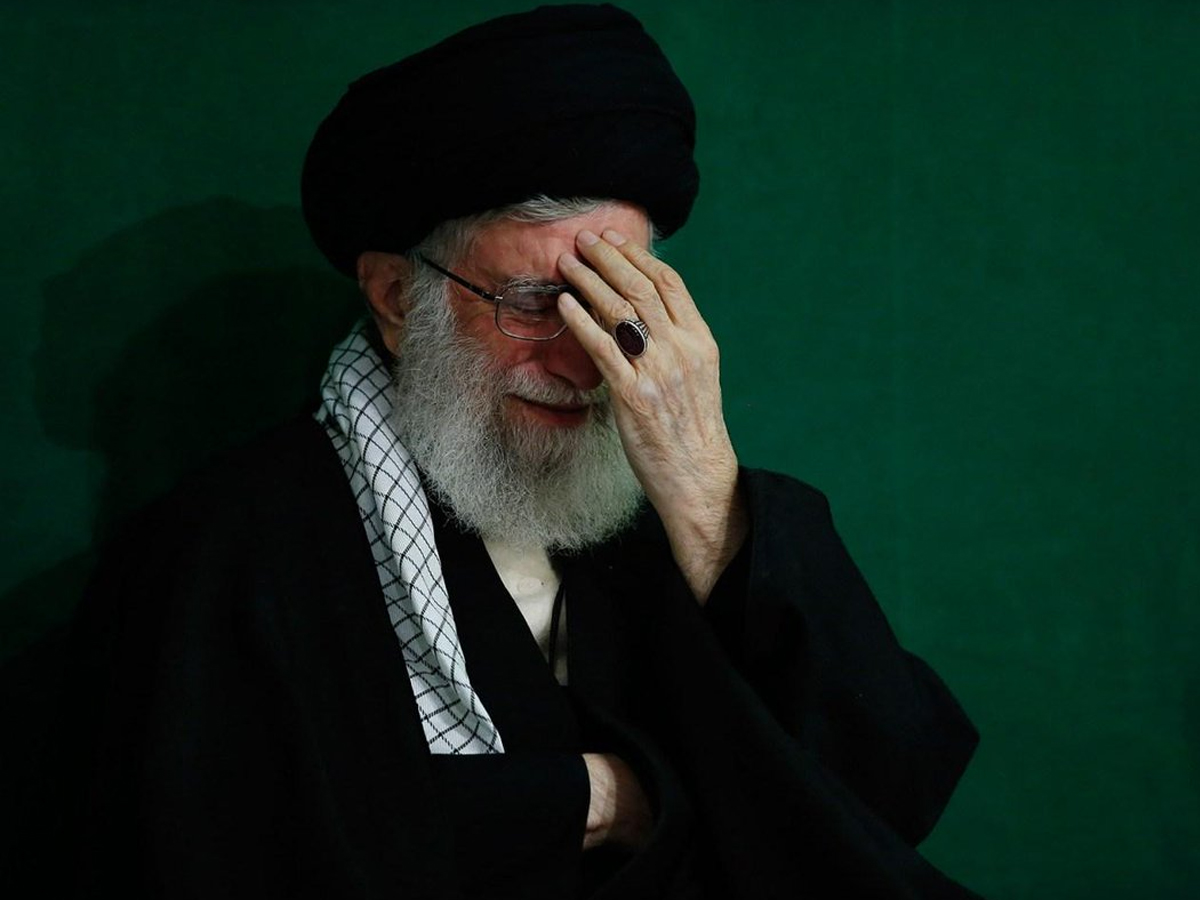
At this stage, Iran’s official media and government statements have not independently verified all claims regarding specific family deaths, and some announced details remain unconfirmed by state channels. (Photo: Social Media)
Iran has confirmed that two close family members of Supreme Leader Ayatollah Ali Khamenei, his son-in-law and daughter-in-law, were killed in the joint military strikes launched by the United States and Israel on Saturday, Tehran City Council sources reported.
The losses are a significant escalation in the conflict, as such personal casualties involving the country’s most powerful clerical leader mark an unprecedented moment in recent Middle Eastern history.
At this stage, Iran’s official media and government statements have not independently verified all claims regarding specific family deaths, and some announced details remain unconfirmed by state channels.
The United States and Israel carried out a large-scale military operation that resulted in the killing of Iran’s Supreme Leader Ayatollah Ali Khamenei, US President Donald Trump claimed on Saturday, in what could become a turning point for the Middle East.
Trump said the strike opened what he called a rare opportunity for the Iranian people to reclaim their country, even as the development deepened fears of wider regional turmoil and uncertainty about Iran’s political future.
In a social media post, Trump declared, “Khamenei, one of the most evil people in History, is dead.” He also warned that the United States would continue “heavy and pinpoint bombing” in the coming days and beyond, as part of a wider campaign aimed at crippling Iran’s nuclear programme.
Iranian authorities, however, have not issued any immediate confirmation regarding the reported death of Ayatollah Ali Khamenei, leaving the claim unverified amid rapidly evolving tensions.
According to local council statements and some regional reporting:
The daughter-in-law is identified as Zahra Haddad Adel, married to Mojtaba Khamenei, one of the Supreme Leader’s sons known for his influence in clerical and political circles.
The son-in-law has not been officially named, but is described as a member of the extended leadership family.
These reported deaths add to claims that multiple family members, including Khamenei’s daughter and grandchild, were also killed in the bombardment.
According to reports, Boshra Khamenei and Hoda Khamenei are identified as daughters of Iran’s Supreme Leader, Ayatollah Ali Khamenei. Separate reports dated March 1, 2026, claim that one of Khamenei’s daughters and a grandchild were killed during joint U.S.–Israeli military strikes, though the details have not been independently confirmed.
The U.S. and Israeli leadership earlier asserted that Supreme Leader Ayatollah Ali Khamenei himself may have been killed in the strikes, citing “many indications” and damage to his Tehran compound.
However, Iranian officials have rejected those reports, insisting the Supreme Leader remains alive and “firmly in command.”
This divergence in claims has created international uncertainty and raised tensions even further.
The military operation — described by some U.S. and Israeli officials as a strategic attack — targeted a large number of military sites across Iran, including missile sites, command centres, and leadership compounds.
Iran, for its part, sees the action as unprovoked aggression during ongoing disagreements over its nuclear programme and regional policies.
The attacks and retaliation have drawn global concern:
In response to the strikes, Iran launched missiles and drones at U.S. military bases across the Middle East, including in Qatar, Kuwait, Bahrain, and the UAE, sharply escalating the conflict.
Iran also closed the Strait of Hormuz, impacting global energy supply routes, and vowed a strong counterattack.
The clashes have sparked condemnation from Gulf states and fears among world leaders of a broader regional war.
