
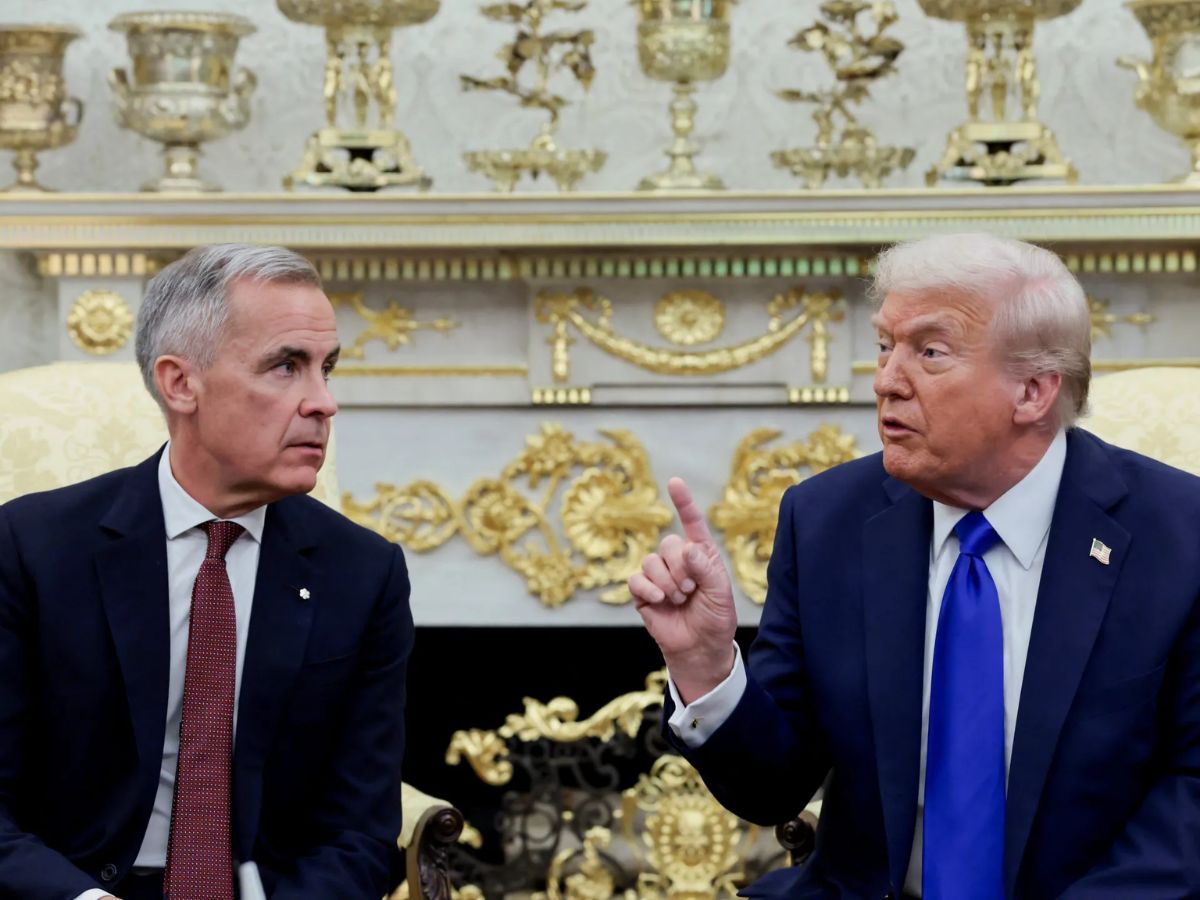
US President Donald Trump has withdrawn Canadian PM Mark Carney’s invitation to join his newly formed ‘Board of Peace,’ escalating diplomatic tensions between the US and Canada.
The dispute follows a sharp public exchange over Trump’s remarks about Canada’s role and contribution on the global stage. The move marks an unusual rupture between two longtime allies and has drawn attention from world capitals.
Trump announced the decision on his Truth Social platform, saying the prestigious global forum will no longer include Canada’s participation. The cancellation comes just days after Carney criticised aspects of US foreign policy at the World Economic Forum in Davos.
Trump Denied Mark Carney from Joining the ‘Board of Peace’
US President Donald Trump officially withdrew Canadian Prime Minister Mark Carney’s invitation to the newly formed Board of Peace. In a post on his Truth Social platform, Trump wrote:
“Dear Prime Minister Carney: Please let this Letter serve to represent that the Board of Peace is withdrawing its invitation to you regarding Canada’s joining, what will be, the most prestigious Board of Leaders ever assembled, at any time.”
The move ends Canada’s potential participation in the forum, which was intended to bring global leaders together for diplomatic and peace-building initiatives.
What Could Be the Reason?
The cancellation follows a public dispute at the World Economic Forum in Davos. Trump had said, “Canada lives because of the United States,” implying that US support is critical to Canada’s well-being. Carney countered sharply, stating:
“Canada doesn’t live because of the United States. Canada thrives because we are Canadians.”
Diplomatic analysts say the disagreement highlights broader tensions between the US and Canada, including trade, defence cooperation, and climate policy. The public spat made Carney’s participation in the Board of Peace politically sensitive for Trump, leading to the withdrawal.
What Trump Said About Canada at Davos?
Trump had criticised Canada during his speech at the World Economic Forum, saying that “Canada lives because of the United States.” He also suggested that Canada should be more grateful for US support on security and economic issues.
In another speech in Davos, Trump touted his proposed Golden Dome missile defence system, saying it would also protect Canadian airspace — a comment that drew confusion and criticism.
Mark Carney Hits Back: Canada Thrives on Its Own
Carney responded firmly after returning to Canada, rejecting Trump’s remarks about dependency. In a national address, he said, “Canada doesn’t live because of the United States. Canada thrives because we are Canadian.” Carney also highlighted Canada’s strong values, democratic principles, and long history of partnership with the US.
His comments reflect a growing emphasis on Canadian sovereignty and a desire for middle powers to navigate a changing global order without being overly reliant on any one superpower.
Why the ‘Board of Peace’ Matters?
Trump unveiled the Board of Peace initiative at the World Economic Forum as a global peacebuilding body, initially tied to efforts to stabilise the Middle East, including support for a ceasefire in Gaza. Member nations were expected to contribute financially and participate in diplomatic talks.
Canada had shown early interest in joining the board, but Trump’s decision to revoke the invitation now casts doubt on the initiative’s credibility and international support. Other traditional US allies, including Britain, France, and Italy, have so far declined to join the board.
Diplomatic Fallout and Wider Implications
The cancellation is likely to have broader diplomatic consequences. Canada and the US share a long history of economic, defence, and cultural ties, including cooperation through NORAD and extensive trade agreements.
Experts say the dispute highlights growing friction in US‑Canada relations, particularly as both nations navigate trade pressures, security challenges, and shifting geopolitical landscapes. Analysts also note that tensions may complicate future collaborations on defence, climate goals, and multilateral institutions.
Domestic Reactions in Canada
Carney’s remarks have resonated with many Canadians, with political observers describing his stance as a strong assertion of national independence. Some Canadian leaders have welcomed his message of self‑reliance and sovereignty, especially in light of global uncertainties.
However, the diplomatic row has also sparked debate in Canada about how best to engage with the United States, particularly in areas of security cooperation and economic alignment.
What’s Next for US-Canada Ties?
The dispute underlines the delicate balance in US‑Canada relations, even among close allies. While both countries maintain deep ties, the public nature of this clash could impact future negotiations and cooperation in international forums.
Observers will be watching how the White House and Ottawa navigate the aftermath of this diplomatic standoff.




