
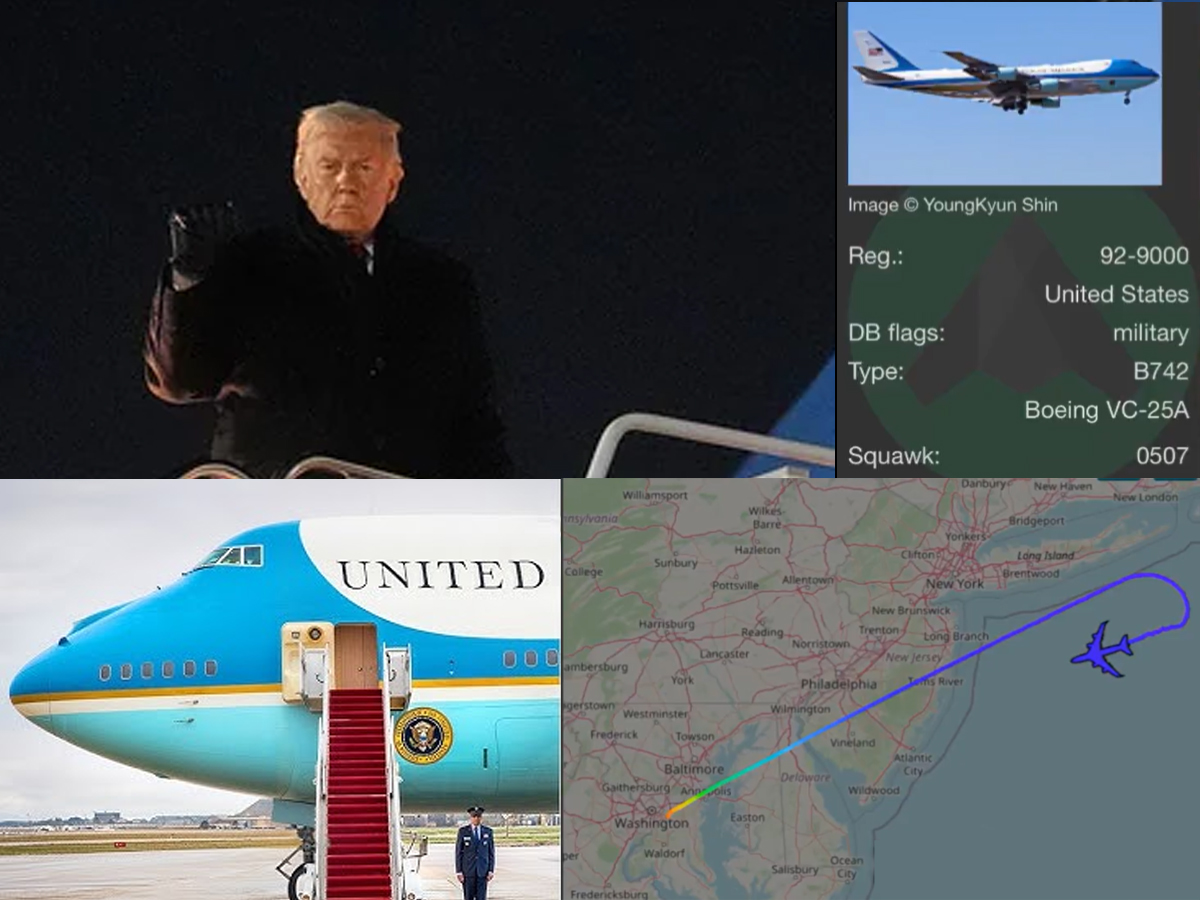
US President Donald Trump’s Air Force One made an unexpected U-turn mid-flight and returned to Joint Base Andrews in Washington, D.C., shortly after taking off for Davos, Switzerland, where he was scheduled to speak at the World Economic Forum. The White House confirmed the plane turned back due to a “minor electrical issue” identified by the aircraft’s crew, who chose to return out of caution.
Reporters on board said they briefly experienced a light flicker in the press cabin soon after takeoff, leading to the decision to return to base. Trump and his team will switch to another aircraft and continue their journey to the forum.
Electrical Issue Air Force One: A Closer Look at the Issue
According to White House Press Secretary Karoline Leavitt, the decision to turn back came after the flight crew detected a minor problem with the plane’s electrical systems not long after departure. Leavitt said the move was made “out of an abundance of caution” to ensure the safety of the president and others on board.
🚨 BREAKING: Air Force One, which President Trump recently boarded to head to the World Economic Forum in Davos, Switzerland, has suddenly TURNED AROUND and seems to be headed back to DC
It’s unclear why AF1 pulled a U-turn
Pray for President Trump’s safety tonight 🙏🏻 pic.twitter.com/ILBGGYFtRe
— Nick Sortor (@nicksortor) January 21, 2026
Officials stressed that Trump was not in danger and that no injuries or serious events took place during the flight. Upon landing at Joint Base Andrews, Trump is expected to board a backup aircraft and resume his trip to Davos, though his arrival and scheduled address may be delayed.
What This Means for Trump’s Davos Visit
Trump’s visit to the World Economic Forum comes at a tense time in global politics, especially as discussions swirl around strategic issues involving the Arctic and international security. His delayed arrival could shift some of the forum’s schedule, but aides said he remains committed to attending and speaking.
Despite the hiccup, the White House maintained calm, emphasizing routine safety procedures for presidential travel. Leavitt even made light of the situation, joking to reporters that a newer aircraft gifted by Qatar was “sounding much better,” hinting at ongoing upgrades to the presidential fleet.
Air Force One Returning: How Safe is Trump’s Air Force One Fleet?
The planes currently designated as Air Force One have served multiple administrations and are nearing 40 years of service, making them much older than most modern passenger aircraft. Boeing is in the process of building replacements, but delays and technical retrofits have pushed back full deployment.
Air Force One jets are uniquely equipped to support communications and defense systems so the president can command military and government operations from the air. However, the return of a presidential flight due to a technical issue draws public and media attention, especially during tense overseas engagements.
Reaction on Social Media and Public Concern
News of the U-turn spread rapidly on social platforms, with many users expressing concern for Trump’s well-being. Some X (formerly Twitter) users posted prayer messages and hope for his safety, while others speculated wildly about the cause of the return.
He actually did it.
The pilot of Air Force One told Donald Trump if he didn’t shut the fuck up, he turned the plane around and go home.
Probably. pic.twitter.com/Z3XtKFtF6O
— David Leavitt 🎲🎮🧙♂️🌈 (@DavidLeavitt) January 21, 2026
Take a moment and SAY A PRAYER for President Trump. Air Force One turning around isn’t normal pic.twitter.com/AVEQRVSwBi
— MAGA Voice (@MAGAVoice) January 21, 2026
Although the official explanation remained technical, speculation underscored how such unexpected developments can quickly become trending topics online.
What’s Next for Trump’s Davos Agenda
After returning to Washington and boarding a backup jet, Trump is expected to resume his journey to Switzerland soon. Once in Davos, attention will likely focus on his remarks at the World Economic Forum and how they intersect with ongoing international issues, including trade, security, and climate cooperation.
The delay, though minor, highlights how even routine travel logistics can make global headlines when the world’s most powerful leaders are involved.




