
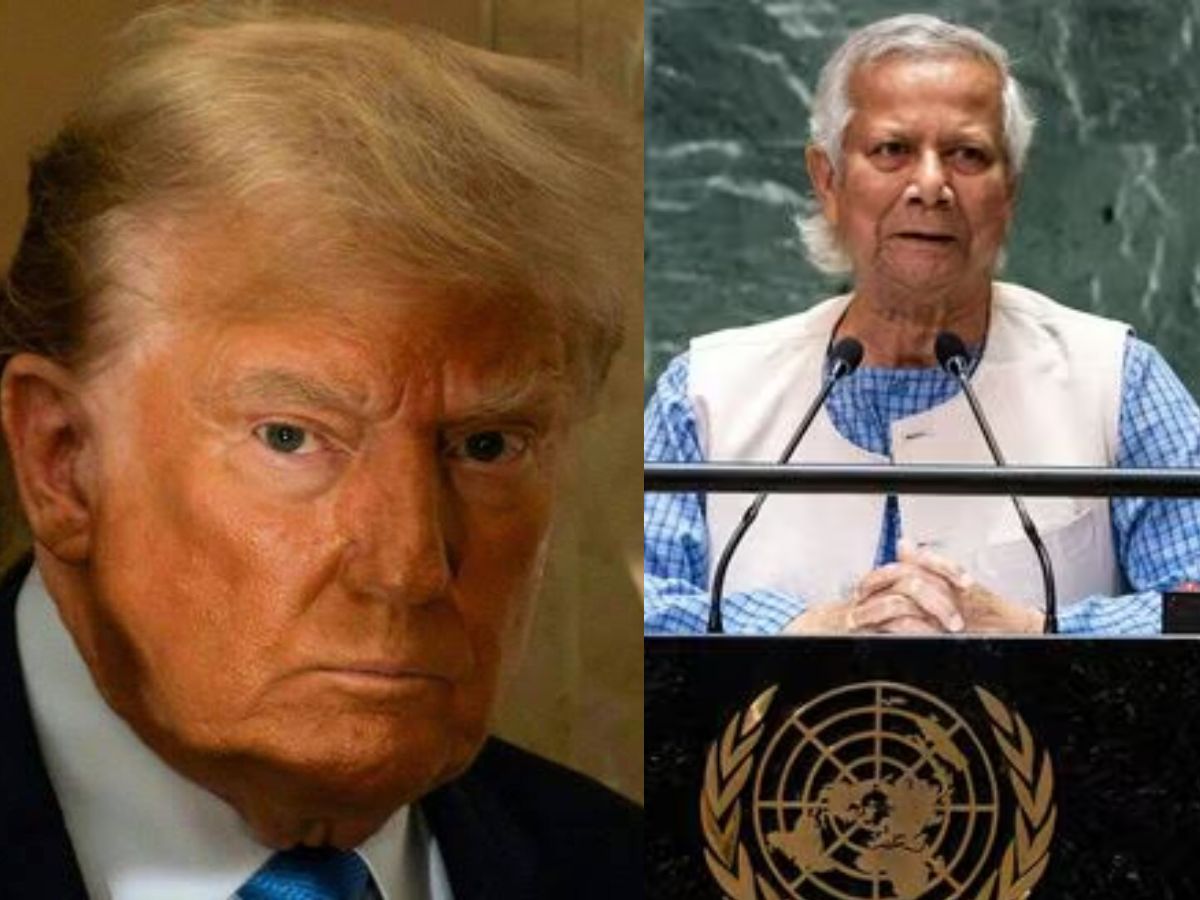
India’s recent trade pact with Washington that cut tariffs on Indian exports to 18 per cent has triggered a swift response from Bangladesh, which is rushing to conclude a ‘secret’ trade agreement with the United States before its national elections. The deal, expected to be signed on February 9, just three days before the polls on February 12, comes amid intense concern in Dhaka about losing market share to Indian export rivals.
Bangladesh’s garment industry, which relies heavily on the US market and employs millions, fears that a tariff disadvantage could accelerate the shift of orders to India and other exporting nations. This has heightened pressure on policymakers to secure competitive terms, even as transparency issues and conditional demands cloud the negotiations.
Why Bangladesh is Racing for a US Trade Deal?
Bangladesh’s exports have been put under strain after a sharp reduction in US tariffs for Indian products following a bilateral deal between India and Washington. India managed to negotiate a significant cut, lowering certain levies to 18 per cent, which has boosted its global competitiveness.
In contrast, Bangladeshi goods still face higher effective duties, despite earlier negotiations that brought its rate down from around 37 per cent to roughly 20 per cent. Industry watchers warn that if Dhaka cannot match or beat India’s tariff benefits, buyers in the US could increasingly favour Indian apparel and textiles.
Bangladesh’s economy depends heavily on ready-made garment (RMG) exports; these account for a large majority of its US shipments, worth roughly $7 billion to $8 billion annually. Any shift away from Bangladeshi goods could disrupt the livelihoods of millions of workers.
What the ‘Secret’ US-Bangladesh Deal Involves?
Details of the planned trade agreement remain confidential, raising concerns among business leaders and economists. In mid-2025, Bangladesh’s interim government reportedly signed a Non-Disclosure Agreement (NDA) with the United States, barring the disclosure of negotiation terms to the public, parliament or industry representatives.
Bangladesh’s Commerce Adviser Sk Bashir Uddin has sought to reassure stakeholders, saying that “there will be nothing in the agreement that goes against the country’s interests” and that the deal might be made public with US approval. Critics, however, remain sceptical about the secrecy, especially given the timing so close to national elections.
Reports indicate that the deal is likely to reduce Bangladeshi tariffs further, to around 15 per cent, aligning it more favourably with India’s 18 per cent rate. But sources also suggest Washington has attached conditions on broader trade behaviour, including pressures to shift imports away from China and adhere strictly to US product standards.
Concerns Over Transparency and Political Timing
Industry experts and economists have criticised the opacity of the negotiation process. Devpriya Bhattacharya, a fellow at the Centre for Policy Dialogue (CPD), argues that the lack of public debate undermines democratic scrutiny and leaves the incoming elected government with little room to alter the agreement’s terms.
Senior garment association leaders expressed surprise at the urgency and timing of the deal. “I was surprised to see the signing of the agreement come just three days before the election,” said a senior vice-president of the Bangladesh Garment Manufacturers and Exporters Association (BGMEA). “This should have been done after the election, because it carries major implications.”
Economist Anu Muhammad has publicly questioned the process, suggesting that foreign lobbyists and advisers may be influencing Dhaka’s negotiating positions. He wrote on social media that the deal “pushes the country into a terrible, dangerous situation” and raised concerns about the motivations behind the urgency.
Impact on Bangladesh’s Garment Sector and Jobs
The garment industry is the backbone of Bangladesh’s economy, employing 4–5 million workers, a majority of whom are women, and accounting for more than 80 per cent of export earnings. Analysts warn that even a small tariff differential between Bangladesh and India could influence buyers’ decisions, potentially diverting orders and threatening jobs.
Competition from India, already enjoying lower US duties, may intensify pressure on Bangladeshi producers, who face higher raw material costs and infrastructure challenges relative to some rivals. Smaller factories and exporters heavily dependent on US orders could be among the most affected.
How Does the Deal Affect Bangladesh’s Trade Strategy?
The urgency of the deal reflects a broader shift in trade dynamics across South Asia. Bangladesh is trying to hedge against its heavy reliance on the US market by securing a formal agreement that can provide tariff certainty and prevent market losses to regional competitors. However, the confidentiality around the terms and the political context has amplified anxiety among business circles and civil society.
Some analysts have also highlighted the broader geopolitical implications, noting that deeper economic engagement with the US may come with expectations on defence imports and standards harmonisation, which could shift Bangladesh’s trade relationships.
What Comes Next?
If the trade deal moves forward as scheduled, it will shape the future of Bangladesh’s export footprint in the US. Economists say that transparent oversight and post-election scrutiny by the incoming government will be crucial to ensuring that the terms serve the country’s long-term economic interests.
Meanwhile, industry leaders continue to urge swift clarity on the agreement’s substance and implications, particularly regarding tariff levels, market access and compliance requirements. The outcome will be closely watched by competitors and buyers in global supply chains.




