14-year jail term of former ISI chief Lt Gen Faiz Hameed stands out as one of the rarest ruptures of security establishment in the country.
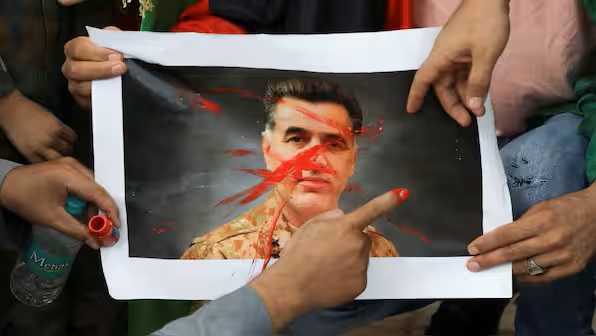
Lieutenant General Faiz Hameed (retired) has been sentenced to 14 years in prison.
New Delhi: Only two directors general of Pakistan’s Inter-Services Intelligence (ISI) have ever been deprived of their liberty since the agency was created in 1948, and only one has died due to accidental or disputed causes. That unprecedentedly small number underscores the extraordinary insulation enjoyed by the ISI’s top leadership inside Pakistan’s military system. It is against this backdrop that the 14-year imprisonment of former ISI chief Lt Gen Faiz Hameed, who headed the agency from June 2019 to October 2021, stands out as one of the rarest ruptures the country has witnessed at the highest level of its security establishment.
The first ISI chief to ever lose freedom was Lt Gen Ziauddin Butt, who was briefly detained during the October 1999 confrontation between Prime Minister Nawaz Sharif and Army Chief Pervez Musharraf. Sharif tried to replace Musharraf by appointing Butt as Army chief, but when Musharraf seized control hours later, the military arrested Butt during the transition. He was never sentenced and was released after a brief period in custody. Apart from this shortlived episode, no ISI chief has been arrested, charged or jailed for any reason in the past seven decades.
Only one ISI chief has died in circumstances that were not natural. Gen Akhtar Abdur Rahman, who oversaw the ISI during the SovietAfghan war, was killed in the 17 August 1988 C-130 crash that also killed President Zia-ul-Haq and the US ambassador. The cause of the crash has never been conclusively established, and suspicions of sabotage have persisted for decades. No other DG ISI has died due to accident, violence or unexplained events.
This exceptionally narrow historical record shows how deeply protected the ISI leadership has been for generations. Pakistan’s formal democracy has long been overshadowed by an entrenched military order in which the real hierarchy places the Army Chief at the top, followed by the DG ISI as the central operator of political engineering, internal security and strategic enforcement. Civilian leaders, Prime Ministers, Presidents and Cabinets, function within the boundaries defined by this military command structure. The ISI chief, in particular, has traditionally operated with near-total insulation from legal, political or institutional vulnerability.
It is precisely this insulation that makes Faiz Hameed’s imprisonment a structural anomaly. His detention and subsequent 14-year court-martial sentence did not emerge from any newfound culture of accountability in Pakistan. Intelligence chiefs have historically engaged in political management, electoral manipulation and covert operations with complete impunity and institutional sanction. Pakistan has never punished an ISI director for political interference. Faiz’s fate therefore demands a deeper explanation.
The real story, according to senior officials and longterm observers of Pakistan’s civil-military dynamics, is not about the charges listed in the court-martial but about a breach of the military’s internal red lines. Imran Khan served as Prime Minister from August 2018 to April 2022, and his rise to power was engineered with the military’s backing. The ISI under Faiz Hameed played a pivotal role in shaping PTI’s ascent. But the PTI-Army partnership collapsed when Khan began resisting the military’s preferences, particularly during the 2021 dispute over Faiz’s transfer from ISI to the Peshawar Corps. When the Army’s institutional leadership withdrew support for PTI, Faiz continued to align with Khan’s political project. In the eyes of the military establishment, this was not political loyalty, it was insubordination.
In Pakistan’s power system, intelligence chiefs are permitted to manage politics only as long as they do so for the institution. The moment an officer begins building political capital for a specific party or for himself, and especially after the Army chief has shifted strategic direction, that officer becomes a threat to the military’s monopoly over political control. Faiz’s perceived proximity to Imran Khan, his alleged role in engineering PTI’s initial rise, and his refusal to reposition himself once the institution recalibrated, amounted to a structural challenge to military authority.
His imprisonment is therefore best understood as an internal correction. It signals to the officer corps that no general, regardless of influence or prior usefulness, can build autonomous political networks or remain aligned with a political actor after the army has withdrawn patronage. The message is not directed at the public, it is directed at the institution.
In more than seventy years, Pakistan has seen only two ISI chiefs ever detained and only one die an unnatural death. The 14-year sentence handed to Faiz Hameed thus represents a break in a long historical pattern of military insulation. But it is not a sign of democratic oversight or judicial independence. It is a demonstration of the military’s determination to reassert uncontested control over the political order after the PTI-military compact fractured.
Faiz Hameed’s fall is ultimately the story of a general who helped create a political project the Army later turned against, and who chose to remain loyal to that project after the institution had moved on. In Pakistan’s system, no deviation is punished more decisively.
