Selling Nvidia H200 AI chips to China boosts short-term profits but accelerates adversarial military and intelligence capabilities.
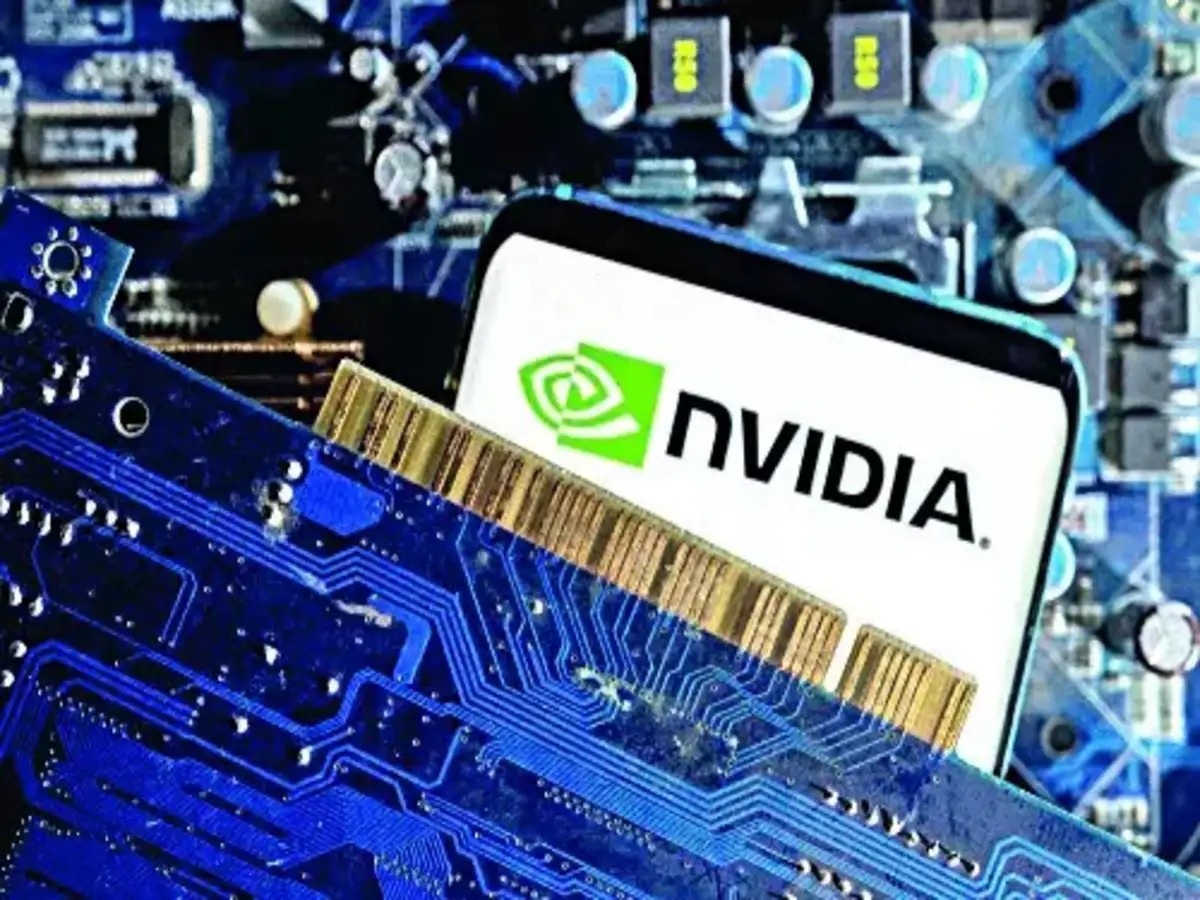
Nvidia H200 AI chips, whose advanced memory architecture and system integration make them strategically sensitive, are at the center of U.S.-China export debates.
The debate over whether the U.S. should allow the sale of advanced AI chips such as Nvidia’s H200 to China is often framed as a narrow trade-off: short-term commercial benefit versus longer-term strategic risk. That framing understates the danger. In reality, permitting such sales does not merely delay China’s technological reckoning; it actively worsens America’s eventual strategic position while guaranteeing near-term military and intelligence gains for Beijing. The profits may accrue to one firm in the next few quarters, but the costs will be borne by U.S. national security for decades.
Proponents of continued sales argue that restricting exports will only push China to accelerate domestic chip development, and that selling H200s “buys time” by keeping Chinese firms dependent on U.S. technology. There is a kernel of truth in this logic. But delay is not denial, and access is not neutral. In advanced semiconductors, hands-on use is one of the most powerful accelerators of learning. Allowing China to deploy H200-class systems does not slow its progress toward indigenous alternatives; it sharpens it. This is especially true because the H200’s significance lies less in raw compute than in memory architecture. High-bandwidth memory, system-level integration, power management, and software-hardware co-optimization are now the decisive bottlenecks in large-scale AI. Operating these systems at scale provides invaluable insight into how frontier architectures actually behave under real workloads. Even without copying designs outright, Chinese engineers gain precisely the experiential knowledge needed to build competitive substitutes faster and more efficiently.
Nor is there any credible uncertainty about how such systems would be used. China’s civil-military fusion doctrine eliminates the distinction between commercial and state applications. Any advanced AI compute deployed in China will be accessible—directly or indirectly—to the People’s Liberation Army and the country’s intelligence services. This is not conjecture; it is how the system is designed to function. AI accelerators like the H200 would inevitably be used for intelligence analysis, autonomous systems development, cyber operations, surveillance optimization, and military modelling. The question is not whether this will happen, but how much capability it will add and how quickly.
The strategic asymmetry is stark. For China, access to H200s delivers immediate gains across military, intelligence, and industrial domains, while simultaneously accelerating its long-term semiconductor learning curve. For the U.S., the upside is limited to short-term goodwill, corporate revenue, and marginal GDP impacts. Markets reward quarterly earnings; national security demands decades-long foresight. When the incentives diverge, it is the government’s responsibility—not a corporation’s—to enforce alignment. And it is not the U.S. government’s responsibility to ensure that Nvidia maintains a competitive advantage in the global marketplace.
This is precisely why export controls exist. They are not a punishment mechanism, nor an attempt to freeze technological progress indefinitely. Their purpose is to slow adversaries’ access to strategically decisive capabilities long enough to preserve deterrence, protect military advantage, and allow allied ecosystems to consolidate their lead. Allowing the export of H200-class systems undermines all three objectives at once. It increases China’s usable AI throughput, improves its engineers’ system-level expertise, and reduces its future dependence on U.S. suppliers.
The familiar argument that “if we don’t sell, someone else will” does not apply here. No alternative supplier offers a comparable combination of performance, memory bandwidth, and software ecosystem at scale. This is not a fungible commodity market. Strategic compute is scarce, and scarcity is leverage. Giving that leverage away voluntarily is a policy choice—not an inevitability.
Perhaps the most dangerous illusion is that selling H200s postpones an unavoidable confrontation on more favourable terms. In fact, it does the opposite. When the “day of reckoning” arrives—when China can field highly capable domestic accelerators at scale—it will do so with better models, deeper operational experience, more refined system architectures, and less reliance on foreign inputs than it would have had otherwise. Any delay achieved today will have been purchased at the price of a steeper and more dangerous competitive landscape tomorrow.
This is not an argument against innovation, nor against Nvidia’s phenomenal success as a company. It is an argument that advanced AI compute has crossed a threshold where private incentives and public interests no longer align. When a technology confers decisive military and intelligence advantage, its distribution cannot be governed solely by market logic.
Selling H200s to China may boost short-term profits for Nvidia, but it does so by exporting strategic advantage, accelerating adversarial learning, and weakening the very security environment that makes American technological leadership possible. That is not a neutral trade-off. It is a strategic mistake—one the U.S. can still choose to avoid.
*Daniel Wagner is CEO of Country Risk Solutions and the author of five books on China.
