US-Israel launch Operation Epic Fury on Iran; Tehran retaliates with missile strikes across the Gulf, raising fears of wider Middle East war and global oil disruption.
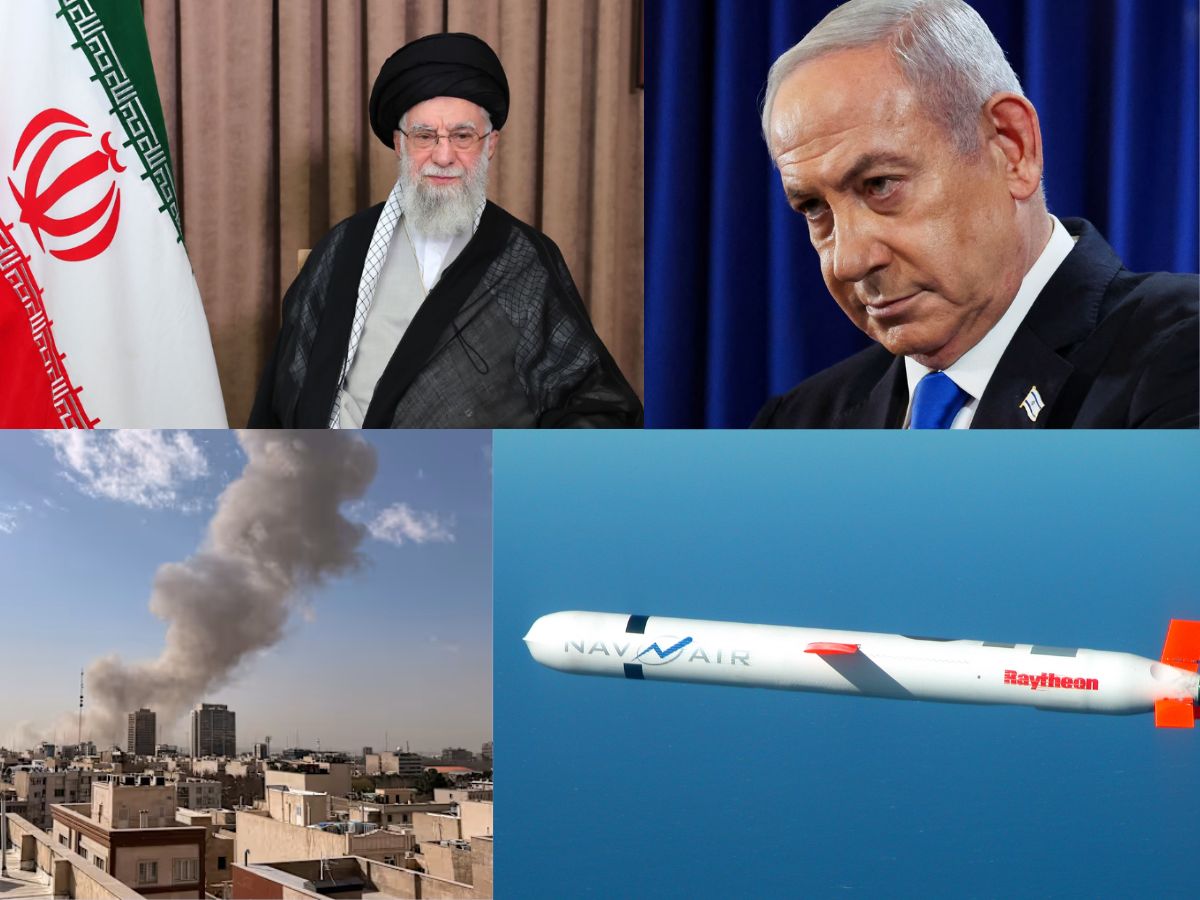
US-Israel launch Operation Epic Fury on Iran; Tehran retaliates with missile strikes across the Gulf [Photo: X]
The United States (US) and Israel have launched large-scale military strikes on Iran under an operation Washington has named “Operation Epic Fury.” The attacks have hit multiple Iranian cities, including Tehran, Qom, Isfahan, Kermanshah and Karaj. US President Donald Trump described the campaign as “major combat operations” that are “massive and ongoing.”
The strikes mark one of the most confrontations in years between Washington, Tel Aviv and Tehran. Iran has already responded with missile launches across parts of the Gulf region, raising fears of a broader regional conflict. Here is a simple explainer of what is happening and why it matters.
The United States and Israel say they launched the strikes to counter what they describe as a growing security threat from Iran. Both countries argue that Iran’s expanding missile programme and nuclear activities pose serious risks to regional stability and to Israel’s national security.
Israeli officials have long warned that Iran’s military build-up and support for armed groups in Lebanon, Syria and Iraq directly threaten Israel’s borders. Tel Aviv maintains that targeted strikes aim to weaken Iran’s strategic infrastructure before it becomes more dangerous.
The United States has justified its involvement by citing the need to protect American forces and military bases stationed across the Middle East. Washington also accuses Tehran of backing proxy groups that have attacked US interests in the region.
Iran responded swiftly after the joint US-Israel strikes, marking a sharp escalation in hostilities. Tehran’s leadership declared the attacks a violation of its sovereignty and pledged to respond “decisively” to defend the nation and its interests.
Iran launched ballistic missile strikes across the Gulf region, targeting US military bases and allied nations that host American forces, including Bahrain’s Fifth Fleet headquarters, Kuwait, Qatar and the United Arab Emirates. Some missiles were intercepted by regional air defence systems, while others reportedly struck strategic sites — including a confirmed impact near the US Navy Fifth Fleet base in Manama.
Iran’s military described the retaliation as a legitimate defence measure and warned that all American and Israeli assets in the region are legitimate targets if operations continue. Missiles were also fired toward northern Israel, triggering air raid sirens and defensive interceptions. Across the Gulf, countries activated defence systems, issued security alerts, and diverted flights as a precaution.
The escalation has therefore impacted military zones, urban centres, aviation corridors, maritime trade routes and global energy markets.
The conflict has involved advanced weaponry from both sides. The United States and Israel reportedly used long-range Tomahawk cruise missiles launched from naval platforms. These missiles fly at low altitudes to evade radar and strike high-value targets with precision.
Israel deployed stealth fighter jets such as the F-35I “Adir” and F-15I Ra’am aircraft for deep-strike missions. Precision-guided munitions like SPICE and JDAM bombs were used for accurate targeting, including hardened facilities.
Stand-off cruise missiles such as Delilah and Rampage allowed strikes from outside hostile defence zones. Reports also suggest the use of GBU-28 bunker-buster bombs to destroy underground installations.
Iran responded with ballistic missiles, including Shahab-3, Emad and Ghadr types, which can travel long distances and target regional bases. Armed drones were also deployed for reconnaissance and precision strikes.
The confrontation reflects a high-tech military exchange involving missiles, drones, stealth aircraft and layered air defence systems.
Global leaders reacted quickly as tensions escalated. The United States reaffirmed support for Israel’s security while also urging caution to prevent a wider war.
European nations, including France, Germany and the United Kingdom, called for immediate de-escalation and diplomatic engagement. They warned that prolonged fighting could destabilise global markets and worsen humanitarian conditions.
Russia and China stressed the importance of political negotiations and respect for sovereignty.
Several Gulf states appealed for calm, citing concerns over oil supply disruption and economic instability. The United Nations urged all parties to avoid further military escalation and return to dialogue.
India has called for immediate restraint and peaceful dialogue. New Delhi maintains strategic ties with Israel while also sustaining diplomatic relations with Iran.
India has prioritised the safety of its citizens in the region and issued advisories where necessary. Officials also emphasised the importance of stability in West Asia due to its critical role in India’s energy security, trade routes and diaspora interests.
India supports de-escalation and a diplomatic resolution to prevent a broader regional conflict.
The Gulf hosts major US military bases and naval facilities. Countries including the UAE, Qatar, Bahrain and Kuwait provide strategic support to American forces. Targeting the Gulf allows Iran to send a direct message to Washington without limiting retaliation to Israeli territory.
The Strait of Hormuz also sits in this region, making it vital for global oil trade. Disruption here affects energy markets worldwide. The Gulf’s strategic value, military infrastructure and economic significance make it central to the conflict.
Oman has managed to stay out of direct conflict mainly because of its long-standing neutral foreign policy. Unlike some other Gulf nations, Oman does not openly align itself against Iran and maintains balanced relations with both Tehran and Western powers. It has often acted as a quiet mediator between Iran and the United States, including hosting back-channel nuclear talks in the past.
Oman and Iran also share strategic interests, especially in securing the Strait of Hormuz, a vital global oil route they both border. Stability in this waterway benefits both countries economically and politically. In addition, Oman avoids aggressive military posturing and does not position itself as a frontline state in regional rivalries.
For Iran, targeting Oman would risk losing one of the few Gulf countries that keeps diplomatic communication open even during crises. This combination of neutrality, diplomacy, geography and mutual economic interest makes Oman less likely to become a direct target.
The Middle East became deeply involved because the core tension between Israel and Iran directly affects the region’s security balance. Both countries see each other as major threats, and their rivalry has spread beyond borders through allies and proxy groups.
Many Middle Eastern countries host US military bases, which automatically draws them into the conflict when tensions rise between Iran and the United States. Iran often warns that any country supporting US or Israeli military action could become a target.
The region also sits on critical oil routes like the Strait of Hormuz, making it strategically vital. Any military escalation risks disrupting global energy supplies, which increases regional involvement.
Several armed groups backed by Iran operate in Lebanon, Syria, Iraq, and Yemen, widening the conflict zone. At the same time, Israel has conducted strikes in Syria to prevent Iranian military expansion.
In the current Middle East tensions, alliances are largely shaped by security interests, regional influence, and ideological differences.
On one side, Israel and the United States share a strong military and intelligence partnership. The US provides Israel with defence aid, advanced weapons systems, and diplomatic backing at global forums. Several Gulf countries like the UAE and Bahrain have strengthened ties with Israel after the Abraham Accords, mainly due to shared concerns about Iran’s growing influence.
On the other side, Iran leads what is often called the “Axis of Resistance,” which includes groups like Hezbollah in Lebanon, certain militias in Iraq, and allies in Syria. Iran views both Israel and the US presence in the region as direct threats to its security and influence.
Saudi Arabia and Iran have historically been regional rivals due to political and sectarian differences, though recent diplomatic efforts have reduced open hostility. Qatar and Oman often play balancing roles and try to maintain communication with all sides.
In simple terms, the conflict revolves around power, regional dominance, military presence, and control over strategic routes, which shapes who stands with whom and who remains an adversary.
Ayatollah Ali Khamenei is Iran’s Supreme Leader and the country’s highest decision-making authority, which makes him a central strategic figure in any conflict involving Iran. He oversees Iran’s armed forces, approves major military actions, and shapes national security policy. Targeting him would therefore aim at the top of Iran’s political and military command structure.
Military planners may view striking senior leadership as a way to disrupt coordination and weaken decision-making during wartime. Removing or incapacitating the Supreme Leader could create uncertainty within Iran’s chain of command.
Supporters of such a strategy argue that it sends a strong deterrent message and pressures the leadership directly rather than only targeting infrastructure. However, targeting a head of state also carries enormous risks, including severe escalation, international backlash, and potential regional instability.
Several countries in the Middle East have temporarily restricted or fully shut down parts of their airspace following missile strikes and rising military tensions.
Most of these measures are temporary and aim to protect civilian aviation during ongoing military exchanges in the region.
Operation Epic Fury is the name used by the United States to describe its large-scale military campaign against Iran. The operation began with coordinated air and naval strikes carried out by US forces alongside Israel. According to President Donald Trump, the campaign involves “major combat operations” that are “massive and ongoing.”
The stated objective of Operation Epic Fury is to eliminate what the US calls imminent threats from Iran. Washington says it aims to destroy Iran’s missile capabilities, weaken its naval power in the Gulf, and prevent further development of its nuclear programme.
US forces reportedly used advanced fighter jets and Tomahawk cruise missiles launched from naval ships in the region. The operation is described as phased, meaning it may continue over several days rather than being a single strike. Officials say the broader goal is to reduce Iran’s military strength and deter future attacks on US forces and allies in the Middle East.
Military operations are expected to continue in the short term. Iran has signalled further retaliation if strikes persist. Air defence systems remain on high alert across the region. Oil prices and global markets are already reacting to uncertainty.
Diplomatic channels may reopen, but for now, military activity dominates. The coming days will determine whether this conflict stabilises or expands into a deeper regional crisis with global economic consequences.
