For more than seven decades, Pakistan has stood staunchly opposed to recognising Israel, citing a principled stance on the Palestinian cause.
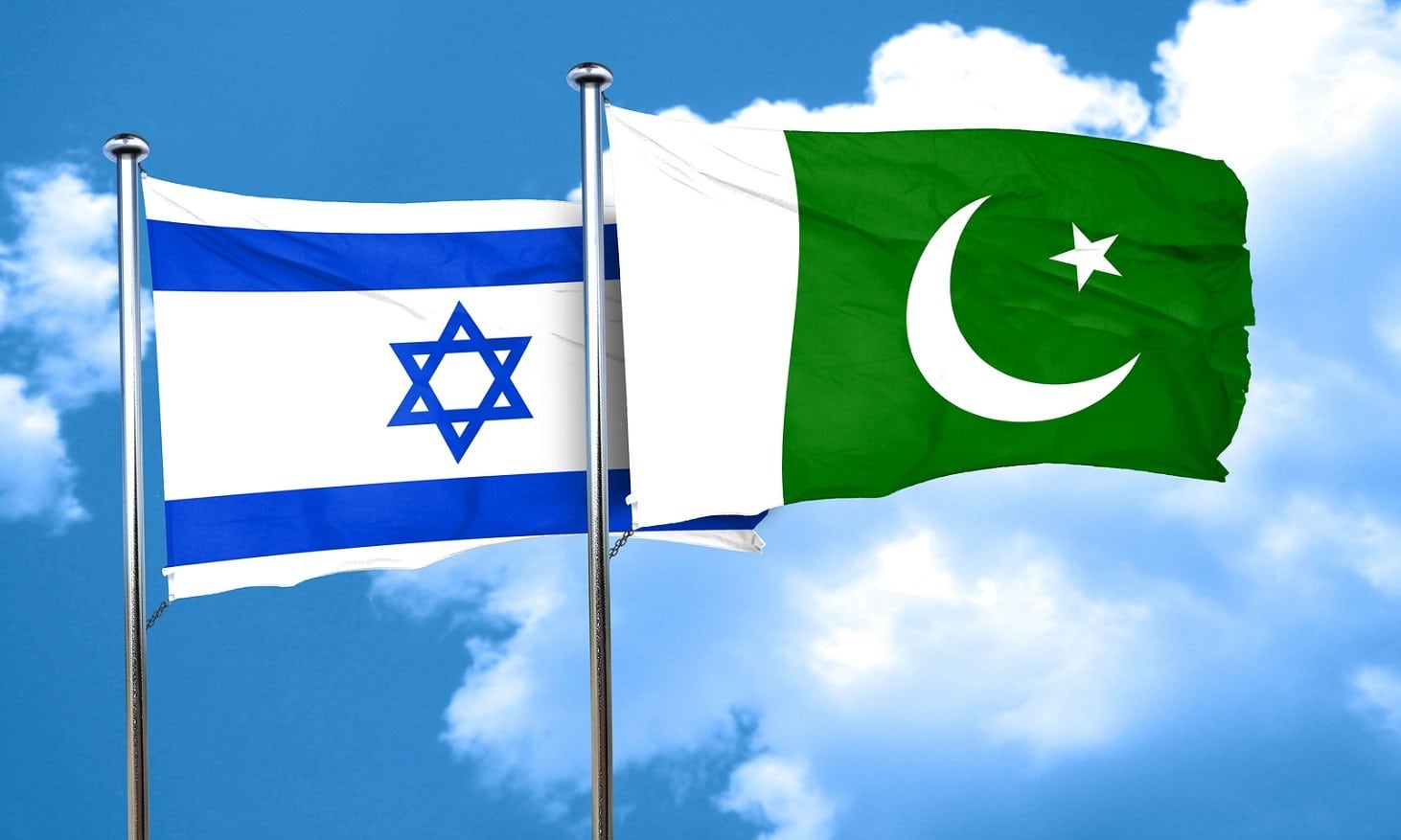
Pakistan balances ideology and survival as geopolitical and economic pressures push it toward eventual recognition of Israel (Photo: File)
Pakistan today finds itself on a tightrope—a nation struggling between ideological rigidity and geopolitical reality. The question that hangs over its future diplomacy is both strategic and existential: Will Pakistan recognise Israel as it deepens its relationships with the United States and Saudi Arabia?
The answer is not as distant as Pakistan's politicians would like their citizens to believe. For more than seven decades, Pakistan has stood staunchly opposed to recognising Israel, citing a principled stance on the Palestinian cause. It has portrayed itself as the ideological vanguard of Muslim solidarity, claiming that until Palestinians achieve an independent state, Pakistan must remain resolute. But beneath this moral posturing lies a harder truth—one defined by economic collapse, political fragility, and foreign dependency.
Pakistan's foreign policy is crafted not in its parliament, but by the generals of Rawalpindi. And those generals now face powerful international pressures that demand difficult choices. At the forefront of this pressure is the United States. Washington has always treated Pakistan transactionally: favour in exchange for strategic service. Today, Pakistan is financially choking, begging for bailouts from global lenders who take their cues from America's geopolitical priorities. The U.S. wants a stabilised Middle East. It wants the Muslim world to integrate Israel into its diplomatic system. For Washington, Pakistan is too big to be ignored and too vulnerable to resist pressure. Dollars speak louder than ideology, especially when the rupee is gasping.
Yet, if America is the stick, Saudi Arabia is the carrot—or more accurately, the lifeline. No country wields more influence over Pakistan's direction than Saudi Arabia, which has repeatedly rescued Pakistan's economy, trained its soldiers, and nurtured its political class. As Riyadh moves carefully toward normalisation with Israel, Pakistan's long-standing excuse—that it only follows the lead of Saudi Arabia on Muslim world matters—is evaporating. If the Custodian of the Two Holy Mosques recognises Israel, Pakistan will lose the ideological cover it hides behind. It will be forced to answer a simple but uncomfortable question: If Mecca and Medina can shake hands with Jerusalem, then what makes Pakistan holier than Islam's heartland?
This exposes another layer of Pakistan's dilemma: the Palestinian cause, though emotionally powerful, has long been more political symbolism than genuine activism. The same state that claims to champion Palestinian rights turns a blind eye to the Uyghur genocide in China. It feigns silence over the persecution of Muslims in friendly Middle Eastern kingdoms. Principle is not the compass of Pakistan's foreign policy—survival is.
Yet survival also brings fear. Inside Pakistan, anti-Israel sentiment is not merely political opinion—it is a deeply embedded ideological weapon. Islamist movements thrive on hatred for Israel, using it to rally mobs and destabilise governments. Recognising Israel would be seen as a betrayal of Islam itself. The Pakistan street is unpredictable, volatile, and easily manipulated. Islamabad fears riots, military backlash, clerical revolt, and extremist insurgency—a perfect storm in a state already struggling to maintain cohesion.
Adding to the complexity is Iran. Pakistan shares a border with Tehran and a sectarian powder keg at home. If Pakistan embraces Israel too hastily, Iran could retaliate through militias, intelligence networks, and energy leverage. Pakistan is already juggling internal and external conflicts; opening a front with Iran could be catastrophic.
And yet, despite these obstacles, a shift is creeping silently into Pakistan's power structure. The military establishment knows that Israel is not just another state—it is a technological powerhouse. Access to Israeli agricultural innovation could save Pakistan's dying farmlands. Cyber cooperation could defend its state infrastructure. Water technology from Tel Aviv could prevent a humanitarian disaster. In the cold, calculative mind of the Pakistani Army, alliances are measured in strategic benefit, not emotional slogans.
Thus, the future trajectory seems inevitable. Pakistan will not jump directly from hostility to full diplomatic normalisation. It will progress cautiously through familiar stages: secret meetings, intelligence coordination, backchannel trade, softening of political rhetoric, and eventually a controlled narrative campaign to convince the public. When that moment comes, the justification will be packaged neatly and sold as reluctant obedience to Saudi Arabia's leadership: "We stood by Palestine until the Kingdom of Saudi Arabia chose peace with Israel" and that day is coming—Pakistan will follow. It will not celebrate the moment. It will endure it. It will not boast of a new chapter. It will apologise for it. And yet, Pakistan will proceed because the future leaves no room for outdated animosities.
But let us be clear—recognition of Israel will not be a bold transformation driven by vision. It will be a forced adaptation driven by economic desperation. Pakistan's ideological walls are cracking under the weight of debt, inflation, extremism, and isolation. When a country cannot feed its people, slogans lose their shine. In the battle between principle and survival, Pakistan has always chosen survival and this time will be no different.
So, will Pakistan recognise Israel? Not today. Not tomorrow. But the currents of global diplomacy will eventually pull Pakistan toward that decision. When Saudi Arabia formalises ties with Israel, Pakistan will follow. In the end, Pakistan's recognition of Israel will be less a shift in foreign policy and more an admission of reality: that no ideology is worth national collapse. That alliances, like politics, are dictated not by emotion but by necessity. And that in a world where Israel holds the technological edge and Saudi Arabia directs Pakistan's survival fund, resistance is not courage—it is foolishness. Pakistan can delay the inevitable. But it cannot escape it.
Savio Rodrigues is Founder and Editor-in-Chief of Goa Chronicle
