
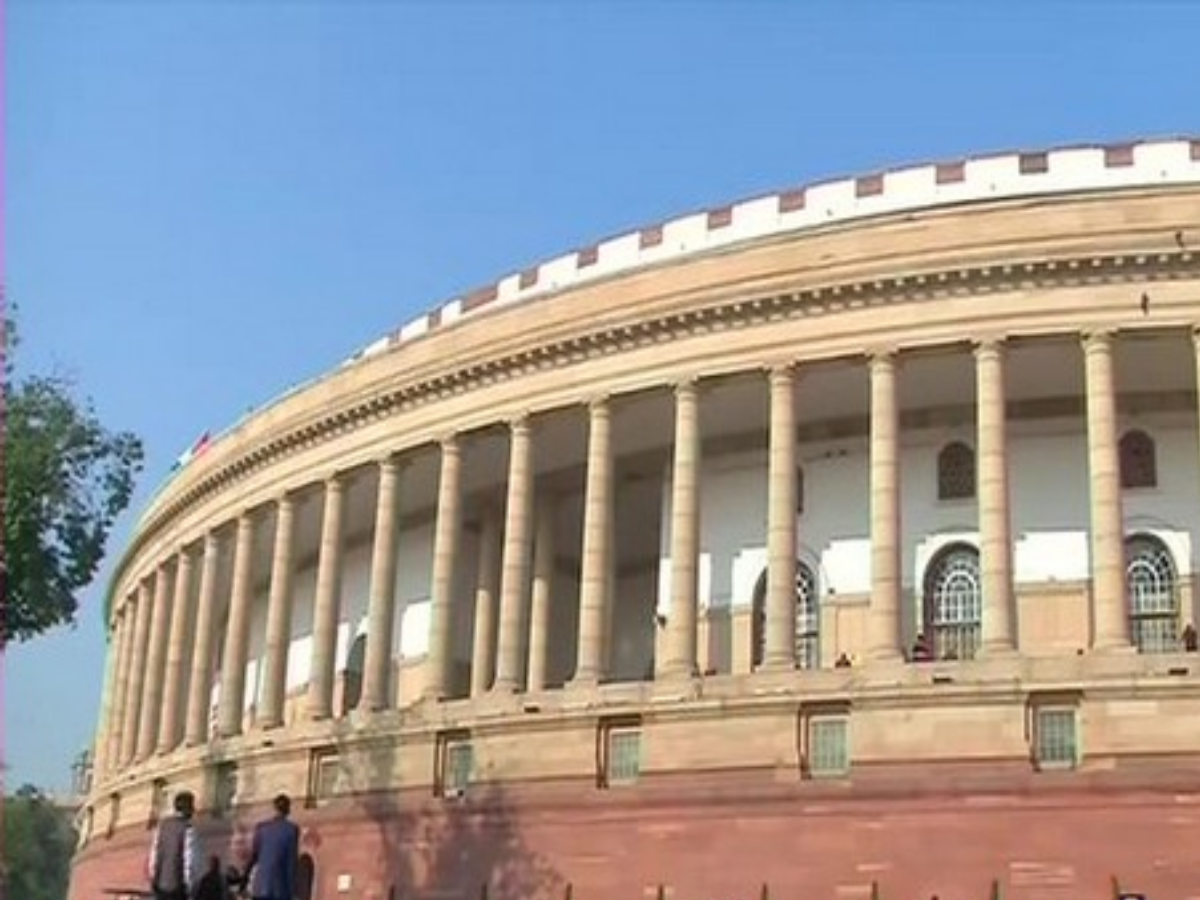
There is considerable uncertainty over whether the Nari Shakti Vandan Adhiniyam (Women’s Empowerment Act) Amendment Bill will pass smoothly through both Houses of Parliament during the third phase of the Budget Session. Based on the posture adopted by the Congress party and other opposition formations, the government is expected to face a demanding task in securing the constitutionally mandated two-thirds majority.
Although the Congress has formally extended support to the bill, it has simultaneously articulated concerns regarding the delimitation process. A central question raised by the party is whether the 33 percent reservation for women will take effect beginning with the 2029 Lok Sabha elections, or whether it may be implemented earlier in upcoming state assembly elections. The Women’s Reservation Amendment Bill, which has already received cabinet approval, provides for 33 percent reservation for women in both the Lok Sabha and state legislative assemblies.
The legislation enacted in 2023 had originally mandated the conduct of a fresh caste census followed by a delimitation exercise. The government now proposes to remove that requirement. This would mean that, instead of relying on data from a new census, the 2011 census figures would be used as the basis for seat allocation and the delimitation process. However, ambiguity persists regarding whether the reservation provisions and delimitation exercise will be operationalised starting with forthcoming state assembly elections or only from the 2029 general elections.
Prime Minister Narendra Modi had earlier indicated at a rally in Assam that the provisions would be implemented beginning with the 2029 general elections. Following that statement, it has been widely assumed that the measure would take effect from 2029. Nevertheless, fresh questions have emerged: if implementation is indeed intended only from 2029, why has the government chosen to proceed at this juncture, prior to conducting a new census? The Congress party and other opposition groups contend that the timing of the move is politically motivated, alleging that it is designed to appeal to women voters ahead of assembly elections in five states. Women’s reservation, if implemented, could significantly influence electoral dynamics in states such as West Bengal and Tamil Nadu, where elections are due after some interval.
The government is scheduled to introduce the amendment bill in the Lok Sabha on April 16. Another key apprehension among opposition parties is that if the government opts to extend women’s reservation to state assembly elections scheduled for next year, it could substantially heighten their electoral challenge. In this backdrop, there is apprehension that the introduction of the bill could trigger disruptions in parliamentary proceedings. Parties such as the All India Trinamool Congress and the Dravida Munnetra Kazhagam are expected to articulate their dissent forcefully. The Congress party may align tactically with these formations during the debate.
Crucially, the government cannot secure passage of the amendment without opposition cooperation. A constitutional amendment requires a two-thirds majority of members present and voting, in addition to a majority of the total membership of each House—numbers that the ruling coalition does not independently command. Under these circumstances, it remains uncertain whether the bill will be enacted during the current session or deferred to the Monsoon Session for further negotiation and floor management.




