
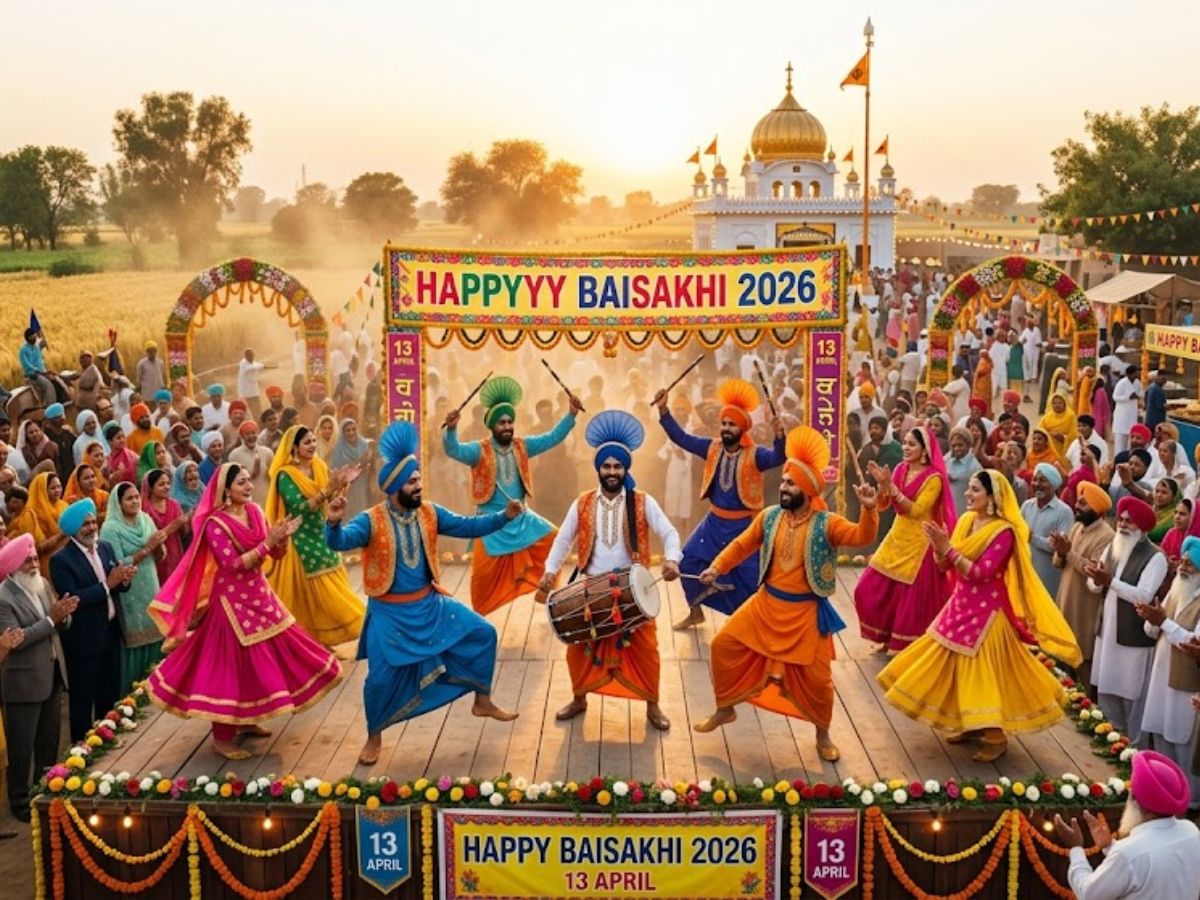
Baisakhi 2026 Date: Baisakhi, also known as Vaisakhi, is a major festival celebrated across India, especially in Punjab. It marks the harvest season, showcases rich cultural traditions, and commemorates the formation of the Khalsa Panth. The festival is observed every year in April, typically on the 13th or 14th, depending on the Hindu calendar. Sikh communities celebrate this day with devotion, joy, and vibrant public gatherings.
When Will Baisakhi 2026 Be Celebrated on April 14 or 15?
According to Drik Panchang, Baisakhi will be celebrated on Tuesday, April 14, 2026, with the Vaishakhi Sankranti taking place at 09:39 AM.
The 327th Khalsa Foundation Day, which coincides with Baisakhi, will be observed with great devotion across Hyderabad from April 13 to 15. The main celebrations will be held at the Gurudwara in Ameerpet. A large congregation is scheduled between 11:00 AM and 4:30 PM at Sri Guru Gobind Singhji Playgrounds, where devotees and people from different communities are expected to gather.
Baisakhi 2026: Historical and Religious Importance
Baisakhi holds great importance in Sikh history. In 1699, Guru Gobind Singh established the Khalsa Panth on this day, giving the festival deep spiritual meaning. The occasion stands for courage, unity, and equality. It represents the idea of a casteless society where everyone is treated equally. Baisakhi also marks the beginning of the new year in the Nanakshahi calendar.
Baisakhi Celebrations: Nagar Kirtans and Processions
One of the main highlights of Baisakhi is the colourful Nagar Kirtans. These processions include devotional singing, martial arts displays, and traditional performances. Devotees walk through streets singing hymns in praise of Guru Gobind Singh, creating a spiritual and festive atmosphere.
How Baisakhi is Celebrated?
On Baisakhi, devotees visit Gurdwaras to offer prayers and take part in religious services. Community meals, known as langar, are prepared and shared with everyone. The sacred Kada Prasad is also distributed among devotees as a symbol of blessings and equality.
Traditional dances like Bhangra and Gidda play a big role in celebrations. Men perform Bhangra with energetic dhol beats, while women perform Gidda with grace and enthusiasm. People wear bright clothes, decorate their homes, and exchange sweets and greetings, spreading happiness all around.
Baisakhi Cultural Celebrations
Baisakhi is also celebrated through fairs and community gatherings in many towns and cities. These include music, dance, food stalls, and rides. Devotional hymns from the Guru Granth Sahib are sung during processions.
Farmers celebrate the harvest with pride, while families come together to enjoy the festive spirit. The combination of traditions, joy, and togetherness makes Baisakhi a lively and meaningful celebration.
Baisakhi Festive Flavours and Dishes
Food is an essential part of Baisakhi celebrations. Families prepare special dishes such as sweet rice, kadhi, chole kulche, sarson ka saag, makke ki roti, kesari phirni, and kada prasad. Yellow and orange foods are commonly seen, as they symbolise joy and prosperity.




